



As land grabbing continues to escalate across Juba, residents are increasingly accusing local chiefs and land brokers of playing a central role in the vice.
The situation has triggered growing calls for both the national and state governments to take decisive action to address the crisis and restore order in land ownership and management.
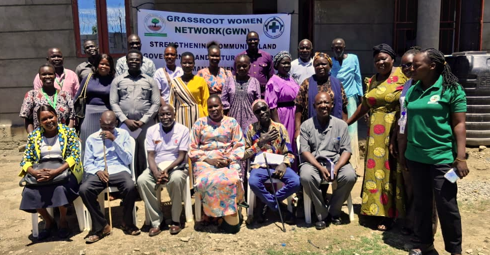
Speaking on Friday in Gudele during a one-day training for members of various land dispute committees organized by the Grassroots Women Network (GWN), Angelo Lobojo Waran, a local chief of the Camp Kuku area located opposite the former Juba Regency Hotel, said the problem has increased, with land brokers, commonly known as “shamsarin” in Juba Arabic, worsening the situation.
“The issue of land has become a big problem, especially in Central Equatoria State. The rest of the states have got their own problems, but ours in Central Equatoria is the issue of land,” he said. “I do not know when this issue is going to stop. What I know is that these so-called brokers are a big problem. If the issue of brokers is not addressed, the land issue will not stop.”
According to Waran, many land brokers operate in residential areas, and upon identifying plots whose owners appear absent, they allegedly collaborate with area chiefs and officials to facilitate illegal land sales.
“Some people say there is land grabbing in Juba, but what I see is that people who are wealthy use money to get plots from the housing officials,” he explained. “For instance, a broker identifies plots whose owners are not around and collaborates with area chiefs and officials from the Housing sector to facilitate the illegal sale of such land. So, they became the eyes and the hand of the Ministry of Lands, Housing and Public Utilities.”
His sentiments were echoed by Paul Ladu, a resident of Hai Baraka in Juba, who said land disputes are also fueled by the involvement of other actors, including members of the legal system.
“Those who participate in land disputes include the chief, brokers, and lawyers. These three people are the ones who are spoiling our land in Juba,” he said. “Even though you go to the court and do not have money, the court will not give you rights, unless you have money. The broker will use money to bribe the court, and in the end, the poor citizen will be deprived of their rights.”
However, Emmanuel Amino Ochola, an area councilor in Gumbo-Shirikat, said not all chiefs are involved in land disputes, but blamed the national and state governments, who have failed to address land issues.
“We have two governments, the national and state governments, who have a great role to play in addressing this issue,” he stated. “Under the state government, we have the local government, which is supposed to handle this issue.”
For his part, Uria Guya Emmanuel, a member of the Central Equatoria State Parliament Land Committee, acknowledged the numerous challenges affecting access to land, attributing them to the lack of proper implementation of existing laws, particularly the South Sudan Land Policy.
According to Emmanuel, while the law clearly outlines procedures for acquiring land, whether for investment or private use, failure to enforce these provisions has contributed to the ongoing challenges.
“Access to land in South Sudan has more challenges, but these challenges are not in accordance with the law,” he said. “These challenges are due to the lack of implementation of the law as it is.”
Land grabbing in South Sudan is rooted in years of conflict, displacement, and weak land governance. Rapid urban expansion in Juba, unclear land ownership systems, and corruption have further intensified disputes, leaving many communities vulnerable to illegal land acquisition and exploitation.

 and then