



African leaders have agreed on a roadmap aimed at steering South Sudan towards long-delayed elections in December 2026, following high-level talks on the sidelines of an African Union summit in Ethiopia on Sunday.
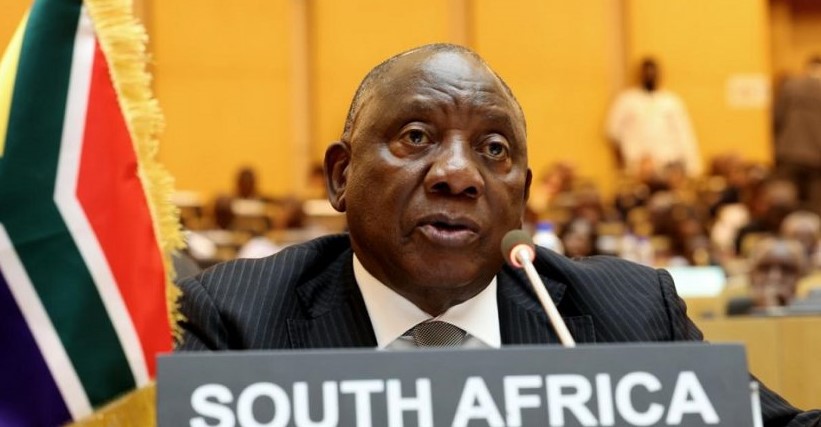
South African President Cyril Ramaphosa, who chaired the African Union High-Level Ad Hoc Committee for South Sudan (C5 Plus), described the discussions in Addis Ababa as “long in the making” but constructive.
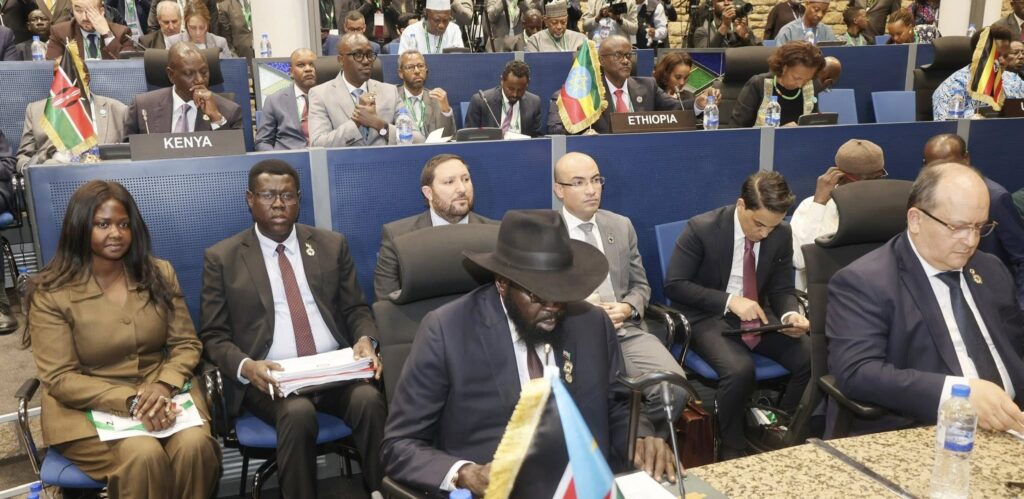
The meeting, held during the 39th Ordinary Session of the African Union, brought together South Sudanese President Salva Kiir and several regional leaders to review the country’s fragile political transition.
In his closing remarks, Ramaphosa thanked Kiir and his delegation for attending, noting that the world’s youngest nation has endured what he called a “difficult and complex journey” towards peace, stability and democracy.
He said South Sudan’s government and people continued to look to the African Union, the regional Intergovernmental Authority on Development (IGAD) and the United Nations for solidarity and support.
Leaders agreed that the 2018 revitalised peace agreement remains the “paramount legal instrument” against which progress should be measured. Ramaphosa said interventions by heads of state had reaffirmed a shared commitment to speed up implementation of the 2018 peace deal despite ongoing obstacles.
Release of detainees
Among the key outcomes was a call for an immediate ceasefire and an end to hostilities across the country.
Leaders also urged the release of political detainees, including First Vice-President Riek Machar, whose legal situation in Juba, Ramaphosa said, should receive consideration from the South Sudanese government.
He stressed the need for “meaningful and inclusive dialogue” bringing together all stakeholders, including groups that have not signed the 2018 peace agreement, to ensure no party is excluded as the country prepares for elections.
The meeting underscored that elections scheduled for December 2026 must go ahead without further postponement. Leaders said the vote must be free and fair, allowing all eligible citizens to participate.
Ramaphosa said minimum standards should be identified and implemented to enable South Sudanese citizens to exercise their democratic rights. These include credible preparations, sufficient funding for electoral institutions, improved security conditions and progress on key transitional tasks such as the unification of armed forces.
The talks also endorsed closer coordination between the C5, IGAD and the AU Commission. An oversight mechanism involving the AU Commission chairperson and three IGAD heads of state is expected to monitor and support implementation of the agreed measures throughout 2026.
While pledging regional backing, Ramaphosa emphasised that responsibility for delivering a peaceful transition ultimately rests with South Sudan’s leaders.
He called on them to act in good faith, promote national cohesion and reconciliation, uphold the rule of law and ensure a transparent and credible electoral process.
Regional efforts
Kenyan President William Ruto told the meeting that regional leaders were working to secure what he described as a “peaceful and successful conclusion” to South Sudan’s transition.
He said regional leaders are working with all stakeholders to stabilise the peace and security situation in South Sudan as the country prepares for elections in December 2026.
Ruto said the C5 Plus framework is advancing efforts towards a peaceful and successful conclusion of South Sudan’s transition period.
“We are working with all stakeholders to address the peace and security situation in South Sudan,” Ruto said.
He noted that the regional push is aimed at delivering credible elections at the end of the transition in December 2026.
According to the Kenyan leader, the process is anchored in robust and inclusive dialogue involving all relevant parties, including hold-out groups and those excluded from the Revitalised Transitional Government of National Unity.
The engagement, he said, seeks to resolve outstanding issues under the Revitalised Agreement and unlock critical transitional milestones necessary for the polls.
Ruto urged all stakeholders to prioritise national unity over factional interests.
“As a result, we call on all participants to refrain from advancing narrow, partisan, sectarian or ethnic interests and instead give priority to the supreme interests of the people of South Sudan,” he said.
President Ruto emphasised that sustained coordination under the AU-led framework remains key to securing lasting peace and ensuring the planned 2026 elections mark a credible end to the transition.
South Sudan’s commitment
For its part, the South Sudanese government delegation, led by President Salva Kiir, expressed commitment to the agreed roadmap but asked that support be provided without what it termed “undue interference”. Regional leaders said they would respect South Sudan’s sovereignty while continuing to offer advice and assistance.
The summit was also marked by public speculation regarding President Kiir’s physical condition. The 74-year-old leader was seen walking with visible difficulty, prompting a wave of concern and debate across social media platforms.
While the South Sudanese government delegation did not officially comment on the president’s health, a short video of him sparked renewed questions about his fitness to lead the country through a demanding electoral period.

 and then