



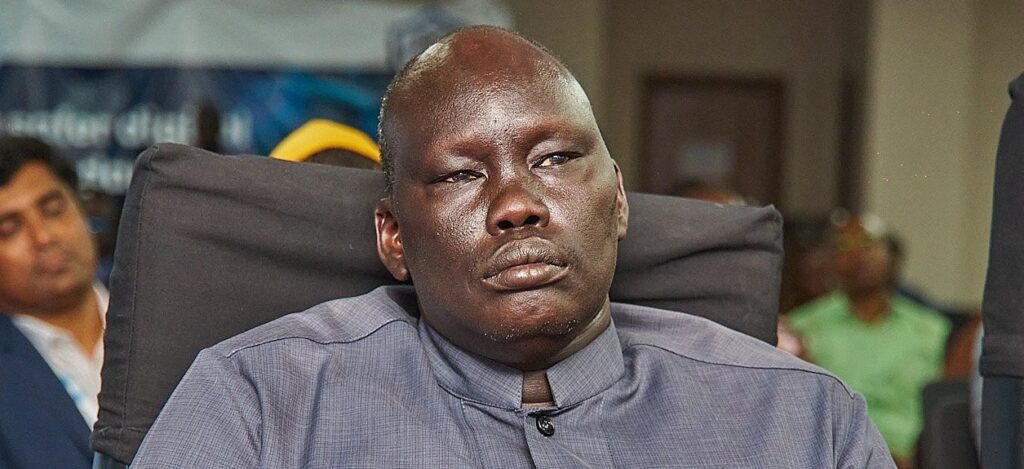
A senior South Sudanese official on Friday urged journalists to “adopt the language” of the government to avoid “problems”, in remarks highlighting the fragile state of press freedom in the country.
Speaking at an event in Juba marking World Radio Day, Deputy Information Minister David Yau Yau told reporters and editors that being a “best friend of the government” would help them steer clear of difficulties.
“You don’t need to backbite the government,” Yau Yau said. “The best is you need to adopt the language that we want so that you become our best friend.”
He described the government as “one-way traffic”, warning that those who go against its direction should “prepare for problem”.
‘Freedom as we want it’
Yau Yau urged independent media outlets to work closely with the Ministry of ICT and the state broadcaster to achieve what he called “shared national goals”.
While encouraging Juba-based journalists to report from conflict-affected regions, he likened their work to military operations, saying it was risky but a necessary sacrifice to obtain “the right information our people really need”.
“You guys must always be there where there’s ongoing security situation,” he said, calling on reporters to travel to remote areas with limited internet and network access.
However, he made clear that the government’s tolerance for independent reporting has limits. Authorities would guarantee freedom of expression only “up to the way that we want it”, he said, cautioning against what he termed “misuse” of that freedom.
South Sudan regularly ranks near the bottom of global press freedom indices, with rights groups accusing authorities of harassment, arrest and censorship of journalists.
Yau Yau pointed to a new cybercrimes and computer misuse bill, recently passed by parliament, as a key tool to regulate digital conduct.
Addressing the use of artificial intelligence in media, he said the South Sudanese government would “embrace” the technology but insisted it must be strictly controlled to promote national unity and prevent division.
‘Heartbeat of the nation’
Despite the warnings, Yau Yau praised radio as the “heartbeat of South Sudan” and a vital link between the government and rural communities.
He called for an end to what he described as the dominance of English in broadcasting, urging greater use of local languages in a country with more than 60 ethnic groups.
“Together we build, together we inform, together we progress,” he said, describing the Ministry of ICT as a partner to the media fraternity.
World Radio Day
On Friday, South Sudan joined the rest of the world in celebrating World Radio Day which is observed every year on February 13, highlighting the continued relevance of radio worldwide.
The day was proclaimed by UNESCO member states in 2011 and adopted by the United Nations in 2012, marking the establishment of United Nations Radio in 1946.
World Radio Day raises awareness of radio’s importance, encourages access to information and promotes cooperation among broadcasters.
The medium remains low cost, accessible and able to reach remote and marginalised communities.
The 2026 theme emphasises radio and artificial intelligence, noting that AI is a tool, not a voice, and that trust is built by radio broadcasters.

 and then