



During this year’s Women’s History Month, I would like to draw our attention to the experiences of South Sudanese women, whose struggles for equal rights and opportunities spanned decades and were impeded by many setbacks. However, amid these obstacles, South Sudanese women persisted.
The history of Sudan and South Sudan has been dominated by civil wars, military coups, population displacement, poverty, and political instability. Prolonged and recurrent conflicts have represented major obstacles to women’s advancement. Women and girls often bear the brunt of armed conflicts: many are internally displaced, others seek refuge in neighboring countries, while others resettle as refugee and asylum seekers in North America and Western Europe.
Following the Addis Ababa Peace Agreement in 1972, which ended the first civil war in Sudan (1955-1972), the Southern region witnessed relative peace and political stability for about a decade. This period allowed women and girls to attend school, leading to a gradual increase in female students and high school graduates. Women returning from exile joined the University of Khartoum to complete their studies. The opening of the University of Juba in 1977 further expanded opportunities, with more women pursuing postsecondary education and entering professions such as teaching and nursing.
Politically, women’s involvement dates to the 1970s and 1980s under the Sudan Socialist Union (SSU) during the presidency of Jaafar M. Nimeiri (1969–85), which promoted women’s participation. This initiative enabled a small number of educated South Sudanese women to join the SSU’s women’s wing and subsequently hold key positions within the government.
However, the resurgence of war, particularly during the second civil war (1983–2005), reversed many gains. Women faced displacement, violence, and extreme hardship. During this period, many joined the Sudan People’s Liberation Movement/Army (SPLM/A), supporting the struggle through mobilization, caregiving, and advocacy for peace. Their activism led to the creation of the Women’s Affairs Office within the SPLM, later renamed the SPLM Women’s League in 2005.
At the same time, global engagements strengthened women’s activism. Participation in the 1994 International Conference on Population and Development in Cairo and the 1995 Fourth World Conference on Women in Beijing amplified South Sudanese women’s voices on the international stage, highlighting the impact of conflict on civilians and the challenges faced in refugee and internally displaced persons camps.
In response to war-induced conditions, women organized across borders. In 1994, exiled South Sudanese women in Kenya established the Sudanese Women’s Voice for Peace to unite women and advocate for peaceful conflict resolution. Branches later emerged in Cairo and Alexandria. In North America, South Sudanese women formed organizations such as the South Sudan Women’s Empowerment Network in 2005, promoting women’s rights, education, and policy advocacy both in the diaspora and at home.
The Comprehensive Peace Agreement of 2005 marked a turning point by recognizing women’s role in the liberation struggle and introducing a 25 percent quota for women’s representation in government. This quota increased to 35 percent in 2018 following the Revitalized Agreement on the Resolution of Conflict in South Sudan. The quota system significantly expanded women’s participation in politics, leading to their appointment in cabinet positions, governorships, legislative leadership, diplomacy, and other senior roles.
Despite these gains, challenges persist. Cultural and customary practices such as early and arranged marriages, combined with the lack of clarity on the legal age of marriage in the Transitional Constitution, continue to hinder women’s progress. While the Constitution affirms equality before the law, its reliance on customary practices often undermines these protections. Early marriage limits girls’ access to education and reduces opportunities for careers in politics, business, and other professions.
Societal perceptions and patriarchal norms further constrain women’s participation in public life. The gendered division of labor places heavy domestic responsibilities on women, restricting their ability to engage in political and professional spheres. Many women spend most of their day performing household tasks, reflecting the enduring burden of inequality.
Today, more than three decades after the Beijing Conference, South Sudanese women continue to experience war, gender-based violence, and human rights violations. These realities align with the critical concerns outlined in the Beijing Declaration, particularly violence against women and women in armed conflict.
Yet, South Sudanese women have not surrendered. Education remains central to their empowerment, as recognized in both the Cairo Program of Action and the Beijing Platform for Action. Increasing numbers of women in South Sudan and the diaspora continue to pursue secondary, university, and postgraduate education, defying persistent barriers.
A new generation is also emerging. In 2020, South Sudanese professional women established the South Sudanese Women Intellectuals Forum, an online global platform promoting dialogue, participation, and social change. Through such initiatives, women continue to shape discussions on politics, health, law, business, and community development.
In conclusion, South Sudanese women have forged a collective commitment to gender equality, political participation, and peacebuilding that transcends ethnic and regional divisions. Through education, activism, and political engagement, they are reclaiming their space in the public sphere and challenging structures that marginalize them. As they sustain families and communities both within South Sudan and across the diaspora, their role remains central to the country’s future. When South Sudanese women rise, the nation rises with them.
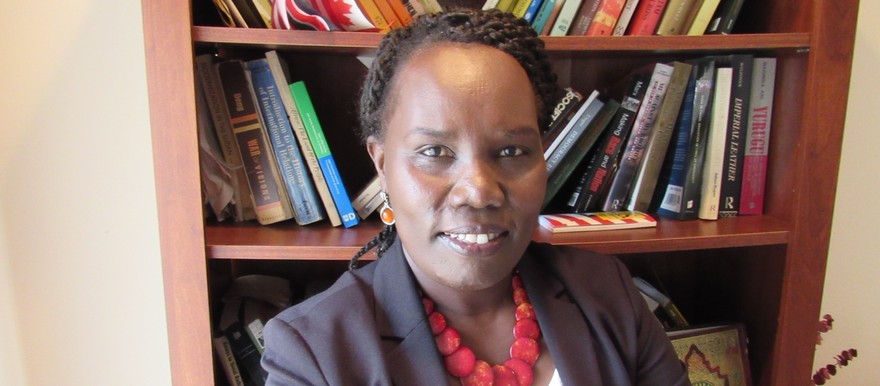
The writer, Jane Kani Edward, is an associate professor of African studies and chair of the Department of African and African American Studies at Fordham University in New York City, USA.
The views expressed in ‘opinion’ articles published by Radio Tamazuj are solely those of the writer. The veracity of any claims made is the responsibility of the author, not Radio Tamazuj.

 and then