



The political and ideological contest between Dr. John Garang and Dr. Riek Machar represents a defining tension in modern African revolutionary thought, reflecting fundamentally distinct conceptions of liberation, sovereignty, and the ethical foundations of political order.
Garang’s Vision: Transformative Unity
Dr. John Garang anchored his revolutionary project in the concept of the New Sudan: a reconstituted polity founded upon justice, equality, and structural inclusivity. He conceived liberation not as territorial separation but as the systematic dismantling of entrenched hierarchies and exclusionary institutions. His vision sought to integrate the Southern Sudanese struggle within a broader national horizon, wherein sovereignty would be collectively exercised by all Sudanese peoples.
This orientation parallels the revolutionary ethos of Ernesto Che Guevara, which transcended parochial nationalism and embraced continental emancipation. Both figures projected liberation beyond territorial limits into the realm of structural transformation. Yet history intervened before either vision could be fully institutionalized. Their deaths transformed their doctrines into enduring philosophical legacies, leaving their ultimate realization to the judgment and invocation of successive generations.
Within this inheritance lies the latent possibility of a confederal reinterpretation. Properly structured, such an arrangement could reconcile sovereign autonomy with strategic unity, potentially consolidating the demographic, economic, and geopolitical weight of the two Sudans into a more influential regional entity. In this sense, the ethical and structural logic of Garang’s project endures as an unresolved political alternative.
Machar’s Vision: Sovereign Independence
Dr. Riek Machar articulated a fundamentally different conclusion. He located Southern Sudanese unfreedom not merely in unjust governance but in the structural condition of unity itself. Liberation, in his analysis, required sovereign independence.
Machar’s doctrine pursued political separation as its definitive objective. Independence represented not retreat but the material realization of political self-determination. This strategic clarity contributed significantly to his domestic and regional appeal: while broader transformational visions remained unrealized, independence offered a concrete and immediate outcome. The eventual emergence of South Sudan as an independent state in 2011 marked the historical fulfillment of this objective.
Yet Machar’s political trajectory did not end with independence. Instead, it entered an extended phase of internal contestation and rivalry. His legacy continues to unfold within the practical challenges of governing, stabilizing, and legitimizing sovereign power.
Ideological Dialectic and Human Cost
The divergence between Garang and Machar reflects a deeper philosophical dialectic within liberation theory: the tension between universal transformation and particular sovereignty. Garang pursued structural reconstitution; Machar pursued sovereign statehood. Both strategies imposed profound costs on the Southern Sudanese population. The liberation struggle displaced communities, fractured social systems, and inflicted widespread suffering. These consequences reveal the enduring paradox of revolutionary politics: the pursuit of freedom often unfolds under conditions that compromise the very human dignity it seeks to secure.
Historical Meaning and Political Judgment
Garang and Guevara represent revolutionary visions interrupted before institutional realization; their legacies endure as philosophical propositions, open to reinterpretation. In contrast, Machar and Fidel Castro exemplify revolutionary doctrines that achieved sovereign statehood yet remain subject to the ongoing burdens of political consolidation and legitimacy. One legacy resides primarily in historical memory; the other remains subject to historical trial.
Conclusion
The ideological divergence between Garang and Machar reflects not merely a strategic disagreement but a fundamental philosophical dispute over the nature of liberation itself. Garang located freedom in structural transformation; Machar located it in sovereign independence. Both visions altered history, yet neither resolved the full burden of political emancipation. That burden now rests upon the realization of democracy, the protection of human rights, and the construction of legitimate political order. Without these, neither unity nor independence can fully vindicate the sacrifices made in their name.
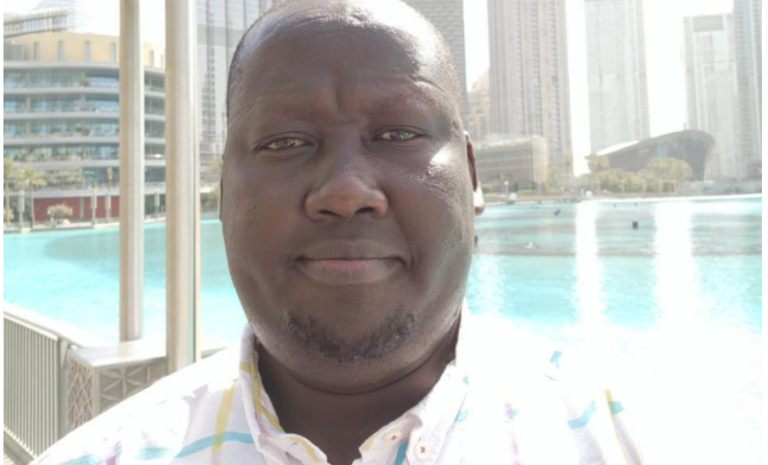
The writer, Gatkuoth Lok Gatwich, is a PhD candidate in Social Transformation (Governance) at Tangaza University, Nairobi, Kenya. He can be reached via email: dietlok7@gmail.com
The views expressed in ‘opinion’ articles published by Radio Tamazuj are solely those of the writer. The veracity of any claims made is the responsibility of the author, not Radio Tamazuj.

 and then