



The debate raised by Hon. Gen. James Kok Ruei regarding the origin of South Sudan’s right to self-determination calls for a clear, honest, and historically grounded response. History must be told with accuracy, not shaped by factional interests or personal claims.
A careful examination of the Juba Conference reveals that Southern Sudanese leaders were already deeply concerned about their political future and identity as early as 1947. The spirit of self-determination did not emerge in the 1990s; it was rooted in the early political consciousness of the Southern people who foresaw the risks of marginalization within a unified Sudan.
The armed struggle of Anyanya and later the Sudan People’s Liberation Army and Sudan People’s Liberation Movement further strengthened this aspiration. These movements fought for Southern autonomy, dignity, and justice long before later internal factions emerged. Their sacrifices formed part of the long and painful journey toward freedom.
When the SPLA/SPLM was founded in 1983 under the leadership of John Garang, it initially advocated for a united “New Sudan.” However, through internal debates, evolving political realities, and the clear will of the Southern people, the right of self-determination became one of the central objectives of the liberation struggle.
On 28 August 1991, Riek Machar declared himself leader of the Nasir faction in what was fundamentally a leadership dispute within the movement. It is important to state plainly that the Nasir declaration was primarily an attempt to change the leadership of the SPLA/SPLM. At that moment, the central issue was not originally the principle of self-determination, but rather an internal power struggle.
Therefore, it is historically inaccurate to claim that the idea of self-determination originated from the 1991 split or from one individual. Dr. Riek Machar’s political shifts—from Torit to Nasir in 1991, to Khartoum in 1997, to Nairobi in 2002, and back to Southern Sudan in 2003—must be understood within their broader political context. The aspiration for self-determination long predated these developments and belonged to the collective will of the Southern Sudanese people.
The right to self-determination was never the property of a faction. It was the dream of generations who endured marginalization, war, displacement, and sacrifice. Ultimately, it was realized through the SPLA/SPLM because the movement carried the military, diplomatic, and political weight necessary to secure it, culminating in the Comprehensive Peace Agreement, which paved the way for the 2011 referendum.
Above all, history must recognize the leadership of H.E. Salva Kiir Mayardit, President of the Republic of South Sudan, who guided the Southern Sudanese people through the final and decisive phase of the struggle. Under his leadership, the Comprehensive Peace Agreement was fully implemented, the 2011 referendum was conducted peacefully, and independence was declared. He led the people of South Sudan to freedom on behalf of all martyrs, commanders, politicians, and citizens who sacrificed for the nation.
Let us remain honest with our history. The right of self-determination originated from the collective will of the people of Southern Sudan. It was achieved through unity, sacrifice, and sustained national struggle—not through the claim of one individual.
History must unite us, not divide us.
Long live H.E. General Salva Kiir Mayardit.
Long live the SPLM Party.
Long live the Republic of South Sudan.
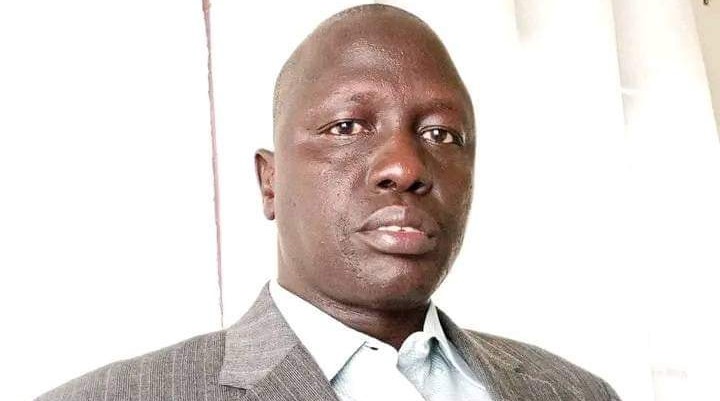
The writer, Isaac Mamer Ruk, is a former minister of land and housing in Jonglei State.
The views expressed in ‘opinion’ articles published by Radio Tamazuj are solely those of the writer. The veracity of any claims made is the responsibility of the author, not Radio Tamazuj.

 and then