



The South Sudan People’s Defense Forces (SSPDF) and the Sudan People’s Liberation Army–In Opposition (SPLA-IO) must be aware of the consequences of their actions during and after the conflict.
Since 2013, their forces have committed human rights violations, both knowingly and unknowingly. Therefore, the commanders at all levels should receive further training to better understand the International Humanitarian Law (IHL) and the International Human Rights Law (IHRL). Such training is essential to promote professionalism, discipline, and respect for human rights during military operations
The ongoing armed conflict between SSPDF and SPLA-IO in Jonglei State and other parts of country continues to raise serious concerns regarding compliance with IHL and IHRL.
The IHL, Geneva Conventions (1949), Common Article 3 (non- international armed conflicts) — provides for the humane treatment; prohibition of murder, torture, cruel treatment, and outrages upon personal dignity.
Additional Protocol II (1977): Arts. 4–6 — demands the protection of civilians, detainees, and persons hors de combat.
The International Criminal Law, Rome Statute of the International Criminal Court (1998), has the following provisions:
Art. 7 — Crimes against humanity (including rape when widespread or systematic)
Art. 8(2)(c) & (e) — War crimes in non-international armed conflicts
Art. 28 — Command responsibility
The UN Security Council laws provides for:
UNSC Res. 1325 (2000) — Women, Peace and Security
UNSC Res. 1820 (2008) — Sexual violence as a tactic of war
UNSC Res. 1888 (2009) — Leadership and accountability for sexual violence
UNSC Res. 2467 (2019) — Survivor-centered approach and accountability
There will be long-term implications resulting from both SSPDF and SPLA-IO forces being composed of trained military personnel and individuals with no formal training or education in military doctrine and principles during and after the conflict.
As a human rights activist and gender expert, I emphasize the principle of “Command and Responsibility,” which holds military leaders accountable for preventing, addressing, and responding to crimes committed by forces under their control. This doctrine must be applied in the context of the Hybrid Court for South Sudan, should it be established by the African Union, in collaboration with the Government of South Sudan and other international partners
Under the four Geneva Conventions of 1949 and their Additional Protocols, all parties to a non-international armed conflict are bound to respect fundamental principles, governing the conduct of hostilities. These include distinction, proportionality, military necessity, and precaution.
Civilians and civilian objects must never be the target of military operations. The deliberate killing, injury, or mistreatment of civilians during or after attacks on military installations constitutes a grave breach of IHL and may amount to war crimes under the customary international law and the Rome Statute of the International Criminal Court (ICC).
The Prisoners of War and Detainees Combatants captured, detained, or otherwise rendered hors de combat, must be treated humanely at all times. The killing of the prisoners of war or detained fighters is strictly prohibited and constitutes a violation of the Geneva Conventions. Summary executions and extrajudicial killings are unlawful and must be investigated and prosecuted.
Fighters who surrender or are no longer participating in hostilities due to injury or incapacitation are protected persons under IHL. Any attack against them is illegal and may constitute a war crime.
Sexual violence, including rape and abuse, is expressly prohibited under IHL and IHRL. Acts of sexual violence against women, girls, elderly persons, or any protected group constitute war crimes and, when widespread or systematic, crimes against humanity.
Both SSPDF and SPLA-IO bear full responsibility to ensure that their forces comply with IHL. The commanders may be held criminally responsible for crimes committed by forces under their control if they knew or should have known of such acts and failed to prevent or punish them.
As a gender and human rights expert, I consider it my professional and moral obligation to call upon all parties to the conflict to immediately take measures to prevent violations, including:
Mandatory training on IHL and military ethics
Clear rules of engagement consistent with IHL
Accountability mechanisms for violations
Cooperation with independent investigations in case both have committed human rights violations and abuses
The persistence of serious violations reflects the lack of professional military training, weak command structures, and entrenched impunity within armed forces on both sides of the conflict. Without urgent reforms, respect for IHL will remain minimal, and civilians will continue to bear the greatest burden of the war.
The protection of civilians is not optional—it is a legal obligation
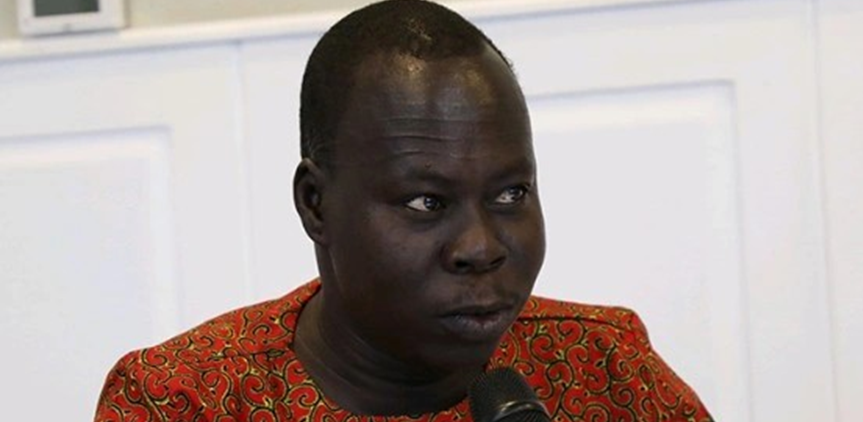
The writer, Ter Manyang Gatwech, is a human rights activist and gender expert working on human rights, governance, transitional justice, peacebuilding, gender equality, and accountability in South Sudan. He can be reached via email: termanyang24@protonmail.com

 and then