



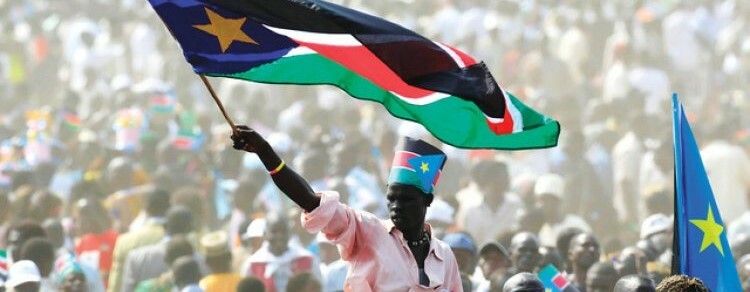
For more than a decade, South Sudanese civilians have lived under conditions of violence, repression, displacement, and political exclusion, while international diplomacy has struggled to translate concern into protection. This prolonged suffering exposes a central dilemma in global governance: when governments commit atrocities under the shield of sovereignty, how long can the principle of non-interference remain morally or legally defensible? South Sudan demonstrates that sovereignty, when abused, becomes not a safeguard for people but a cover for impunity.
History shows that even leaders long accused of war crimes and crimes against humanity cannot be protected indefinitely by diplomatic maneuvering or regional alliances. In South Sudan, President Salva Kiir’s political survival has relied heavily on regional protection and international hesitation, revealing how selective interpretations of sovereignty and strategic silence can enable repression while testing the credibility of international law.
One of the clearest illustrations of this dynamic is the role of regional actors, most notably Uganda, whose actions exemplify how regional protection can sustain abusive governance. Among all external partners, Uganda stands out as the single most influential regional actor propping up the Kiir government, combining military presence, diplomatic cover, and political legitimacy in a way no other state has matched. United Nations findings underscore this pattern. In March and December 2025, a United Nations Panel of Experts reported that Uganda violated a UN arms embargo by deploying troops, tanks, and other military equipment in direct support of the South Sudanese government. This was not an isolated incident. In November 2018, Kampala similarly transferred weapons, ammunition, and military equipment to Juba in defiance of the same embargo. Ugandan troops remain stationed in parts of Juba, openly disregarding Security Council mandates and reinforcing the perception that enforcement of international law is optional for regional allies.
This regional shielding has direct consequences for South Sudanese citizens, who increasingly question whether peaceful mobilization alone can still produce meaningful political change. President Kiir has deliberately undermined the September 2018 Revitalized Agreement on the Resolution of the Conflict in the Republic of South Sudan (R-ARCSS), delaying reforms, manipulating security arrangements, and consolidating power through coercive institutions. With Uganda’s backing sustaining the regime, peaceful pressure has yielded few tangible results, raising serious doubts about diplomacy divorced from enforcement mechanisms. In this case, Kiir’s regime has committed mass atrocities and continues to perpetrate crimes in Jonglei and Upper Nile States, as well as in other parts of the country.
Acknowledging the risks associated with international engagement does not weaken the case for action; it strengthens it. The greater danger in South Sudan lies not in measured, collective engagement, but in prolonged inaction. Years of diplomatic caution, selective neutrality, and closed-door negotiations have coincided with mass displacement, famine, and entrenched violence. UN-mandated tools, such as targeted sanctions, enforcement of the arms embargo, and strengthened civilian protection mandates, exist precisely to limit harm and deter further atrocities. The status quo has proven more destabilizing and deadly than any lawful, collective response.
Critics of international pressure frequently invoke sovereignty as an absolute shield, a position most visibly advanced by Kiir’s regional ally, Yoweri Museveni. By treating sovereignty as inviolable regardless of state behavior, his government portrays diplomatic pressure, sanctions, and accountability mechanisms as violations of the UN Charter. This argument is routinely deployed to deflect scrutiny and delegitimize international engagement, even as documented violations of international law persist.
Calls for “forceful measures” are often intentionally mischaracterized by authoritarian regimes such as Kiir’s. These calls do not endorse unilateral military action, proxy warfare, or armed rebellion—approaches that have historically intensified civilian suffering. Rather, they refer to collective mechanisms explicitly provided under the UN Charter and reinforced by the Responsibility to Protect (R2P) doctrine. These include Security Council–authorized enforcement actions, robust peacekeeping mandates, and international accountability processes. Under international law, the use of legitimate force is constrained, conditional, and intended solely to prevent mass atrocities—not to advance geopolitical interests.
This distinction is often obscured in debates on South Sudan, where sovereignty is invoked selectively to shield state abuse while ignoring the moral and legal obligations that accompany it. International law both protects sovereignty and imposes obligations when sovereignty is abused. The UN Charter affirms non-interference in Articles 2(4) and 2(7), while Chapter VII authorizes coercive measures when a situation threatens international peace and security. The Responsibility to Protect, endorsed by UN member states in 2005, reaffirms that when a state is unwilling or unable to protect its population, the international community has a duty to act collectively. Applied correctly, these principles make external engagement through sanctions, diplomatic pressure, and accountability mechanisms not only lawful but necessary.
In practice, South Sudan’s political trajectory depends not only on Kiir himself but on the regional and international network that shields him from consequences. Uganda provides diplomatic cover and military support, while other regional and global actors reinforce the regime through silence or strategic neutrality. This collective inaction undermines the credibility of international norms and emboldens further repression.
International engagement is not a substitute for South Sudanese leadership; rather, it is essential to safeguard it. Without external protective mechanisms, civil society activists, journalists, women’s groups, and opposition voices face arbitrary detention, intimidation, censorship, and violence, making peaceful civic action nearly impossible.
Currently, South Sudan’s political space is severely constrained, making it impossible for meaningful opposition to operate freely or safely. On March 26, 2025, President Kiir placed the main opposition leader, Dr. Riek Machar, under house arrest and suspended him from his position as First Vice President, following a highly politicized and performative process designed to signal absolute control. This move dismantled organized political dissent. Beyond elite politics, independent media outlets are suppressed, civil society organizations face legal and security harassment, and the security services operate with near-total impunity. Under these conditions, calls for “South Sudanese-led solutions” ring hollow unless genuine political space is restored.
Under Kiir, South Sudan has effectively become an extension of Uganda’s decades-long authoritarian political system, marked by systematic repression. Opposition leaders, civil society activists, journalists, and other dissenting voices are routinely harassed, arrested, tortured, and, in some cases, killed. The crisis in South Sudan will not be easily resolved. If the world still cares about peace in the country, East African leaders—excluding Museveni—together with the international community, must end their more than decade-long silence, which has served only to enable Kiir’s regime. Without external pressure, the environment remains ripe for continued oppression and unchecked violence.
In such a climate, it is crucial to recognize that when a government attacks its own citizens and persistently blocks all peaceful avenues for reform, rebellion ceases to be merely political and becomes a tool for survival, making the arming of South Sudanese resistance or rebels justifiable. While most South Sudanese prefer a peaceful, internally driven resolution, Kiir has consistently shown no interest in that path. In the calculations of Kiir and Museveni, atrocities are transactional: Museveni remains indifferent as long as Uganda benefits from military involvement, while Kiir is willing to sacrifice the nation’s future and sovereignty to maintain power. These dynamics make clear that the status quo cannot endure without further bloodshed.
Given this reality, meaningful reform and lasting peace in South Sudan can only be achieved through organized internal resistance or mechanisms supported by external powers. Without decisive action—both internal and external—the cycle of violence and exploitation will persist, leaving ordinary South Sudanese to bear the cost of leaders who prioritize power and profit over the nation’s future.
Supporting the South Sudan peace process, therefore, requires deliberate international pressure to protect civil society, amplify opposition voices, and uphold basic political freedoms. The East African region and the broader global community should not abandon South Sudanese citizens to a regime that has systematically violated international norms, undermined peace agreements, and criminalized dissent to maintain power.
One conclusion is unavoidable: international engagement in South Sudan is not only legitimate but also essential. Affirming this legitimacy through sanctions, diplomatic pressure, and sustained support for civil society is critical to ending impunity and preventing further suffering.
Without decisive regional and international action, Kiir’s impunity will persist, and the cycle of violence will continue. The people of South Sudan have suffered long enough. Complicit silence, selective outrage, and diplomatic indifference have allowed state-sanctioned violence to continue unchecked. The choice before regional leaders and the international community is clear: either continue shielding repression or take action to uphold accountability, enforce the peace agreement, and protect the people of South Sudan—ignored for more than twelve years.
The writer, Duop Chak Wuol, is an analyst, critical writer, and former editor-in-chief of the South Sudan News Agency. He is a graduate of the University of Colorado, focusing on geopolitics, security, and social issues in South Sudan and the broader East African region. His work has appeared in leading regional and international outlets, including AllAfrica, Radio Tamazuj, The Independent (Uganda), The Arab Weekly, The Standard (Kenya), The Chronicle (Ghana), Addis Standard (Ethiopia), and Sudan Tribune. In 2017, the Ethiopian Broadcasting Corporation (EBC) highlighted his article on Prime Minister Meles Zenawi’s role in Ethiopia’s economic transformation. He can be reached at duop282@gmail.com.
The views expressed in ‘opinion’ articles published by Radio Tamazuj are solely those of the writer. The veracity of any claims made is the responsibility of the author, not Radio Tamazuj.

 and then