



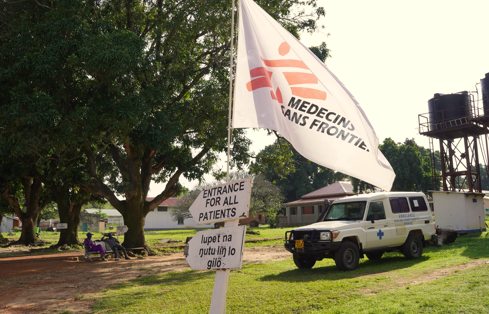
Médecins Sans Frontières/Doctors Without Borders (MSF) has been working alongside the Ministry of Health (MoH) since February 2023 to restore secondary healthcare services in Central Equatoria State’s Kajo-Keji County, an area currently recovering from years of severe conflict.
A press release extended to Radio Tamazuj said that after three years of successful collaboration with MoH, MSF will launch a gradual and phased handover of these healthcare services to MoH and other local partners.
The process is scheduled to begin in June 2026 and is expected to conclude by December 2026.
“As part of the handover, MSF will leave all infrastructure, equipment, and relevant supplies to the MoH, aiming to ensure a smooth transition. The phased approach will aim to ensure minimal disruption of services, and patients will be able to continue accessing care during the process,” said Ferdinand Atte, MSF Head of Mission in South Sudan. “The phased handover process involves hiring staff, conducting training, capacity building, and putting logistical and other systems in place.”
MSF and MoH are the only providers of secondary healthcare in KajoKeji County. Since 2023, MSF has provided more than 97,980 outpatient consultations, admitted 8,806 patients for inpatient care, assisted 2,077 births, conducted 44,351 emergency room consultations, and treated 27,957 patients for malaria in the County. The organization also trained 155 nurses and midwives through the MSF Academy programme and sponsored two doctors in one of the European universities to receive advanced surgical training.
Services in KajoKeji Civil Hospital include maternity and neonatal care, pediatrics, emergency medicine, intensive care, surgery, and internal medicine.
“These services have played a vital role in meeting the urgent and life-saving healthcare needs of the local community and those returning to the area, following violence between 2016 and 2018 that forced most of the population to flee to Uganda and left local infrastructure, including healthcare facilities, severely damaged and non-functional,” the statement reads in part. “The X-ray unit will be the first function to be fully transferred to the Ministry of Health in June 2026. Other essential lifesaving operations at the hospital will continue to operate under MSF support until the end of October. In addition to the hospital-based care, since 2024, MSF has been supporting 10 Primary Health Care Centers (PHCCs) across the country.”
“This support encompasses the provision of medical supplies, training, and incentives for healthcare workers, as well as strengthening the County’s ambulance referral system,” the statement added.
In addition, MSF addressed the long-term effects of conflict by providing mental health services to support people experiencing trauma, anxiety, and depression.
“As an emergency medical organization, MSF will focus on pressing medical and humanitarian needs in other regions of South Sudan. However, MSF will continue to monitor the situation in Kajo-Keji and Central Equatoria State, and remain prepared to respond rapidly to any new emergencies in the area,” the statement concluded. “MSF has been present in what today is South Sudan since 1983 and remains one of the largest medical humanitarian actors in the country, currently operating in seven states and two administrative areas.”

 and then