



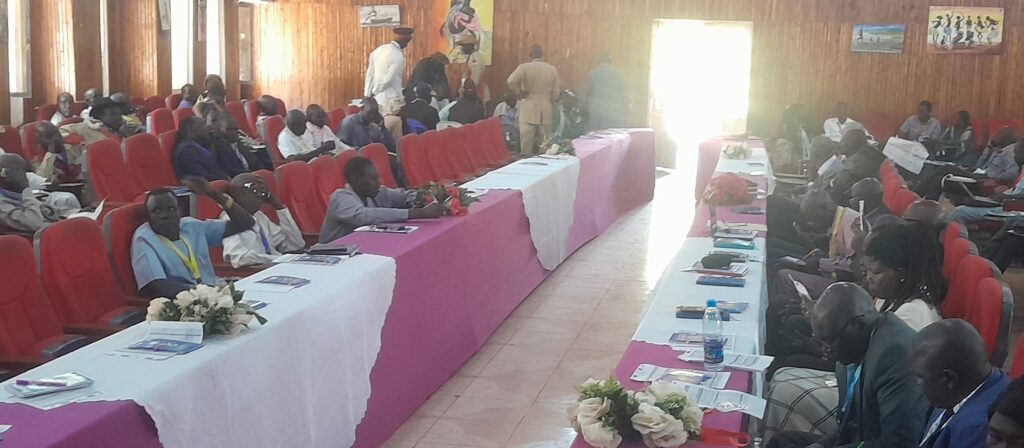
A three-day inter-state conference on pre-seasonal cattle movement opened Wednesday in Wau, Western Bahr el Ghazal State, bringing together about 150 participants from Warrap, Northern Bahr el Ghazal and Western Bahr el Ghazal states.
The annual meeting aims to address challenges faced by cattle herders from Warrap and Northern Bahr el Ghazal and farmers in Western Bahr el Ghazal, particularly during seasonal migration to grazing areas.
The conference marks the 13th gathering since the first Marial-Bai agreement was signed in 2013 to reduce conflicts between farmers and cattle keepers. Participants are reviewing the agreement, which outlines compensation rights for both farmers and herders in cases of crop damage or livestock loss.
Luciano Thomas, deputy chairperson of the Inter-State Cattle Movement Committee, said the meeting is intended to assess progress and identify challenges in implementing past agreements.
“The focus of the conference is to review previous agreements to see what has worked and what challenges remain,” Thomas told Radio Tamazuj on Wednesday.
He added that the timing was important as cattle from Warrap and Northern Bahr el Ghazal are expected to begin moving toward farmlands in Western Bahr el Ghazal.
Thomas said tensions between farmers and herders had eased this year, with only reports of cattle arriving earlier than expected and no major incidents formally presented to the committee.
“So far, we have not received many complaints, apart from early arrivals of cattle in farming areas,” he said.
He expressed optimism that the conference would strengthen implementation of the Marial-Bai agreement and lead to new recommendations to improve coexistence. Thomas also urged both farmers and herders not to take the law into their own hands in the event of disputes, stressing the need for peace and stability.
Stephen Robo Musa, Western Bahr el Ghazal state coordinator for the Community Empowerment for Progress Organization, said the conference helps build trust between the two communities.
“This conference builds relationships between herders and farmers and addresses challenges related to cattle movement in farming areas,” Musa said. He noted a reduction in violence in recent years, calling it a significant achievement.
Musa said the meeting is also addressing concerns over the presence of firearms among cattle keepers. However, he acknowledged ongoing challenges, particularly delays in compensation to farmers.
“Compensation cases often take too long, which creates further problems because affected farmers do not receive payment on time,” he said.
The conference is being held under the theme: “Strengthening collective commitment to cattle seasonal movement towards healthy and better living for all.”

 and then