



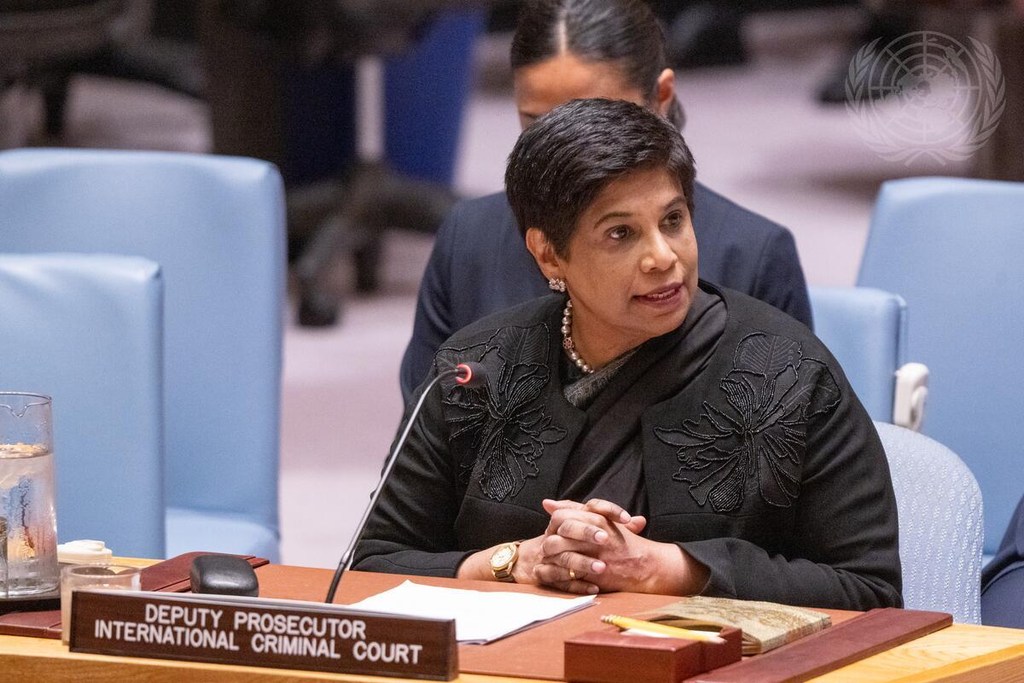
The gruesome crisis in Sudan has “darkened even further” in the last six months, the Deputy Prosecutor of the International Criminal Court (ICC) said on Monday, citing a pattern of large-scale crimes against humanity that is being repeated “in town after town” across the country’s Darfur region.
Nazhat Shameem Khan, the Court’s second-in-command, made the revelation while addressing the UN Security Council.
“Darfuris, as we speak, are being subjected to collective torture […] including rape, arbitrary detention, executions and mass graves, all perpetrated on a mass scale,” she stated. “The picture that is emerging is appalling.”
Describing her Office’s ongoing collection of evidence and intensifying investigations into alleged crimes committed in West Darfur and in the city of El Fasher — which was seized by Rapid Support Forces (RSF) fighters in October 2025 — she cited video, audio, and satellite data clearly indicating that war crimes and crimes against humanity have been committed.
In some footage, she said, RSF fighters are seen celebrating executions of non-Arabs and desecrating corpses. Her Office is also analysing evidence of mass crimes committed in 2023 in the West Darfur town of El Geneina, which are now being mirrored in El Fasher. “This criminality is being repeated in town after town in Darfur,” she said, warning that it will continue until the conflict, and the sense of impunity that fuels it, come to an end.
Among several landmark strides made by the Court in its Darfur case, she noted the first conviction resulting from a referral by the Security Council and its first conviction on grounds of gender-based persecution. In late 2025, the Court unanimously indicted Ali Muhammad Ali Abd-Al-Rahman — also known as Ali Kushayb, a senior commander of the notorious Janjaweed militia — for crimes against humanity and subsequently sentenced him to 20 years in prison.
Noting that she would have preferred to brief the Council in person but had been denied a visa by the host country, she urged States not to frustrate the Court’s work and to support its investigations.
Council members also took the floor to outline their positions, saying justice “Must Be Served to the Sudanese People.”
“The humanitarian disaster in Darfur is catastrophic and unprecedented,” said Greece’s representative. He joined other speakers in welcoming the indictment and sentencing of Mr. Al-Rahman, adding: “It sends therefore a powerful message […] to the affected communities and to the international community on what can be achieved on the basis of the referrals and the common action between the Security Council and the [Court].”
The representatives of Denmark and Latvia were among those speakers who underlined the importance of accountability to a peaceful future in Sudan. While welcoming the Sudanese Government’s increased cooperation and engagement, the former called for renewed efforts to arrest other fugitives sought by the Court.
The representative of France agreed, describing the extreme suffering of civilians in Sudan as “the fruit of absolute scorn for international law” by the warring parties. “Justice must be served to the Sudanese people,” he said, adding that is exactly what the International Criminal Court is working to do.
Visa Denial Preventing Deputy Prosecutor’s Attendance Draws Criticism
Turning to the sanctioning of the Court’s senior officials, he reminded the United States of its responsibilities as host country of the United Nations, joining others — including the representatives of the United Kingdom, Panama, and Colombia — in voicing regret that the Deputy Prosecutor was prevented from attending the Council meeting in person.
“Accountability for serious crimes committed against civilians is indispensable in order to break cycles of violence and deter future atrocities,” agreed the representative of the Democratic Republic of the Congo, also speaking on behalf of Liberia and Somalia. In addition, he stressed: “We must scrutinize the role of external actors in fueling the conflict and monitor these destructive roles with transparency.”

 and then