



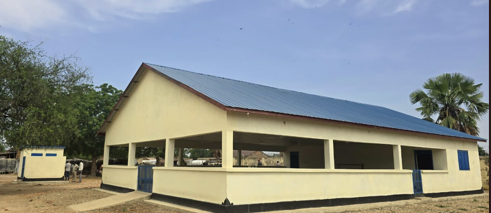
Newly established customary courts in the Western Bahr el Ghazal State are beginning to transform how communities resolve disputes, offering faster and more structured justice while exposing gaps in access, awareness, and resources.
The courts, introduced under a peacebuilding programme supported by the International Organization for Migration (IOM), mark a change from informal, elder-led mediation to a system guided by written customary law.
“Before, we had no written laws, but now we have a clear system in place,” said Emilio Ulau. “Justice is now more organized and accessible.”
For decades, disputes in much of South Sudan were settled through oral traditions, often requiring consultations among chiefs across different areas, a process that could take weeks. Under the new system, customary laws formally adopted in April 2025 provide clear guidance for courts, reducing delays and inconsistencies.
“Previously, cases relied on elders and could take a long time,” said Silvius Pons Ukola Ponciano. “Now, courts have the information they need in the law itself and can resolve cases more efficiently.”
The reforms are part of a European Union-funded programme aimed at strengthening peace, livelihoods, and access to justice across Western Bahr el Ghazal and parts of Warrap State.
Local practices within a formal system
Despite the introduction of written law, the courts continue to reproduce local customs.
“In our customary system, we sometimes use items like honey as a form of value,” Ulau said, describing how compensation and fines are determined. “Honey is important in our community because its value is stable.”
While such practices remain central to local justice, leaders say clearer national guidance is needed to standardize them.
Although the courts have improved access to justice, practical challenges persist, particularly in rural areas.
Hearings can take weeks, and in some cases are delayed entirely due to logistical constraints.
“When it rains heavily, access to the court becomes difficult,” Ulau said. “Some cases remain pending because people cannot reach the court.”
Limited infrastructure, including poor roads and a lack of equipment, continues to affect court operations.
Awareness gap slows impact.
Community leaders say many residents still lack access to copies of the new customary law, limiting understanding and compliance.
“We need more copies of the customary law,” Ulau said, calling for wider distribution and translation into Arabic and English.
Without broader awareness, leaders warn, the benefits of the reforms may not be fully realized.
Changing social norms
The new legal framework is also beginning to influence social practices.
One community member, James Umori, said he recently applied the law when negotiating his daughter’s marriage.
“In the customary law, we don’t go beyond a certain number of cows,” he said. “I used that as an example so others can follow.”
He added that better dissemination of the law is needed to ensure communities adopt the changes consistently.
Part of a broader peace effort
The courts form part of a wider peacebuilding programme led by IOM, which includes early warning systems, youth engagement, and support for civil society organizations.
“We have established committees to monitor and report conflict risks, linked to a national platform for coordinated response,” said Sergios Pons Ukola, IOM’s Project Assistant for Peacebuilding in Wau County
He added that youth groups, once difficult to engage, are now participating more actively in dialogue and peace initiatives.
“Through workshops and dialogue, youth are now more open and ready to implement activities,” he said.
To align customary practices with national standards, experts in human rights and child protection were involved in drafting the laws.
“The customary laws are based on longstanding community norms, but they were reviewed to ensure they do not conflict with the constitution and the Bill of Rights,” Ponciano said, noting that harmful practices such as forced and child marriage were addressed.
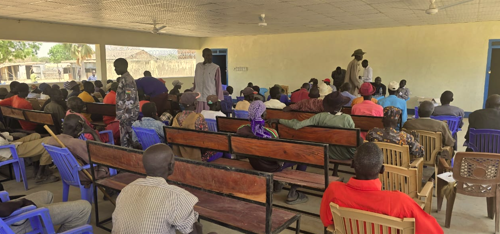
Community ownership
Two customary courts, one in Baggari and another in Turalei, have been completed and handed over to communities, where they are already being used to resolve disputes.
Religious leaders, including Angelina Ayen Chagai, say they are reinforcing peace messages through churches, promoting reconciliation and social cohesion.
But community leaders warn that without wider awareness and practical support, the impact of the new system could be limited.
“We need more copies of the law, more awareness, and support to make this system work for everyone,” Ulau said. “If people do not understand the law or cannot access the court, justice will remain out of reach for many.”

 and then