



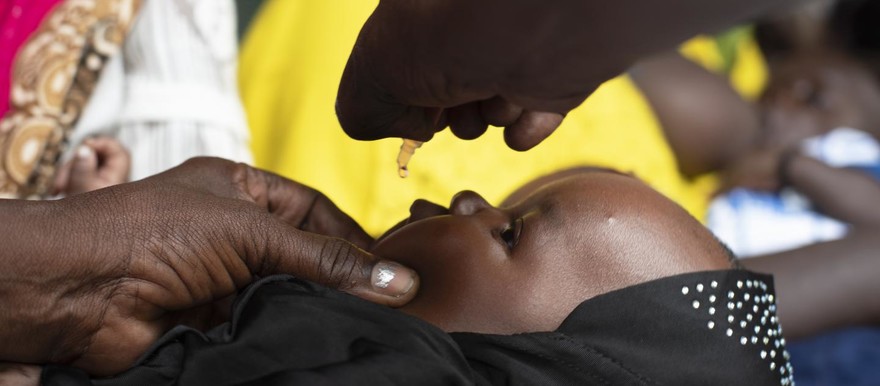
Health authorities in Eastern Equatoria state have launched a four-day polio vaccination campaign, deploying 1,722 vaccinators to reach children across communities and prevent the disease, which can cause permanent paralysis.
Vaccination teams are expected to visit households, schools, markets, churches and other public gathering places to ensure eligible children receive the vaccines.
Speaking at the launch at Torit Freedom Square on Tuesday, Dr. Amin Gordiano, director general at the state Ministry of Health, said the campaign would deploy 1,722 vaccinators and 159 supervisors to improve immunization coverage.
“No community is to be missed, and no child should be left behind,” Gordiano said, urging parents and communities to welcome vaccination teams into their homes.
The campaign will use two oral vaccines: the novel oral polio vaccine type 2 (nOPV2), which targets poliovirus type 2, and the bivalent oral polio vaccine (bOPV), which protects against types 1 and 3.
John Sokwarto, an Expanded Programme on Immunization representative in Eastern Equatoria, said teams would use a house-to-house approach, alongside temporary vaccination posts at markets and other public gathering places.
Dr. Emmanuel Timothy, representing the World Health Organization (WHO), said reaching every eligible child would require joint efforts by health authorities, partners, parents and community leaders.
He warned that children missed during vaccination campaigns could remain vulnerable to poliovirus infection and its potentially life-altering consequences.
Opado Godfrey, a representative of Health Link South Sudan, said the government and communities are leading the campaign, with implementing partners supporting delivery at the grassroots level.
Godfrey urged chiefs, religious leaders and other community representatives to help vaccination teams reach families, particularly in hard-to-reach areas. He also stressed the importance of accountability in vaccine distribution and administration, saying every dose given should be properly recorded.
Osuru Peter, representing the United Nations Children’s Fund (UNICEF), urged parents to ensure children aged zero to 59 months received the vaccine. He said polio had no cure but could be prevented through vaccination.
Peter also called on community leaders to counter misinformation about immunization and encourage families to cooperate with health workers.
Polio is a highly infectious disease that primarily affects children under five and can cause permanent paralysis.
 and then