



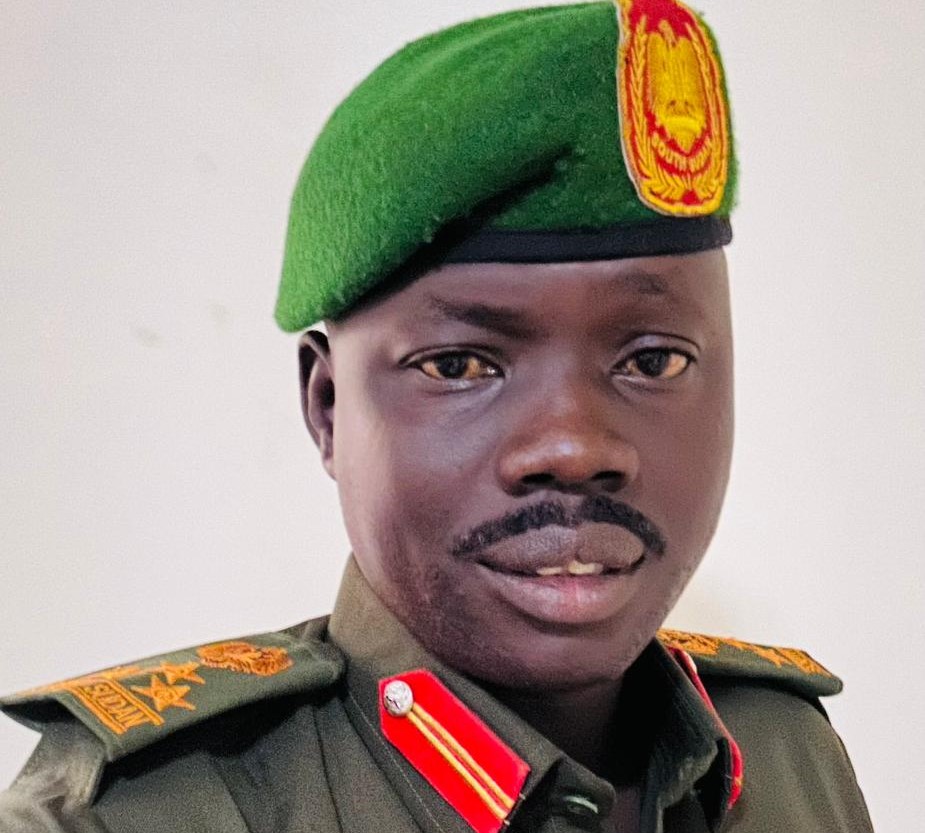
A senior commander in the South Sudan Patriotic Army (SSPA) has accused Agriculture Minister and former Vice President Hussein Abdelbagi Akol of illegally recruiting new fighters and falsely claiming command over armed forces amid a long-running leadership dispute within the party.
Maj. Gen. Deng Mayar Barjok, deputy commander of the SSPA led by Dr. Costello Garang, told Radio Tamazuj on Monday that Abdelbagi has no authority over SSPA forces and was dismissed from the movement earlier this year. He alleged that Abdelbagi misrepresented himself to the presidency by presenting individuals as SSPA forces under his command.
“Hussein has nothing to do with the SSPM/A and does not command any army,” Deng said. “There was an official letter dismissing him from the party, yet he continues to use the SSPM/A name and portray himself as its leader.”
The accusations follow Abdelbagi’s submission last week of documents to President Salva Kiir requesting the integration of what he described as his forces into the South Sudan People’s Defence Forces (SSPDF). The files were presented in the presence of Presidential Adviser on National Security Affairs Tut Gatluak Manime.
Abdelbagi’s move was seen as formally relinquishing his position as overall commander of forces aligned with a faction of the opposition umbrella South Sudan Opposition Alliance (SSOA), though authority over those forces remains contested.
The SSPM/A was originally founded and led by presidential adviser Dr. Costello Garang, but internal divisions emerged after Abdelbagi was appointed vice president in 2020 under the 2018 revitalised peace agreement. Both men have since claimed legitimacy over the movement and announced the dismissal of the other.
SSPA forces on the ground are commanded by Agany Abdelbagi Akol, the elder brother of Hussein Abdelbagi.
Deng said SSPA forces joined the 2018 peace process as part of the SSOA and followed agreed security arrangements, including registration, screening, training, and unification under international monitoring mechanisms.
“The JMCC managed registration, while the JTSC and JDB oversaw training and unification. About 75% of the process was completed,” he said.
He added that most unified forces have already been deployed and integrated into national structures, with only some middle-echelon positions still unresolved.
Deng warned that any recruitment outside the framework of the 2018 peace agreement would violate its provisions and risk destabilizing the country’s security arrangements.
“The army is under the authority of the state and the president, not individual politicians,” he said. “There must be only one national military structure.”
In response, Stephen Lual Ngor, spokesman for the SSPM faction aligned with Hussein Abdelbagi, released a statement asserting the legitimacy of their leadership.
According to the statement, the Movement’s National Leadership Council convened an extraordinary session on 23 November 2024, during which it adopted “decisive and binding resolutions” in line with the SSPM Constitution of 2022.
The statement denounced what it called “attempts at deception and impersonation” by the former chairperson, including the recruitment of individuals and groups with no official affiliation to the Movement.
Under the peace agreement that ended South Sudan’s five-year civil war, all armed groups were to be unified into a single national army. The process has faced repeated delays due to funding shortages, logistical problems, and political disagreements, although the first batch of unified forces has already graduated.
The agreement explicitly bans the recruitment of armed forces outside its security arrangements.
South Sudan’s transitional government is preparing for national elections scheduled for December 2026, amid growing political tensions and complaints from the SPLM-IO party led by detained First Vice President Riek Machar.

 and then