



The South Sudanese government has confirmed a major cross-border withdrawal of Sudanese Armed Forces (SAF) personnel into its territory, following clashes with the rival Rapid Support Forces (RSF) near the strategic Heglig oilfields.
The RSF seized Heglig, the country’s largest oilfield, on Monday, as the paramilitary group continued to make gains against the Sudanese Armed Forces (SAF) in the resource-rich south.
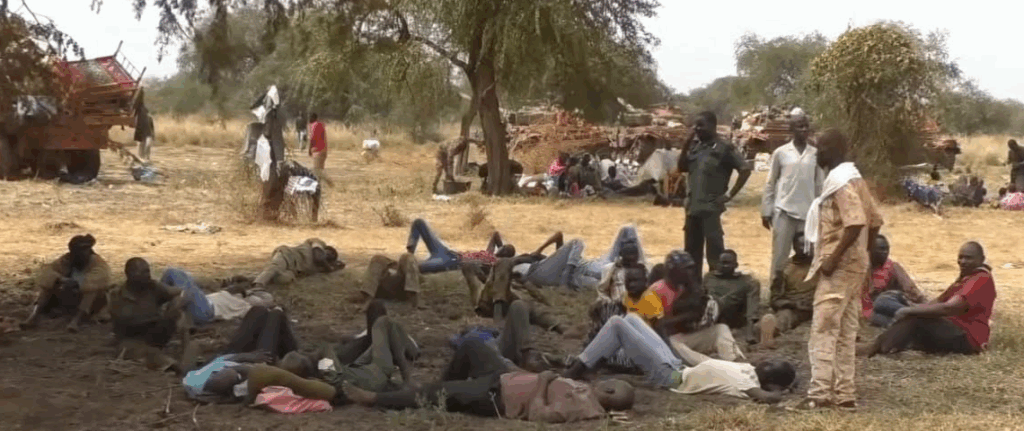
Following the RSF takeover, South Sudan’s state television broadcast footage showing South Sudanese soldiers alongside RSF fighters in Heglig. Footage also showed Sudanese army troops crossing into South Sudanese territory after withdrawing from the oil facility after its capture by the RSF.
Heglig, a small border town between Sudan’s West Kordofan state and South Sudan, hosts some of Sudan’s most important oil installations, including about 75 wells, storage tanks and processing stations.
The field processes between 80,000 and 100,000 barrels of oil per day for Sudan and South Sudan. A pipeline to Port Sudan runs through the area, meaning the loss of Heglig delivers a significant blow to the Port Sudan-based government’s remaining revenue stream, including fees from the transit of South Sudanese oil.
Heglig is a crucial stop on the 1,600-kilometre Greater Nile Oil Pipeline, which carries crude from South Sudan’s Unity oilfield to Port Sudan for export.
Speaking to reporters in Juba on Thursday, Ateny Wek Ateny, South Sudan’s Minister of Information, said SAF units, led by Brigadier Tariq Mokhtar, had withdrawn into South Sudan’s Unity State.
The SAF soldiers, a total of 1,650 non-commissioned officers and 60 officers, handed over their weapons to the South Sudan People’s Defense Forces (SSPDF) and surrendered, he said. Plans are underway to return them safely to Sudan.
Ateny, who is also the government spokesman, confirmed that South Sudan has brokered a tripartite security agreement between the SSPDF, SAF, and RSF. Under the deal, the SSPDF has taken over full responsibility for securing the Heglig oil zone.
As part of the agreement, RSF fighters have pulled back to the northern part of the Heglig oilfield, leaving the SSPDF in charge of the site security.
“They have to leave the oil field. Of course, the contest has been going on around the oil field simply because each party in the conflict wanted to control the oil field,” Ateny emphasised.
He said South Sudan is mediating between the two warring Sudanese parties to safeguard the flow of oil.
“Our forces (SSPDF) are friendly to both parties in the war in Sudan. They are not taking sides in the fight. We are the ones mediating between the two,” Ateny said.
“President Salva Kiir contacted both leaders (of RSF and SAF) to de-escalate the situation and also to avoid fighting in the oil field because both parties may have the power to destroy the oil field but they may not have the power to stop [the flow from] a burst oil field.”
President Salva Kiir serves as the guarantor of the agreement signed this week in Heglig, ensuring that both Sudanese sides adhere to the deal and avoid further fighting near the oilfield.
Ateny said the oilfield infrastructure had not been destroyed, affected or damaged, and the oil continues to flow.
“We have no report of any major damage that could have halted the production of the oil,” he stated.
As tensions rose, the SSPDF reported that a drone strike by Sudanese forces killed seven South Sudanese soldiers at Heglig oilfield on Tuesday.

 and then