



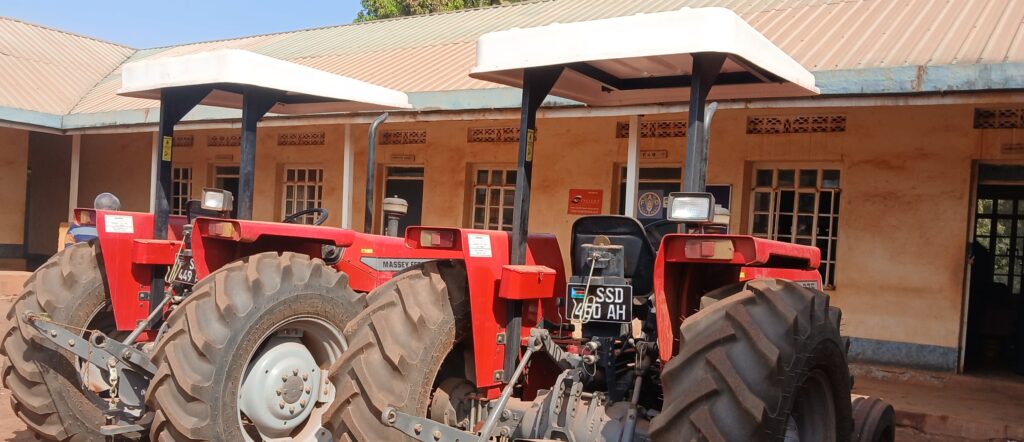
Western Equatoria State has received two tractors from the National Ministry of Agriculture to support mechanized farming and increase food production, state officials said Monday.
State Agriculture Minister Letecia Gbafu told reporters in Yambio that the delivery is part of a national donation made in 2024, under which Western Equatoria was allocated four tractors. Two were given to the Azande Kingdom, while the remaining two were formally handed over to the state ministry.
Gbafu, who took office in July, said the equipment will help intensify agricultural activities next year as the state seeks to boost output and reduce hunger.
“Next year, we are going to embark seriously on agriculture to boost farming in Western Equatoria, produce more food and reduce suffering,” she said, adding that the tractors will be made available to farmers and groups cultivating large tracts of land.
She said the machines are expected to ease land preparation for individual farmers, cooperatives and organized farming associations, and called on development partners to increase support for the agriculture sector.
The ministry’s director general, Mariano Erneo Mangu, said the tractors were received through the national ministry and will be managed by the state agriculture department to support farmers across the state, including in Yambio County.
Mangu said the ministry plans to train local farmers and rent out the tractors to cooperative societies and farming groups. He urged farmers to book the equipment early and prepare their land in January ahead of the planting season.
Senior agriculture inspector Santo Babala said the tractors could significantly improve efficiency and raise food production if properly managed. He called for fair access, close supervision and technical support for farmers using the machinery.
The state ministry said the tractors will be used for land preparation ahead of the upcoming planting season and are part of broader national efforts to promote mechanized farming and reduce reliance on traditional tools that limit large-scale production.
Western Equatoria is considered one of South Sudan’s key agricultural regions, and officials say the new machinery is expected to improve food security and livelihoods.

 and then