



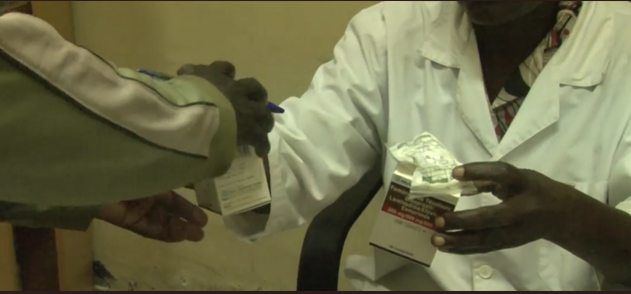
The Western Equatoria State HIV/AIDS Commission has reported 16,297 people living with HIV/AIDS in 2025, according to the latest state data, showing a marginal change compared to 2024 estimates, when about 16,200 cases were recorded during routine surveillance.
Speaking to the media on Monday, Elizabeth Dominic Dabi, Focal Person for Information and Public Relations at the commission, said the statistics are based on data compiled in June 2025 across all ten counties.
She noted that awareness and treatment coverage have continued to improve compared to the previous year.
Dabi explained that in 2025, 15,295 people knew their HIV status, 14,073 were enrolled on treatment, and approximately 95% of identified patients were aware of their condition.
She added that adherence to medication remains a concern despite progress, as gaps still exist in follow-up, viral load monitoring, and consistent drug use.
“Our main implementing partners include FCIDA, SSG, CMMB, AAA, AMRSF, COPE, SNNP, and NEPO, working together with the Western Equatoria State Ministry of Health to strengthen response efforts,” Dabi said.
She highlighted ongoing community awareness activities carried out through local NGOs and outreach campaigns.
However, she cited operational challenges, including limited mobility to monitor programs across counties, salary delays for staff, and inadequate office infrastructure.
For his part, Paul Awari Avoro, the acting chairperson of the State HIV/AIDS Commission, said the commission continues to focus on prevention policies, community education, and collaboration with partners. He noted that compared to 2024, the state has seen a slight reduction in new infections — estimated at nearly 1% — attributed to expanded testing and awareness campaigns.
“The most affected group remains people aged 15–35, with girls more vulnerable than boys,” Avoro said.
He pointed to achievements such as free testing drives, advocacy programs, promotion of safe practices, and distribution of agro-tools and seeds to support livelihoods for people living with HIV.
The commission plans to intensify awareness through radio talk shows, workshops, banners, and posters, but continues to face funding gaps, mobility constraints, and stigma affecting prevention and treatment uptake.
Partners involved in HIV programming and community members living with HIV did not comment on the matter.

 and then