



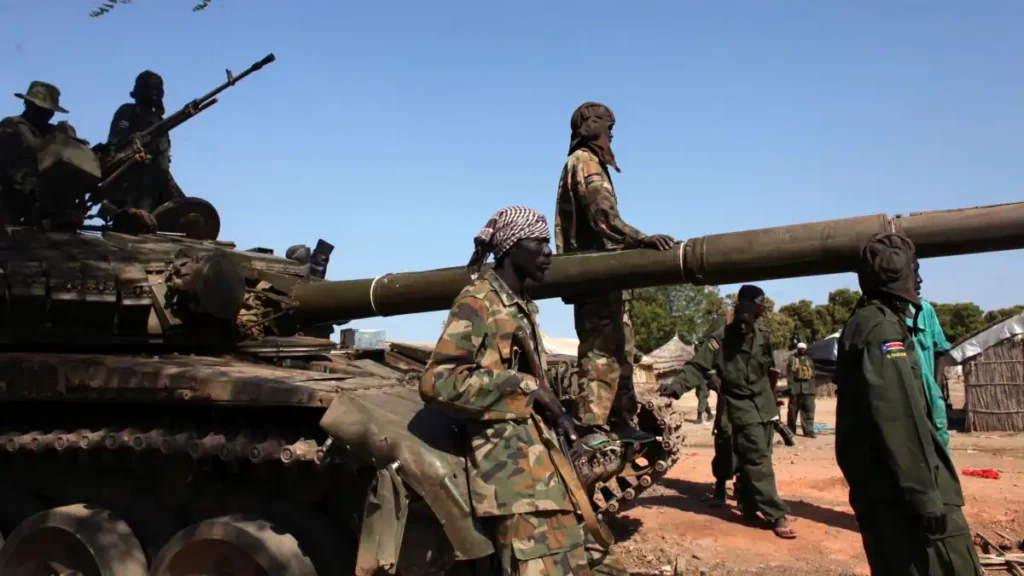
The Deputy Spokesman for UN Secretary-General António Guterres has said the UN Peacekeeping mission, UNMISS, is deeply concerned by reports of significant military confrontations between armed forces aligned with the main parties to the peace agreement in Jonglei and Eastern Equatoria states.
Farhan Haq made the remarks while briefing the media on Monday in New York and said this surge in conflict, which includes aerial bombardments of civilian areas, comes in the aftermath of efforts to diverge from the peace framework established by the Revitalized Peace Agreement.
“The mission urges South Sudan’s leaders to immediately cease hostilities, de-escalate tensions, and to advance reconciliation and peace through inclusive dialogue under the framework of the peace agreement,” he stated. “Strong leadership and decisive, consensus-based action is needed now, more than ever, to prevent the current crisis from deepening and to ensure that the peace and prosperity so deserved by the people of South Sudan is finally delivered, the Mission added.”
And on the humanitarian side, Haq said the Office for the Coordination of Humanitarian Affairs (OCHA) warns that an already dire humanitarian crisis, marked by food insecurity, disease outbreaks and the impact of catastrophic floods, is worsening following renewed fighting in Jonglei State over the past week.
“Since late last month, more than 180,000 people, mostly women, children and older people, have been forced to flee their homes in Jonglei, according to the Government. Many have sought refuge in remote areas, while others have fled to neighbouring states,” he said. “As humanitarian needs continue to rise, already overstretched operations are under increasing strain. At least four health facilities have been looted, leaving more than 100,000 people without access to essential services.”
“Restrictions on movement by air, river and road in several areas have obstructed the delivery of life‑saving assistance,” Haq added.
He revealed that while several humanitarian organizations have temporarily relocated staff, around 15 Non-governmental organizations continue to be present in the area.
“We and our partners are engaging with local authorities to ensure the protection of civilians and aid workers, as well as to secure safe, unhindered humanitarian access to people in need,” Haq concluded.

 and then