



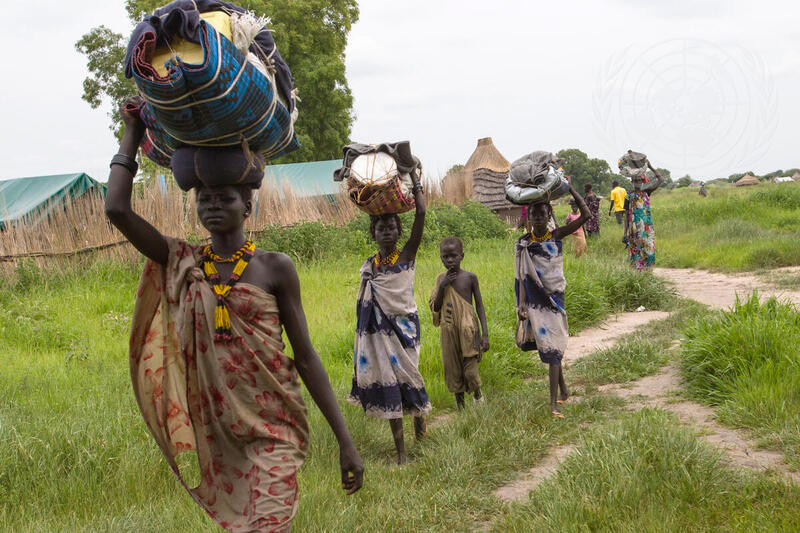
The acting country representative of the United Nations Children’s Fund (UNICEF) in South Sudan on Friday said some 280,000 people have been displaced in Jonglei State alone, the majority of whom are women and children, since late December 2025, after the escalation of devastating violence in parts of the country.
Obia Achieng, who virtually addressed a hybrid press briefing hosted by Rolando Gómez, Chief of the Press and External Relations Section at the United Nations Information Service in Geneva, said it is the second or even third time some of the victims were being displaced.
“Some 53 percent of those displaced were believed to be children. Most had fled with nothing and were sleeping in displacement camps,” he said. “In South Sudan, killing and maiming of children, recruitment of children by armed groups, and gender-based violence against children were all prevalent. It was reported that 11 health facilities had been attacked and looted in recent months.”
Achieng also spoke of the reported outbreaks of cholera among displaced people, with hundreds of reported casualties. Some 825,000 children across several states were at risk of acute malnutrition, he warned.
“Children with acute malnutrition without treatment were 12 times more likely to lose their lives. UNICEF, other UN agencies, and NGOs remain committed to remaining and responding to the ongoing crisis,” he said. “The scale of what was unfolding in the country was immense, and what was really needed was a cessation of hostilities and unrestricted, unhindered humanitarian access.”
Meanwhile, Christian Lindmeier, for the World Health Organization (WHO), said that across South Sudan at least 19 attacks against health care had been recorded in 2025, leading to loss of life, injuries, and destruction. The consequences for civilians were grave and immediate.
He added that some 1.5 to two million people were facing restricted or no access to health services, including treatment of communicable diseases.
Disease surveillance was weakening precisely when it was needed the most. This was a regional and global health security threat, stressed Mr. Lindmeier.
He warned that attacks on health care were serious violations of humanitarian law, saying “the climate of impunity has to be reversed.
WHO called on all parties to stop attacks against health care and to respect international humanitarian law without exception.

 and then