



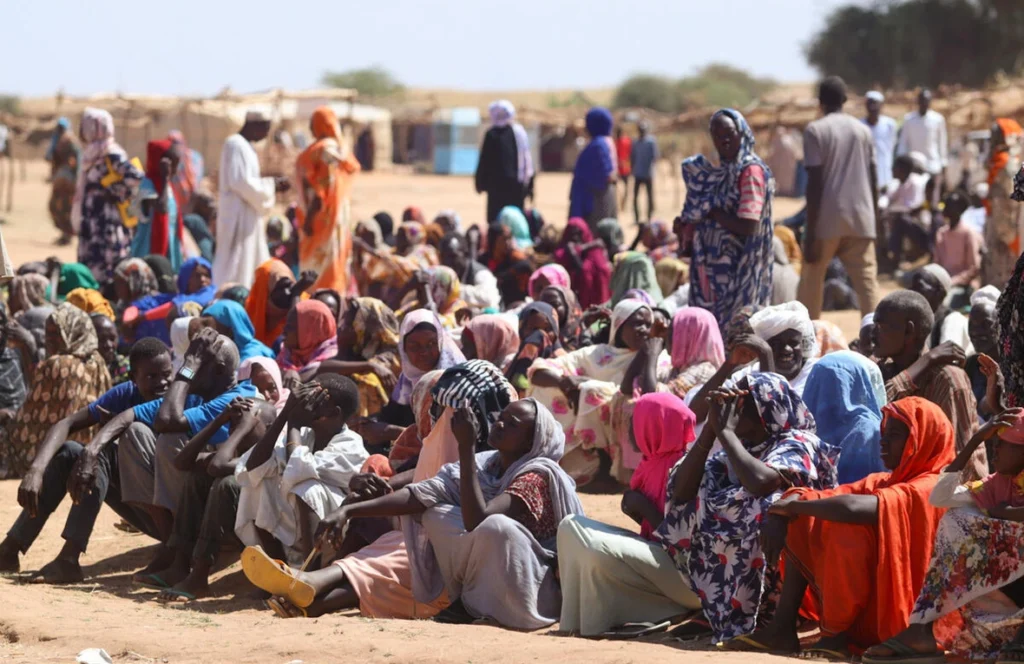
The Deputy Spokesman for UN Secretary-General António Guterres on Wednesday said the Office for the Coordination of Humanitarian Affairs (OCHA) is concerned by the plight of thousands of civilians who are cut off from aid in Sudan’s North Darfur State.
Farhan Haq, who was briefing the media in New York, said that with active conflict continuing to escalate in the north-western part of the state, local partners report that at least 2,000 families are trapped in the valleys of Wadi Qardi and Um Saad in the localities of Karnoi and Um Baru.
“OCHA tells us that fighting in the area is severely restricting humanitarian access,” he stated.
Haq added that conflict continues to displace people in the Kordofan region, with the International Organization for Migration (IOM) estimating that nearly 3,000 people were displaced between 15 and 19 January from the cities of Kadugli and Dilling in South Kordofan State, with some moving towards locations in White Nile State.
“Both cities remain under siege amid ongoing fighting, as extreme food insecurity deepens, with famine conditions confirmed in Kadugli and similarly extreme levels of food insecurity in Dilling,” Haq said. “OCHA calls on all parties to immediately protect civilians and civilian infrastructure, and ensure rapid, safe, unhindered and sustained humanitarian access to people in need.”
“In White Nile State, local authorities and our humanitarian partners report that nearly 2,000 people have arrived in the city of Kosti over the past three weeks, placing more pressure on already overstretched services,” Haq added.
He reported that since late October, some 19,500 people have fled Kordofan to White Nile State.
“Our partners are scaling up assistance, including food rations, tents, mattresses, tarpaulins, and water, sanitation, and hygiene services, but critical gaps remain due to funding shortages,” Haq said. “OCHA appeals for additional funding so humanitarian partners can scale up life-saving assistance. This year, we and our partners in Sudan are calling for $2.9 billion under the Humanitarian Needs and Response Plan to reach more than 20 million people in need.”

 and then