



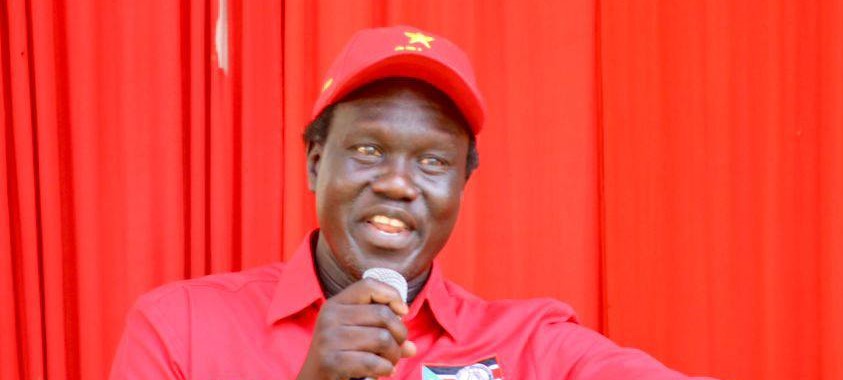
The SPLM National Secretariat on Tuesday held a joint meeting of its caucuses in Juba, signaling the party’s resolve to move forward with elections and to endorse any bills related to the electoral process.
The meeting brought together senior party officials and members to deliberate on political, organizational and legislative priorities aimed at strengthening party unity, promoting dialogue and preparing for upcoming elections.
The meeting was chaired by SPLM First Deputy Chairman and Vice President Dr. James Wani Igga, under the theme, “SPLM Stands for Building a Peaceful and Prosperous South Sudan.”
In his closing remarks, Dr. Igga emphasized the importance of mobilizing resources to ensure the successful convening of SPLM congresses and the upcoming national convention.
He noted that the party leadership is actively addressing resource mobilization and fundraising strategies and urged members to think innovatively in tackling the country’s challenging economic conditions. Such efforts, he said, would enhance the party’s capacity to support key SPLM activities.
Igga also presided over the swearing-in of Puok Bol Par as the new national chairperson of the SPLM Youth League, replacing Daniel Abucha Ali.
Presenting the outcomes of the meeting, SPLM Secretary General Dr. Akol Paul Kordit highlighted several key resolutions.
On elections, the joint caucuses resolved that the SPLM will participate in the general elections scheduled for December 2026, in line with the extended transitional roadmap. The caucuses further agreed to ratify election-related bills once they are presented before the National Legislature.
The meeting also emphasized that the SPLM name should not be misused or referred to in any distorted form by other political parties and the public. The party rejected references to SPLM-IG, or SPLM-In Government.
This stands in contrast to some official documents in which the ruling party refers to itself as SPLM-IG. One recent example is an agreement signed in Khartoum between the government and the Agwelek militia led by Gen. Johnson Olony in 2022, in which the Internal Security Bureau of the National Security Service refers to the government or ruling party as SPLM-IG.
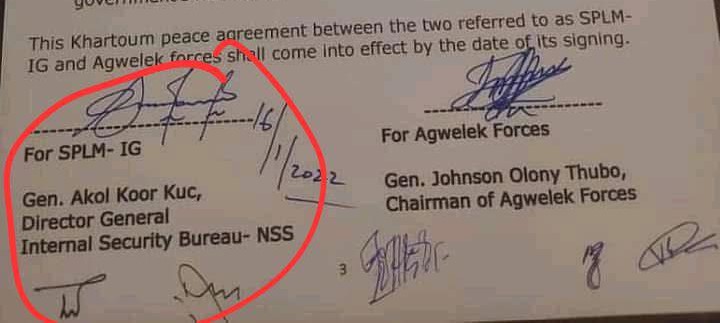
SPLM-IG emerged as a designation by regional peace mediators to distinguish the ruling SPLM faction after the civil war and political split in 2013.
Participants in the joint caucuses meeting reiterated that unity and cohesiveness within the ruling SPLM remain paramount for the stability of the country.
On dialogue, the SPLM caucuses agreed to promote intra-party discussions to address internal challenges, as well as inter-party dialogue to collectively tackle election-related and other national issues.
Dr. Akol Paul summarized President Salva Kiir’s message into key points: commitment to elections, dialogue within the party and among political parties, unity of the SPLM, and preparation for the upcoming general elections.
The meeting featured two presentations, one on political matters delivered by the SPLM Secretary General and another on legal issues presented by Michael Makuei Lueth, a senior SPLM member and minister of justice.
The joint caucuses further reaffirmed the SPLM’s commitment to inclusive governance, peacebuilding and the implementation of agreed national priorities in line with the party’s vision and guiding principles.
The ruling party’s meetings come amid challenges including economic hardship, insecurity and conflicts in parts of the country, as well as a lack of political consensus on plans for the December 2026 elections.
Last month, the presidency and cabinet approved amendments to key provisions of the 2018 peace agreement, delinking the December 2026 elections from the permanent constitution-making process, a national census and other institutional reforms.
The peace deal, signed by President Salva Kiir, opposition leader Riek Machar and other political leaders, has faced repeated delays, including missed election timelines.
Elections have been postponed multiple times and are now scheduled for December 2026, despite objections from Machar loyalists, who say presidency-led consultations excluded them.

 and then