



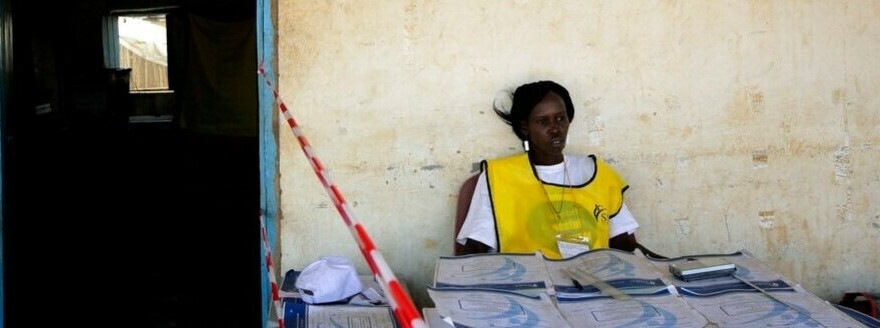
South Sudan’s leaders say the country will finally hold long-delayed general elections in December 2026, raising hopes — and doubts — about whether the vote will proceed after years of political deadlock.
President Salva Kiir and several political parties have recently renewed public commitments to the polls, insisting there will be “no more extensions” of the country’s transitional period, which began after a 2018 peace deal ended a five-year civil war.
Here are six questions posed by Radio Tamazuj to help explain what has been decided — and what remains uncertain.
1. What has been decided about the 2026 elections?
South Sudan’s transitional government, formed under the 2018 Revitalised Agreement on the Resolution of the Conflict in South Sudan (R-ARCSS), reaffirmed on December 10, 2025, its intention to hold national elections on December 22, 2026.
During recent political consultations, President Kiir and allied parties described elections as an “exit strategy” from prolonged transitional arrangements. The transitional period has already been extended three times since the peace deal was signed.
At an expanded meeting of the presidency, ministers, and political party leaders, officials endorsed amendments to the 2018 agreement that remove provisions they say have delayed elections.
Most significantly, the amendments decouple elections from the adoption of a permanent constitution — a process that remains unfinished seven years after the deal. Instead, elections would be held under the Transitional Constitution of 2011, as amended.
Another change revises Article 1.2.14 of the agreement to require a national population and housing census to be conducted after elections, rather than before.
The revised provisions were signed by Justice Minister Michael Makuei Lueth for the ruling Sudan People’s Liberation Movement (SPLM), Johnson Maylik Akol for a faction of the SPLM-IO, and Wilson Lodiong Sebit on behalf of Other Political Parties (OPP).
Political analyst and University of Juba professor Abraham Kuol Nyuon says the renewed commitment reflects leaders’ desire to regain legitimacy.
“Most of our leaders came to power through peace agreements,” he told Radio Tamazuj. “These agreements matter more to them than the people, which is why the R-ARCSS has been extended repeatedly.”
For many leaders, elections are now framed as the only remaining pathway out of transition — even as conditions on the ground remain fragile.
2. Has Riek Machar’s group been included in the consultations?
No — and this is one of the most contentious aspects of the renewed election push.
The Sudan People’s Liberation Movement–In Opposition (SPLM-IO), led by suspended First Vice President Dr. Riek Machar, did not take part in the consultations that reaffirmed the December 2026 timeline.
Machar’s exclusion has drawn criticism because his party is a principal signatory to the 2018 peace agreement, which underpins the Revitalized Transitional Government of National Unity (R-TGoNU). Also, there are areas controlled by the SPLM-IO, which could make it difficult to hold elections there if the party does not agree with the election plan.
Machar is currently on trial in Juba alongside seven co-accused on charges of treason and murder linked to violence in Nasir in March. His legal case has effectively sidelined him from political engagement at a critical moment.
Dr. Kuol says Machar’s absence complicates the political landscape but does not automatically halt the electoral process.
“If elections are held, political parties decide their candidates,” he said, noting that the SPLM-IO is not formally registered under electoral law because it maintains an armed wing.
However, other analysts warn that excluding Machar’s faction undermines both trust and legitimacy.
“Consensus among selected parties does not equate to national consensus,” said policy analyst Boboya James, warning that sidelining a key signatory risks deepening mistrust within the unity government.
3. Why are the parties divided?
The other parties signatory to the peace agreement, including a newly formed faction of the SPLM-IO led by the peacebuilding minister, have aligned with President Kiir in supporting elections in December 2026.
But allies of Machar say they were not invited to the consultations, even though some are based in Juba. Also, SPLM-IO officials aligned with Machar reject the recent amendments to the peace agreement. They maintain that the deal should be implemented in full – including the formulation of a permanent constitution and the conduct of a census – before elections are held.
Boboya warns that marginalizing Machar’s faction could destabilize the unity government itself.
“Excluding a principal signatory undermines the inclusivity that underpins the peace agreement and could have serious political and security ramifications,” he said.
4. Can South Sudan hold a credible election by December 2026?
Major preparatory steps remain unfinished, including voter registration, civic education, security arrangements, the declaration of geographical constituencies, and amendments to the election law.
A population census and a permanent constitution — long seen as essential — have now been deferred until after the vote.
Dr. Kuol argues that while the upcoming elections may fall short of international standards, they are technically possible.
“We may not talk about credibility, but something that may get us out of this dilemma,” he said, adding that security — not the census or the permanent constitution — is the biggest obstacle.
Boboya disagrees, warning that proceeding with elections without key benchmarks stipulated in the peace deal risks worsening instability.
“Elections may be technically possible on paper,” he said, “but they lack the essential conditions needed to be credible, inclusive, and peaceful.”
Persistent insecurity, incomplete unification of forces, restricted political space, and weak institutions remain major hurdles.
5. Is the election process legal if the peace deal is amended?
Yes, it is possible. Supporters argue South Sudan is a sovereign state and can conduct elections under its Transitional Constitution, Electoral Act, and Political Parties Act, even if parts of the peace agreement are amended.
Dr. Kuol says legality is often misunderstood.
“Every sovereign country has the liberty to use its existing laws to govern its affairs,” he said, adding that parliament could quickly amend laws related to constituency arrangements to proceed with elections.
But critics warn that altering the peace agreement without full consensus creates legal and political risks.
“These benchmarks were not optional,” Boboya said. “Changing the sequencing and spirit of the agreement erodes public confidence and exposes election outcomes to dispute.”
6. What challenges could still delay the 2026 general elections?
Funding, security, and political consensus remain decisive.
South Sudan is facing severe economic hardship, with civil servants and security forces often going months without pay. Elections are costly, and government resources are limited, especially since the ongoing war in neighboring Sudan has interrupted oil production.
Dr. Kuol cautions that without donor support, another extension of the transitional period remains possible — despite official denials.
“There are possibilities the government may renew its legitimacy by extension, not election,” he said.
International donors remain cautious, with analysts noting that partners are unlikely to fund elections without transparency, safeguards against corruption, and broad political agreement.
South Sudan has postponed elections repeatedly since independence in 2011, citing insecurity, lack of funds, and slow peace implementation — leaving many citizens skeptical that December 2026 will be different.

 and then