



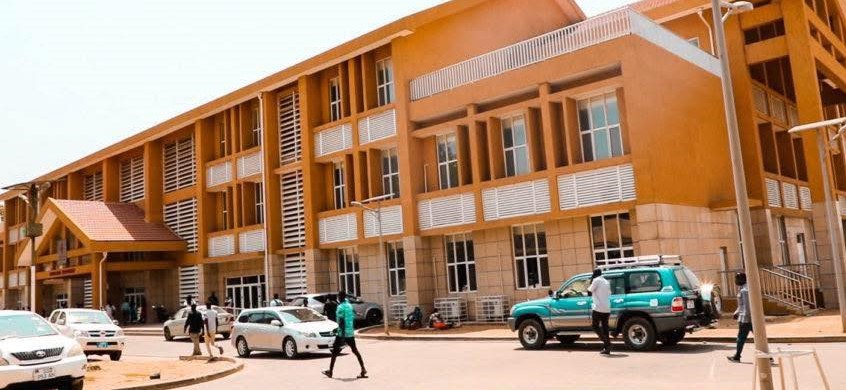
The director general of Juba Teaching Hospital has called on health authorities and development partners to urgently provide a continuous supply of fuel, warning that frequent power outages are putting patients’ lives at risk.
Dr. Gift Natana said on Monday that the hospital has struggled to maintain stable electricity since the United Nations Development Programme (UNDP) ended its fuel support late last year.
“Last year, UNDP was supplying the hospital with about 5,000 litres of fuel every week, but that support ended in December,” he said. “Since then, the hospital has faced serious challenges in maintaining power. We are now appealing to the Ministry of Health and our partners to come to our rescue.”
Dr. Natana stressed that uninterrupted electricity is critical for life-saving services, particularly in emergency and specialised units.
“We are requesting support so that power can be maintained at all times,” he said. “Without electricity, patients seeking care are the ones who suffer the most.”
He recalled that power outages have previously led to deaths during surgical procedures.
“In the past, we have lost lives in the operation theatre when the power suddenly went off,” he said. “These are preventable deaths, and they happen simply because we cannot sustain electricity.”
The hospital, South Sudan’s national referral facility, has faced unstable power supply for years, with electricity often available only for limited hours, Dr. Natana added.
“The power situation has not been stable. Sometimes it works, but not for 24 hours,” he said. “This inconsistency makes it very difficult to deliver proper healthcare services.”
Critical departments such as the operating theatre and the intensive care unit (ICU) have been severely affected by the outages.
“When there is no power, services in the operating theatre and ICU are directly affected, and this has led to loss of lives,” Dr. Natana said.
Despite the challenges, he said the hospital has the capacity to maintain electricity if fuel is available.
“We have two generators capable of supplying enough power to the entire hospital,” he said. “What we need is timely and sufficient fuel to keep them running.”
Dr. Natana reiterated his call for urgent intervention, warning that without immediate support, patients will continue to face life-threatening risks from power interruptions.

 and then