



The Transitional National Legislative Assembly (TNLA) on Monday referred the Mining Act 2012 (Amendment) Bill 2026 back to the joint Committees on Mining and on Legislation and Justice for further review and expansion.
Lawmakers said the bill requires broader consultation, including public hearings, because it concerns the country’s natural resources.
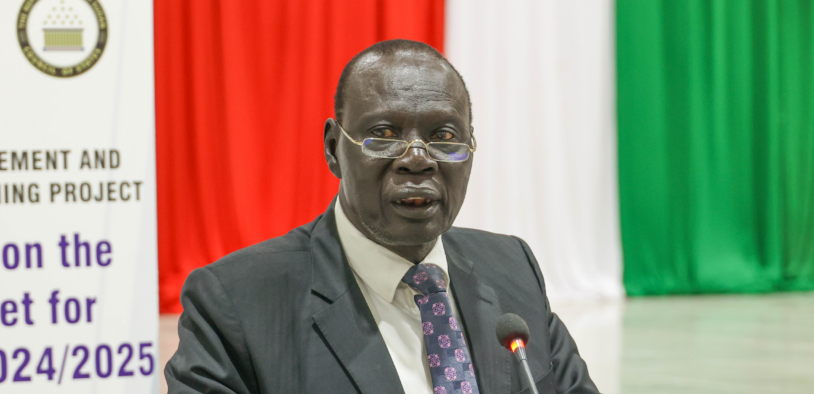
Presenting the bill at its second reading, Oresto Lupara, a member of the joint committees, said the amendments align with the Revitalized Agreement on the Resolution of the Conflict in South Sudan (R-ARCSS) and the Transitional Constitution.
According to Lupara, the amendment seeks to reform the national mining law by establishing a legal framework for mining licenses, royalties, corporate taxes, and annual rent, with the aim of attracting investment, improving governance of the mining sector, enhancing transparency and accountability, and ensuring that mineral wealth benefits South Sudanese citizens.
“The bill was also found to be aligned with international standards, including the Sustainable Development Goals, the Extractive Industries Transparency Initiative (EITI), International Labour Organization conventions, the Labour Act 2017, and the Land Act 2009,” he stressed.
The committees issued several recommendations, including inserting the words “Administrative Areas” where “States” appear in the bill, clearly defining the term “Mining” in Section 5 of Chapter One, and constructing a geological laboratory and library for the mining sector.
They also urged the government to expedite the process of joining the Extractive Industries Transparency Initiative (EITI), as provided for in the R-ARCSS, to enhance accountability and transparency.
In addition, the committees strongly recommended that the Ministry of Environment fast-track the presentation and enactment of the Environment Policy and Bill 2025, citing a serious gap in environmental legal frameworks. The committees further proposed the establishment of a new mining-related institution, the South Sudan Chamber of Mines.
However, Delmoi Abraham, a member of the SPLM party, described the committees’ report as shallow and in need of further enrichment.
“First of all, this is not the bill we just passed. We need a critical look at every section so that we can benefit the people of South Sudan,” Abraham said.
“We are saying that this country has a lot of minerals. Since the country has many minerals, bills concerning minerals need to be carefully reviewed, deliberated, and expanded,” he added.
Abraham further noted that the report lacked depth.
“This report is a bit shallow, and I agree with the first speaker who said that maybe the public hearing has not been conducted. That’s correct, because we only saw it in the media,” he said.
The motion to refer the bill back was seconded by Dustman Joice, an MP representing Lainya County of Central Equatoria State, who supported the call for more scrutiny.
“I stand here to second the motion that the report should be referred back to the committee for a thorough public hearing. They should also ensure that the minister attends the session,” she said.
Second Deputy Speaker of Parliament Perimena Awerial, who chaired the session, officially referred the bill back to the joint committees for further scrutiny and public hearings, and directed that the responsible minister be present during the next presentation to the Assembly.

 and then