



Despite South Sudan’s fertile land and favorable climate, its agricultural sector has not flourished due to complex factors, including political instability, underdeveloped infrastructure, insecure land tenure, limited market access, and inadequate policy support. The nation’s economy has historically relied heavily on oil production, overshadowing the potential of its agricultural sector for food security and economic diversification. This dependence has been a barrier to agricultural development, despite agriculture being a primary source of livelihood for the majority.
One of the most critical impediments is persistent political instability and civil conflicts. The long civil war severely hampered food production, leaving weak or nonexistent infrastructure and a meager workforce. Violent conflict remains a leading cause of severe food insecurity, affecting an estimated 70% of the population. Such instability deters investment, disrupts farming, and displaces communities, making sustained agricultural growth nearly impossible. Even humanitarian, development, and peacebuilding (HDP) nexus efforts face significant challenges in addressing the food insecurity crisis exacerbated by these conflicts.
Underdeveloped infrastructure is another major constraint. The absence of adequate roads, storage facilities, and processing plants means that even when crops are harvested, they often cannot reach markets efficiently, leading to post-harvest losses and reduced farmer incentives. This issue is further compounded by energy poverty, as limited access to modern energy sources forces much of the population to rely on traditional biomass, affecting agricultural processing and storage. Investing in infrastructure development, including transport, communication, and electricity, is crucial for economic growth and farming success.
Land tenure issues present significant challenges to agricultural development. Debates over land tenure have been instrumental in state-building since the 2005 Comprehensive Peace Agreement, with competing interpretations of rights. South Sudan has experienced a brief but significant land rush, marked by large-scale foreign investment from 2007 to 2013, which highlighted the pitfalls of large-scale land deals. While the Land Matrix marks only 17 deals as “concluded,” the initial surge revealed problems associated with the unclear rights, management, administration, and governance. The lack of clear policies and secure rights discourages long-term investment in land and sustainable farming by smallholder farmers, who constitute the backbone of the agricultural sector. Customary tenure systems coexist alongside urban freehold and investor leasehold, creating a complex, often contested landscape for land ownership and use. This insecurity affects farmers’ willingness to adopt climate adaptation methods, as land tenure is associated with the implementation of adaptation strategies to climate variability.
Climate variability, including frequent droughts and flooding, also profoundly impacts agricultural production and necessitates adaptation strategies. For instance, studies in Sudan have shown that rainfall variability, negatively affects food security, despite having a positive effect on crop and livestock production in some contexts. This highlights the need for climate-smart agricultural interventions, which require investment decisions and support tools for policymakers. Smallholder farmers in South Sudan face the challenge of adopting such adaptations, with limited information on the factors influencing their uptake.
The lack of access to markets and credit further constrains farmers. Smallholder irrigation, which could significantly reduce food insecurity, has been slow to develop in East African countries, including Uganda, Kenya, and Tanzania, primarily due to reliance on traditional schemes and limited access to individual irrigation technologies. In South Sudan, agricultural cooperatives are being leveraged to distribute seeds, thereby mitigating some market access issues for maize farmers. However, the overall agrarian value chains remain weak, hindering farmers from selling their produce at fair prices and limiting their ability to invest in better equipment or practices.
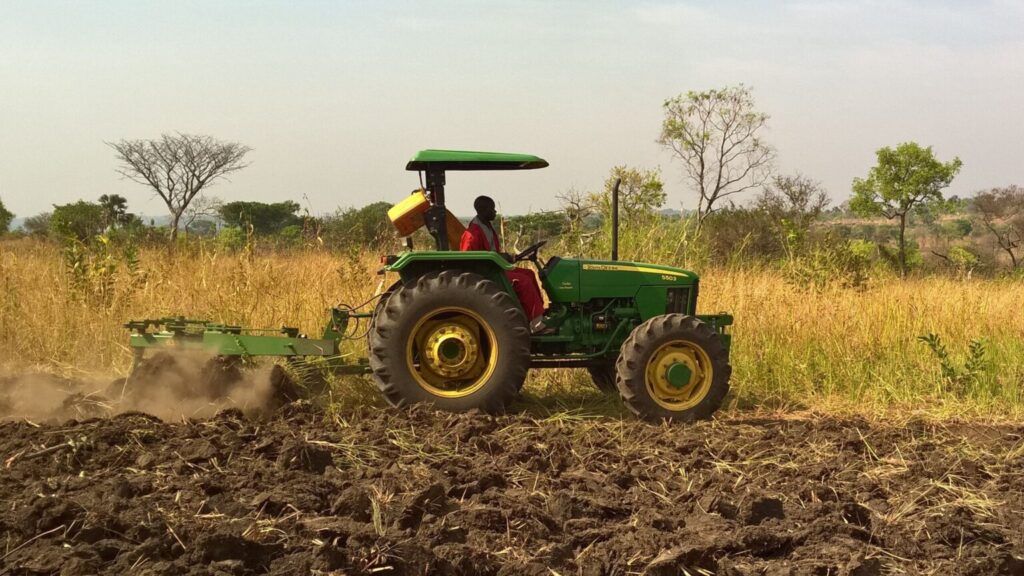
In terms of equipment like tractors, the issue is not merely the presence but also the accessibility, maintenance, and appropriate utilization of such technology within the prevailing socio-economic context. Even if equipment exists, the lack of skilled labor, technical support, spare parts, and fuel, often exacerbated by poor infrastructure, can render it ineffective.
To succeed, South Sudan must address these multifaceted challenges comprehensively:
1. Ensuring political stability and peacebuilding: This is foundational for any sustainable development. Effective peacebuilding strategies and the operationalization of the humanitarian-development-peace nexus are crucial for reducing conflict and fostering an environment conducive to agricultural investment and growth.
2. Investing in infrastructure: Developing robust infrastructure, including roads, irrigation systems, and electricity grids, is essential for improving market access, reducing post-harvest losses, and supporting agricultural mechanization. This includes strengthening communication networks to provide farmers with vital climate information and market prices.
3. Clarifying and securing land tenure: Establishing transparent and equitable policies, alongside strengthening land administration and governance, is paramount. This would encourage long-term investment in agriculture and reduce land-related conflicts, empowering farmers to improve their land sustainably.
4. Promoting climate-smart agriculture: Implementing strategies to adapt to climate variability, such as ridge-furrow film mulching and nitrogen fertilization, has shown potential in improving yield and water productivity in arid and semi-arid regions. Decision-support tools are needed to prioritize these interventions based on agroecological, climatic, and economic development scenarios.
5. Strengthening agricultural support systems: This includes providing farmers with access to quality seeds, modern farming techniques, financial services, and market information. Leveraging cooperatives, as seen with maize production, can facilitate seed distribution and collective bargaining power. Additionally, addressing challenges in the livestock sector, including cattle raiding and poor record-keeping, is vital, as these challenges significantly affect agricultural activities.
6. Diversifying the economy: While oil has been a primary revenue source, a strong agricultural sector will build resilience and ensure long-term food security and economic growth.
In conclusion, South Sudan’s agricultural sector, despite its natural potential, is hindered by systemic issues stemming from conflict, governance deficiencies, and inadequate development. A concerted, multi-pronged approach focusing on peacebuilding, infrastructure development, secure land tenure, climate adaptation, and robust support systems is indispensable for unlocking its agrarian potential, ensuring food security, and driving sustainable economic development.
The writer, Leek Daniel, is a media specialist and development practitioner (leek2daniel@gmail.com)
The views expressed in ‘opinion’ articles published by Radio Tamazuj are solely those of the writer. The veracity of any claims made is the responsibility of the author, not Radio Tamazuj.

 and then