



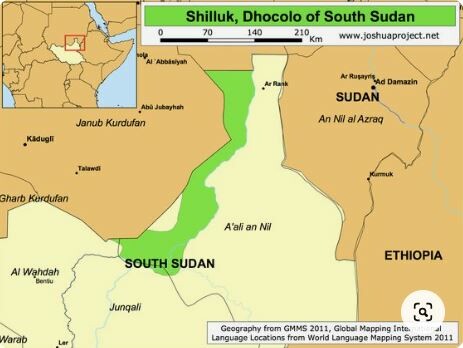
I wish to express my deepest sympathy and condolences for the tragic loss of innocent Collo civilians, who were recently killed by Padang Dinka militias in Fashodo County and Malakal. We strongly condemn this cowardly act and the brutal killings of Collo civilians by Padang militants in Upper Nile State. It is now evident to all that the Juba regime is behind and supporting the escalating ethnic conflict between the Collo and the Padang Dinka in Upper Nile State. The Padang Dinka militia is employing ethnocide tactics by killing Collo people on the east bank, including within Malakal, in an attempt to force them out to the west bank. Tensions between the Padang Dinka and Collo in Upper Nile State are fueled by the Padang Dinka’s efforts to alter the demarcation boundaries between their communities and to illegally seize ancestral Collo land on the east bank. In 2016, Padang Dinka militia fighters attacked the United Nations Mission in South Sudan (UNMISS) protection of civilians (PoC) site in Malakal, resulting in the deaths of several Collo civilians.
Padang Dinka militias and the Padang Dinka political elite of Upper Nile are deliberately orchestrating a campaign to displace the Collo population from the east bank of the White Nile, as evidenced by the recent killings of Collo civilians in Fashodo County and within Malakal. For instance, the Padang Dinka militia controls the internal security of the Upper Nile, including the groups known as Mathloum and Abu Shoq, which consist of individuals from Akoka, Baliet, Melut, and Renk counties. These militias, formed in 2014, are responsible for the ongoing violence and insecurity in Upper Nile State. The Padang Dinka militias have become the primary force in an offensive against the Collo people for control of the east bank. This offensive is strongly supported by Kiir’s tribal regime, which has enabled the South Sudanese Minister of Defense, Chol Thon Balok, who is also a son of Padang Dinka, to arm the Padang Dinka militia. They aim to terrorize Collo civilians on the east bank and forcibly redraw boundaries, establishing a new divide through the White Nile, a boundary they claim lies in its middle. In 2015, the Padang Dinka militia destroyed Collo settlements and killed civilians. They have been working to solidify their control over the east bank of the Nile, demonstrating clear national backing for their efforts to displace the Collo people. The east bank remains an active combat zone in Upper Nile State. For instance, in February 2026, the Padang Dinka militia killed several civilians on the east bank and in Malakal.
A 2016 Small Arms Survey noted that Collo politicians, identifying as nationalists, were more focused on establishing a national, non-sectarian platform than on advocating for their community’s interests within South Sudanese politics. President Kiir’s tribal regime’s backing of the Padang Dinka militia has elevated their standing nationally, leading to their increased dominance in Upper Nile State and their attempts to expel the Collo from Malakal and the entire east bank. Reports and evidence suggest a significant gap between the 2018 Revitalized Agreement on the Resolution of the Conflict in South Sudan, which intended to restore the country to 10 states based on pre-1956 boundaries, and the reality on the ground, particularly in Upper Nile State, is different. Evidence indicates that the Padang Dinka is attempting to preserve the boundaries based on the 32-state structure, contrary to the 10 states stipulated in the agreement. It is evident that the South Sudanese government, under President Kiir, is reluctant to fully implement the 2018 agreement.
For instance, in Upper Nile State, the January 1, 1956, boundaries are a point of contention, particularly regarding tribal land disputes between the Padang Dinka and the Collo. It appears that the Juba-based tribal regime is unwilling to adhere to these historical boundaries, allegedly with the backing of both the Juba and Upper Nile State governments. We all recall President Kiir’s statement, “I will not send the army or police to intervene in inter-communal conflicts,” which underscores the need for self-reliance in this situation. He declared he would only support communities fleeing to Juba. Therefore, the Collo must uphold their right to self-defense and their responsibility to protect their population within the Collo Kingdom. Kiir’s regime appears to be employing the Agwelek as a strategy to combat opposition, having recognized their significant military presence in Upper Nile State, and is now utilizing them against rebellions targeting the South Sudanese government. The Padang Dinka militia is apparently aware that the absence of the Agwelek in Upper Nile State presents an opportunity to terrorize Collo civilians on the east bank and within Malakal. Their intention seems to be the marginalization of the Collo in Upper Nile State, ultimately aiming to drive Collo settlements from the east bank to the west bank. General Olony should be reminded of the Padang Dinka militia’s actions against him in 2014, when a member of the militia shot at him following Agwelek’s successful participation in the campaign against the SPLA-IO in Wadakona.
The Padang Dinka militia, led by Mathloum, also killed General James Bwogo and 12 of his bodyguards on the Lul Bridge, which connects Fashoda and Akoka counties, on April 1, 2014. General Olony, the leader of the Agwelek, must explain to Collo whether the Agwelek has abandoned its primary objective for which it took up arms against the Padang Dinka militias: their illegal occupation of Collo’s ancestral land, and whether it has allowed itself to be used by Kiir’s regime to fight his war against the opposition. The recent attacks and killings of Collo civilians in Fashodo County and Malakal are part of the Padang Dinka militias’ strategy to push Collo settlements to the east bank of the Nile. Furthermore, the Padang Dinka do not want a large Collo IDP population in the Protection of Civilians (PoC) site in Malakal, as this has become a political issue. The Padang Dinka militias are concerned that the presence of over 40,000 Collo IDPs in the Malakal PoC site hinders their control of the east bank, as they believe the physical presence of Collo in Malakal proves it belongs to them. Regarding the UN and UNMISS decision to close the Malakal IDP PoC site in February 2026, the UN and UNMISS’s failure has been well-documented since 2016, when they failed to protect unarmed civilians in the Malakal PoC site. It is noteworthy that immediately after the UN and UNMISS closed the Malakal IDP PoC site, Padang Dinka militias killed Collo civilians in Fashodo county and Malakal town. Clearly, the UN and UNMISS mission in South Sudan has failed in its duty to protect vulnerable civilians. There is no doubt that the UN and UNMISS failed in their duty to protect civilians in South Sudan, primarily because of a combination of issues, including conflicts of interest and bias, which resulted in poor command and control among peacekeepers tasked with civilian protection.
The UN and UNMISS failed to compel the South Sudanese government to uphold its obligation to protect its citizens. Alternatively, the UN and UNMISS have a mandate to protect vulnerable civilians during humanitarian crises. Following investigations into the 2016 Malakal Protection of Civilians (PoC) site incident, the UN Secretary-General highlighted the UN and UNMISS’s failures in South Sudan’s conflict, including ineffective responses to violence and a failure to protect civilians and fulfill their core mandate of protecting vulnerable civilians in Malakal and elsewhere in South Sudan. As South Sudan is a failed state, it has neglected its duty to protect its own citizens. Therefore, it is the UN and UNMISS’s responsibility to protect civilians in humanitarian crises. For instance, the South Sudanese government has decided to force the UN and UNMISS to vacate the Malakal PoC site in Upper Nile State without ensuring adequate government protection for civilians there. Consequently, a week after the UN and UNMISS handed over the PoC site to the Upper Nile state government, Padang Dinka militias, who receive support and empowerment from the Juba regime, killed several Collo civilians.
The South Sudanese government has a fundamental responsibility to protect its citizens by ensuring their safety, security, upholding human rights, and preventing violence and human rights abuses, whether committed by state actors or Padang Dinka militias. This duty is enshrined in the United Nations Charter, which outlines core responsibilities including protection against violence and civilians. South Sudan’s government has failed in its obligation to protect its citizens and fulfill its fundamental mission. Under international human rights law, the government is bound to respect and protect its people. It has completely failed in its duty and responsibility to protect (R2P) its population from atrocity crimes such as war crimes, ethnic cleansing, and crimes against humanity. The UN and UNMISS, through their mission in South Sudan, are well aware of their obligations. When the South Sudanese state or government fails to protect its citizens, the UN and UNMISS have a responsibility to intervene and provide protection for vulnerable civilians.
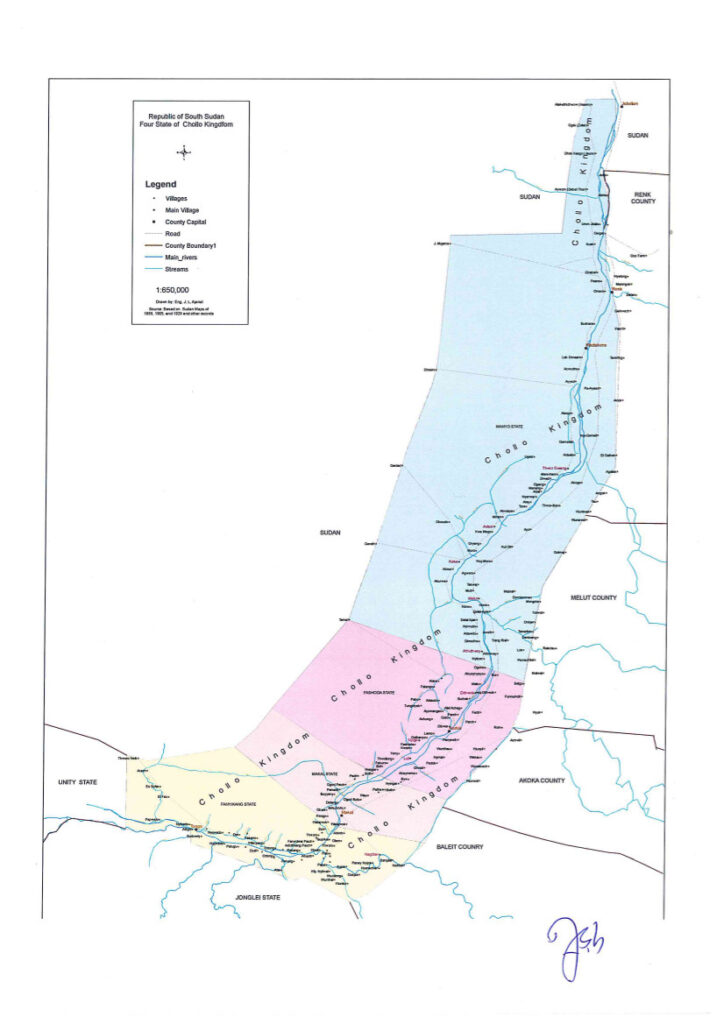
The question remains: why has the Agwelek allowed itself to be used by Kiir’s regime to fight his war against opposition groups? Concurrently, Kiir’s regime supports the Padang Dinka militias in terrorizing Collo civilians on the east bank and within Malakal town. They aim to forcibly displace Collo settlements from the east bank to the west bank, a core objective intended to establish a new demarcation line between the Collo and Padang Dinka, which they believe lies in the middle of the White Nile. Many Collo citizens now question whether the Agwelek’s involvement in President Kiir’s war against opposition groups is part of a plan by Kiir’s regime and the Padang Dinka to undermine and weaken the Collo from within. It is now evident to everyone in South Sudan that the Agwelek is being utilized by Kiir’s regime to combat rebels in Jonglei state and other regions. This is the unvarnished truth, which many will find difficult to accept. The Agwelek is readily available to Juba and can be deployed anywhere in South Sudan to fight Kiir’s war against the opposition, while the Padang Dinka militias, known as Mathloum and Abu Shoq, continue to kill Collo civilians in both Fashoda County and Malakal town.
Regrettably, South Sudan’s media have largely failed to report on the ongoing conflict in Upper Nile State, despite numerous civilian deaths in Fashodo County and Malakal town. This lack of coverage highlights the media’s bias regarding certain issues in Upper Nile State. The UN and UNMISS in South Sudan are fully aware that the conflict in Malakal between the Padang Dinka and Collo communities stems from an unresolved land dispute. Furthermore, the current security apparatus in Upper Nile State is dominated by Padang Dinka militias, who reportedly receive backing from the regime in Juba. Therefore, for the UN and UNMISS to sanction the closure of the Protection of Civilians (PoC) site in Malakal, which houses over 40,000 Collo Internally Displaced Persons (IDPs), is tantamount to endorsing genocide and ethnic cleansing. Merely two days after the PoC site’s closure on February 13, 2026, Padang Dinka militias are reported to have killed several Collo individuals in both Fashodo County and Malakal town. The current generation of Collo people must rise to defend their ancestral lands, which have been illegally occupied by the Padang Dinka, with the support of President Kiir’s regime. The current administration in South Sudan appears intent on humiliating and weakening the Collo tribe through divisive tactics. Collo civilians have long been subjected to cowardly and reprehensible acts by Padang Dinka militants in Upper Nile State. Individuals identified as Abu Shoq and Mathloum, Padang Dinka militants, have been named as perpetrators of the recent killings of Collo civilians in Fashodo County and Malakal town. It is the collective responsibility of the Collo people to protect their dignity and ancestral homeland. Having endured prolonged violence and humiliation, we possess every right to defend our existence and survival. We urge the government of Upper Nile State to hold these individuals accountable for their recent atrocities against innocent Collo civilians, who were callously murdered. The Padang Dinka militias must be held responsible for their crimes against Collo civilians on the east bank, acts that severely threaten social cohesion and peaceful coexistence within Upper Nile State.
In conclusion, I urge the three pillars of Collo society – the monarchy, political leaders, and military leaders within Agwelek – to unite in response to the existential threat facing Collo in South Sudan. Collo must reject identity politics and selfish ambitions that jeopardize the collective interests of its people. Healthy political competition should not come at the expense of Collo’s common good. Collo must abandon self-serving political rivalries that are disconnected from reality and the needs of its people, as such divisive politics are a destructive force that must end. The notion of building an ethnocentric society in a multi-ethnic state through ethnocide, aiming for Dinka ethnic domination, is a utopian and ultimately futile endeavor in South Sudan. Collo must recognize that South Sudan is a failed state, and individual safety is a personal responsibility. Collo, as a people, possesses natural rights to self-defense in the current chaotic environment. Every generation must determine the sacrifices necessary for survival, existence, and dignity through the right to self-defense. We have witnessed the deliberate marginalization of Collo in modern South Sudanese politics under President Kiir’s leadership. Kiir’s policies work against Collo’s interests, irrespective of their political affiliations. To reclaim its honor and rightful place in South Sudan’s political arena, Collo must fundamentally revise its political approach. Collo needs to redefine its core political strategy, prioritizing the common good of its citizens and restoring their dignity within the existing political landscape. It is time for Collo to cease prioritizing political party interests over their collective well-being and survival.
Collo must establish a unified collective vision and common objective for its continued survival and existence, particularly in light of an existential threat posed by Padang Dinka militias in Upper Nile State. These militias, purportedly supported by the Juba-based tribal regime, aim to forcibly displace the Collo population from the east bank to the west bank. The Pandang Dinka’s paramount agenda, endorsed by Kiir’s tribal regime, is hereby presented. Collo citizens maintain a commitment to peaceful relations with the residents of Upper Nile state, who similarly value peaceful coexistence. The essence of Collo culture lies in its peaceful coexistence and its embrace of diversity, rendering it unique. To summarize, permit me to paraphrase Saint Augustine: our engagement in conflict is for achieving peace, and when peace and justice are lacking, the Collo must consequently advocate for them. The Collo’s advocacy for land rights represents a critical battle for both their inherent dignity and their very survival. The right to self-defense is a natural entitlement for Collo against those who would forcibly remove them from their ancestral territories, thus framing the conflict as one for both land and dignity. We are obligated to ensure the protection of Collo’s ancestral land. May divine favor be bestowed upon the Collo Kingdom.
The writer, Jwothab Othow, is a South Sudanese political activist and critic of the government. He can be reached via email at jwothab@yahoo.com
The views expressed in ‘opinion’ articles published by Radio Tamazuj are solely those of the writer. The veracity of any claims made is the responsibility of the author, not Radio Tamazuj.

 and then