



In 2020, South Sudan set a global record by establishing a coalition government headed by a president with five deputies and a 35-member Cabinet.
A country of 12 million people, its legislature boasts a membership of 650—higher than the United States’ 541 senators and representatives, which serves a population of 340 million—all in the name of the compromise for restoring normalcy.
Close to eight years since the 2018 Revitalized Agreement on the Resolution of Conflict in the Republic of South Sudan (R-ARCSS), which established this government led by President Salva Kiir, the government’s legitimacy has expired three times and has been renewed through extensions. The Revitalized Transitional Government of National Unity (R-TGoNU) was initially set up for 24 months, with the first extension occurring in August 2022, pushing elections to December 2024.
The transitional period was extended again in September 2024, postponing elections to December 2026, with the government citing financial constraints and logistical challenges as the reasons. These extensions have raised concerns among international observers and the civil society, who argue that the perpetual transitional government’s mandate was hindering democracy and peace.
Suffice it to say, our country’s political leadership—both in government and opposition—has, over the last six years, failed to deliver on the reforms and transition to democracy they promised. While R-ARCSS deserves credit for halting violence across the country, except the recent flare-up largely in Upper Nile—much remains at stake.
The R-ARCSS, if implemented to the letter and in its full spirit, would transform South Sudan’s governance and security through:
Power Sharing (Chapter 1): Established a complex executive structure, including a President (Salva Kiir), a now-suspended First Vice-President (Riek Machar), and four additional vice presidents, representing various opposition groups.
Security Arrangements (Chapter 2): Mandated the unification of all the armed forces into the Necessary Unified Force (NUF), including cantonment, training, and redeployment of troops to ensure national security.
Economic Reform (Chapter 4): Required audits of the petroleum industry, revenue- sharing frameworks, and reviews of land management and tenure acts.
Transitional Justice (Chapter 5): Provided for the establishment of a Hybrid Court for South Sudan, a Commission for Truth, Reconciliation, and Healing (CTRH), and a Compensation and Reparation Authority (CRA).
Constitutional Review: Outlined a process for a permanent constitution to guide the country toward democratic elections.
The timeline for these protocols was supposed to include an eight-month pre-transition intended for ceasefire monitoring and the initial stages of force unification, followed by a 36-month transition originally set to lead to elections.
With bodies like the Reconstituted Joint Monitoring and Evaluation Commission (RJMEC) tasked with tracking progress and reporting on implementation failures, hopes were high among many.
However, in 2026, the agreement remains the primary framework for peace but faces severe challenges, with security sector reforms and the constitutional review remaining incomplete, catastrophic levels of hunger and displacement rampant, and Machar—a key signatory—in detention.
Other hurdles include, but are not limited to, a lack of census, fragile security due to unmet reforms, funding issues, restricted political space, a lack of voter registration, and insufficient civic education.
The beauty of the R-ARCSS remains on paper. Our political elites have refused to implement it, with only the power-sharing protocols, benefiting them, fully realized. The rest of the 12 million average citizens are left out. There is no one to blame! No one to cry out to for help!
Our parliament is merely a rubber stamp. Elections are the only way out in 2026. When these perpetual transitional periods end through elections, we will at least have someone to hold accountable when we feel wronged or when services are not delivered.
Public opinion is sharply divided on the readiness for elections later this year, with the main areas of contention being Machar’s detention and inadequate political consensus. These and other challenges are real, but not sufficient enough to warrant another postponement.
Dr Machar, being a major signatory to the R-ARCSS, may not take part in the upcoming polls because he is being tried by a special court in Juba, for treason and other serious charges. His party, the SPLM-IO, has factionalized, with those loyal to him dismissing any planned elections as a sham. However, SPLM-IO is not a litmus test for the credibility of any elections.
SPLM-IO may still have been disqualified from the ballot if it did not relinquish its military wing, as required by the electoral act. While values like inclusivity and competitiveness are characteristic of credible elections, SPLM-IO is just one of several signatories. SPLM-IO was part of the last three extensions and has enjoyed a political marriage with the rest of the government since 2020. In late 2024, SPLM-IO figures were among a government delegation to the Kenyan-led Tumaini Consensus, an initiative aimed at revitalizing the R-ARCSS and incorporating the holdout opposition groups.
However, SPLM-IO openly voiced opposition to it and, with others, abrogated the initiative that may have saved their beacon.
Like never before, election preparations appear to be on track. In December 2025, having a permanent constitution and conducting a census—both deferred by various parties—settles a major hurdle on the way to elections. The question of geographical constituencies is now settled, with a declaration, later in the same month, that 2010 election constituencies would be utilized.
Across the 10 states, the State High Electoral Commission (SHEC) offices have been established, along with the training of staff. With amendments to the Transitional Constitution and other electoral laws, reportedly with the Justice Ministry, minimal electoral prerequisites appear achievable before December 2026.
The principle of sovereignty is enshrined in the United Nations Charter (1945), particularly Article 2(1), which states: “The Organization is based on the principle of the sovereign equality of all its members.” Thus, it is incumbent upon South Sudan to use its laws to conduct elections.
As for the security, it would not be unprecedented for national elections to be held in South Sudan despite difficult or insecure environments. Throughout its decades of civil wars, Sudan held several elections. Afghanistan conducted multiple presidential and parliamentary elections (2004, 2005, 2009, 2014, 2019) amid Taliban insurgency, suicide attacks, and targeted violence. Multiple elections since 2005 (2005, 2010, 2014, 2018, 2021) took place in Iraq during post-2003 insurgency, sectarian violence, and later ISIS conflict, while the Democratic Republic of Congo saw elections in 2006, 2011, and 2018 amid widespread political violence, militia activity, and localized armed conflict.
To sum up, since 2015, many agreements have been signed but dishonored, with the government extending its lifespan. Let us give elections a chance in 2026 as an exit strategy.
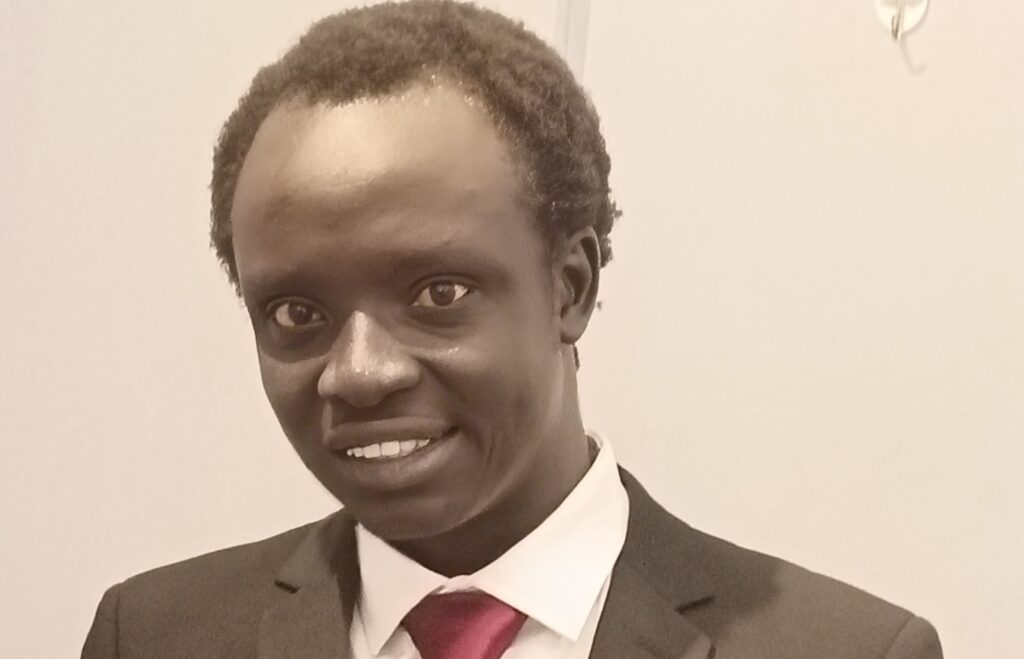
The writer, Manas James Okony, is a South Sudanese journalist and author. He can be reached via email: manasjokony@gmail.com
The views expressed in ‘opinion’ articles published by Radio Tamazuj are solely those of the writer. The veracity of any claims made is the responsibility of the author, not Radio Tamazuj.

 and then