



South Sudan’s next but brutal warfare might be fought on the basis of institutional and state-sanctioned tribocracy that my colleague, public commentator, Paan Luel Wël first publicly alluded to 14 years ago.
It is distilled as a political power matrix that is based on the ‘equitable tribal representation of all greater regions of South Sudan. In a latter commentary, a more detailed yet problematic definition becomes available. In his seven-part article, published on his blog, Wël conceptualized tribocracy as:
“A political system where representatives of a particular ethnic group hold a number of government posts, proportionate to the percentage of the total population that the particular ethnic group represents in order to promote and achieve fair and equitable political representation across all ethnic groups comprising that particular nation.”
While the move is welcome in principle, the invocation of the total population problematizes the offer, in my view. This is because, unlike other more established countries, demographically speaking, South Sudan’s population figures are still a subject of public debate. To use it as a basis to recommend an institutional and political governance, would be a blunder, in my view.
That said, a tribocracy is an uncomfortable dose for a fragmented and fractured society like ours. While not inherently the panacea for fixing the gaping holes left by our bloody history, or to use our President’s perfect line, ‘Final Solution’, this system would balance the odds, ensuring even the smallest of the ethnic set-ups partake in the national cake (whatever that is).
Yet the current realities are starkly different. And shockingly so.
Today, the political and economic contours of our country are tinted and tainted by two competing (and should I add, cautiously cooperating ethnicities), the so-called Dinka and Nuer, while the rest watch on curiously. It is a system that perfectly stretches the Israeli Geographer and Theorist, Oren Yiftachel, who first set up what we now call ethnocracy. In this setting, one ethnic group sets the dominoes, jumbles them and wins the game. The rest wait or, in the case of the Nuer, stand in contrasting shadows.
Whereas demographic evidence suggests that South Sudan has over 62 ethnically diverse populations outside the Dinka/Nuer dichotomy, political and economic realities sit on the opposite end.
The Dinka, having tasted the fruits of power ever since the Abel Alier days, continue to occupy every meaningful seat in the land (from the posh ministerial positions such as the Finance, to the shiny and oiled economic corridors like the Nilepet, the Central Bank, to Defense, the foreign service and everything in between). The Dinka ethnicity’s power influence in the short stint of our embattled country, defies contemporary analyses of institutional dominance and ethnocratic capture.
The best example is perhaps rooted in our history when the North intended to underdevelop the South, to paraphrase the Guyanese historian and academic, Walter Rodney’s eye-opening text: How Europe Undeveloped Africa.
The Dinka, though undoubtedly the most dominant, are not alone in these muddled waters. Their erstwhile yet troubled cousin, the Nuer follow suit in a slow but steady fashion. Unlike their forebears, think of Sir Both Diu, to name but a few, who always asserted their own right to be counted and respected, the contemporary Nuer politicians are fine with what is, as long as it pays their individual bills.
There are, of course, outliers. Dissidents such as Riek Machar lack strategic manoeuvring to sustain their ambitions (and presumably South Sudan’s). Together, the Dinka and the Nuer constitute the greater political and economic force of South Sudan, though in unequal ways. Clearly, the Dinka run the system, and the evidence is overwhelming.
Nevertheless, curious observers of the revolving door can easily see how the system is being tipped in favor of the duo while others occupy the periphery as though they do not belong. This is our reality, if not our ticking-time bomb.
During wartime, we were sold the cheap logic that the Arabs were the problem. They were imperialists by faith and religious zealots by ideology, who wanted an Arabized and Islamized Sudan. Be that as it may, how is it that a decade and a half later, we are brutally worse off than the former? How then did we become, to borrow from John Garang, jobbists and worse so, tribal kings, who have easily forgotten how far this country has come?
As the Nuer continue to fragment across fragile sub-ethnic and clan contours, evident in recent spates in the east, and slow but sure collapse in the center and the rest, the Dinka ethnicity is busy planning for the next presidential succession. This should not be shocking in the strict interpretation of power politics. As the British historian, Lord Acton, reminded us in 1887, ‘Power tends to corrupt, and absolute power corrupts absolutely’.
While these trips proceed almost concurrently, the rest wait on, not passively and naively, but strategically. Some of the marginalized factions of our wider republic are either quietly chasing apolitical projects to survive or have joined the militarized and resisting forces across unexplored boundaries of the country we first liberated 14 years ago.
Fragmentation of states does not always work like that of a corporation. It takes corrosive but steady forms with far-reaching consequences. As Francis Mading Deng reminds us in Sovereignty as a Responsibility, states should not be claimed for instrumental purposes. Their significance must mirror the often indivisible characters rooted in the historical and normative practices that gave way to their contemporary attitudes. Being a sovereign, therefore, becomes a moral duty that extends the narrow statist logic which often sustains rule by excluding others.
Until we understand that national cohesion and collective consciousness are not built on greed and ethnocratic selfish acts, our nation’s historical realities will, unfortunately, continue to haunt us for several decades, if not centuries ahead. We must, as Sir Both Diu aptly put it in that momentous occasion on June 12, 1947, have ‘safeguards’ to prevent the inevitable fall into self-inflicted destruction.
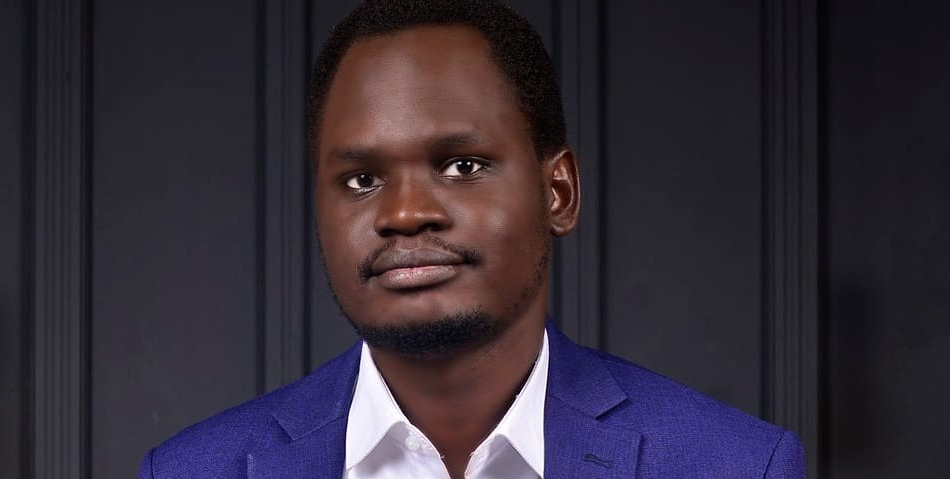
The writer, Matai Muon, is a doctoral researcher at the University of Oxford. The views expressed are his own and do not reflect his institutional affiliation (mataimuon2@gmail.com)
The views expressed in ‘opinion’ articles published by Radio Tamazuj are solely those of the writer. The veracity of any claims made is the responsibility of the author, not Radio Tamazuj.

 and then