



For South Sudan to conduct free, fair, credible, and peaceful elections in 2026, the parties to the Revitalized Agreement on the Resolution of the Conflict in South Sudan (R-ARCSS) must demonstrate genuine commitment through concrete actions—not empty promises.
The failures of peace agreements in 2015, 2016, and 2018 show that political will has consistently been undermined by the actions of individuals, while segments of the international community have failed to treat these violations with the seriousness they deserve.
Many South Sudanese clearly understand who has obstructed the smooth implementation of the peace agreement. R-ARCSS provides for an ambitious reform agenda to be implemented within three years, yet most of its core provisions remain unfulfilled. Without addressing these failures, holding elections in 2026 risks plunging the country back to instability.
When Dr Riek Machar returned to Juba in 2019, he did so at great personal risk after surviving the deadly 2016 conflict that forced him to flee on foot to the Democratic Republic of Congo. His return symbolized hope—that the peace agreement would be implemented and that the suffering of millions of South Sudanese displaced to IDP camps, refugee settlements, and exile would end.
Unfortunately, that hope has yet to be realized.
Among the key reforms under the R-ARCSS is the establishment of transitional justice mechanisms. These include the Commission for Truth, Reconciliation and Healing (CTRH), the Hybrid Court for South Sudan (HCSS), and the Compensation and Reparations Authority (CRA). The Agreement also requires comprehensive judicial reforms, including the reconstitution of the Judicial Service Commission, which is mandated to oversee the independence and effectiveness of the judiciary.
However, persistent delays in the implementation of R-ARCSS have created vulnerabilities that some political leaders have exploited for personal gain. The unilateral decisions by the President—without consultation as required under Article 1.9—resulted in the removal of key positions allocated to the SPLM-IO under the Agreement.
These actions constituted a violation of the R-ARCSS and contributed to the political crisis that culminated in the Nasir incident of March 2025.
Article 1.2.2 of the R-ARCSS obligates the parties to implement the Agreement and restore permanent and sustainable peace, security, and stability in South Sudan. Article 1.2.3 further mandates the expedited relief, protection, voluntary and dignified repatriation, rehabilitation, resettlement, and reintegration of IDPs and returnees, in cooperation with the United Nations and other international agencies. Article 1.2.4 emphasizes the facilitation and oversight of a people-driven reconciliation and healing through independent mechanisms, including budgetary provisions for compensation and reparations.
The lack of political will and commitment has resulted in significant delays in implementing these critical provisions. Sustainable peace cannot be achieved when national issues are approached through personal interests rather than dialogue, tolerance, and collective responsibility.
Furthermore, attempts by some parties to amend Articles 8.2 and 8.3 to serve narrow political interests—without inclusive participation of all signatories, including Dr Machar—undermine the spirit of the Agreement. These efforts include attempts to delink the Constitution-Making Process Act, 2022, and prematurely conduct a National Population and Housing Census.
The Constitution-Making Process Act, 2022, was enacted in accordance with Article 6.9 of the R-ARCSS. Resistance to this provision by certain actors appears motivated by a desire to prolong political control without accountability or meaningful development.
Article 1.9 of the R-ARCSS clearly outlines that executive powers, functions, and responsibilities must be exercised jointly by the President, First Vice President, and Vice Presidents through consultation and agreement.
Chapter II of the R-ARCSS also restricts offensive actions, inflammatory propaganda, and recruitment. These provisions explain why some actors oppose reports by the Reconstituted Joint Monitoring and Evaluation Commission (RJMEC), CTSAMVM, and other international bodies such as UNMISS, IGAD, the African Union, and the United Nations, all of which remain committed to monitoring and supporting the implementation of the Agreement.
Civil society organizations, faith-based institutions, and the academic communities continue to advocate the full implementation of R-ARCSS to prevent the complete collapse of the state under the current political arrangements.
R-ARCSS was designed to end conflict and prepare South Sudan for democratic governance. Central to this roadmap were security sector reforms, the unification of forces, constitution-making, population census, electoral law reforms, and the reconstitution of key institutions. Years later, these critical benchmarks remain largely incomplete.
The transitional government has repeatedly extended timelines without delivering tangible results. Instead of building trust among citizens, these delays have deepened public skepticism. Elections cannot be free or credible when the very institutions meant to administer them are weak, politicized, or nonexistent.
A credible election requires a secure and neutral environment. Yet South Sudan continues to experience communal violence, political insecurity, and the presence of multiple armed groups.
The failure to fully unify the Necessary Unified Forces (NUF) under a single national command remains one of the greatest threats to stability. Without security sector reform, elections risk becoming a trigger for violence.
An election conducted under such conditions would lack legitimacy both domestically and internationally.
South Sudan is still operating under a transitional constitution. The permanent constitution-making—intended to be inclusive, people-driven, and reflective of the country’s diversity—has not been completed. Holding elections without a permanent constitutional framework raises serious legal and political concerns.
A constitution defines the rules of the political game. Without it, elections may produce contested outcomes, deepen political divisions, and weaken state legitimacy. Democracy cannot be built on an unfinished legal foundation.
Millions of South Sudanese remain displaced internally or living as refugees in neighboring countries. Many lack access to documentation, civic education, or voter registration mechanisms. Conducting elections while such a large population is excluded would undermine the principle of universal suffrage.
A legitimate election must allow all citizens—regardless of location or ethnicity—to participate meaningfully. Anything less would be a betrayal of the sacrifices made by those who suffered through years of conflict.
Trust is the cornerstone of democratic processes. Unfortunately, trust between political leaders, and between the government and citizens, remains dangerously low. Repeated ceasefire violations, selective implementation of agreements, and lack of accountability have eroded public confidence.
Elections held in an environment of risk entrenching power struggles and provoking renewed conflict.
IGAD and the international community have played a crucial role in mediating South Sudan’s peace agreements. However, their failure to enforce compliance and hold violators accountable has weakened the credibility of these agreements. Silence or selective engagement sends the wrong message—that impunity is acceptable.
If elections are to be meaningful, regional and international actors must insist on full implementation of the R-ARCSS before endorsing any electoral process.
To achieve durable peace and stability, there is an urgent need for IGAD, the African Union, the United Nations, the international community, and the ordinary citizens of South Sudan to adopt firm, principled, and coordinated approaches to identify and address violations of R-ARCSS.
Without accountability and consistent pressure for compliance, South Sudan risks remaining trapped in cycles of political instability and conflict.
The following recommendations may help address the current challenges:
1. Prioritize accountability and inclusivity: Dialogue should be genuine, inclusive, and conducted in good faith, with clear guarantees that all signatories’ concerns will be addressed in accordance with R-ARCSS.
2. Strengthen political coordination among opposition parties: SPLM-IO and other political actors should coordinate with non-signatory groups around a common agenda focused on peace, constitutionalism, and democratic reforms.
3. Enhance international pressure and oversight: IGAD, the African Union, the United Nations, and international partners should use diplomatic, political, and legal mechanisms to ensure compliance with R-ARCSS, including targeted measures against persistent violators.
4. Promote peaceful civic engagement: Citizens should be empowered to engage in lawful, non-violent civil action, advocacy, and public discourse to demand accountability, respect for the Agreement, and good governance.
5. Advance federalism through constitutional processes: The country should pursue a federal system of governance in line with Article 6.2.2 of the R-ARCSS, through an inclusive, transparent, and people-driven constitution-making process.
South Sudan is not ready to hold elections in 2026—not because its people do not desire democracy, but because the conditions for credible elections have not been created.
Peace cannot be rushed, and democracy cannot be imposed on a fragile foundation.
The priority must be full implementation of R-ARCSS, genuine security sector reform, completion of the constitution-making, inclusion of the displaced populations, and the restoration of public trust. Elections should be the culmination of peace—not a substitute for it.
Until these fundamental issues are addressed, elections in 2026 would risk returning South Sudan to the cycle of conflict its people desperately want to escape.
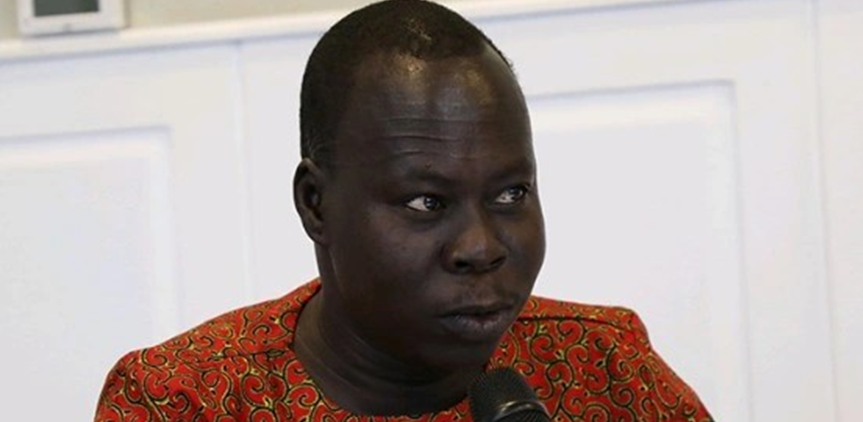
The writer, Ter Manyang Gatwech, is a South Sudanese gender expert and human rights activist. He can be reached via email:termanyang24@protonmail.com
The views expressed in ‘opinion’ articles published by Radio Tamazuj are solely those of the writer. The veracity of any claims made is the responsibility of the author, not Radio Tamazuj.

 and then