



As a South Sudanese who believes deeply in the vision of a New Sudan—one built on justice, equality, and shared nationhood—I write this article with a heavy heart. The war currently consuming Sudan is not merely a contest between two armed factions. It is the latest chapter in a long and painful history of exclusion, marginalization, and the systematic dismantling of a pluralistic national identity.
Since independence, Sudan has been shaped by a narrow political vision that sought to impose an Arab-Islamic identity on a country defined by its ethnic, cultural, and religious diversity. This hegemonic project, championed by central elites—often referred to as Ahl al-Hall wal-Aqd (those who hold the reins of power)—has consistently marginalized vast swathes of the population, particularly in the South, West, and East.
The 2005 Comprehensive Peace Agreement (CPA) offered a rare opportunity to reimagine Sudan as an inclusive state. It promised a path toward unity based on equity and mutual respect. Yet, rather than implementing the agreement in good faith, the ruling elite undermined its provisions, making unity unattractive and ultimately leading to the secession of South Sudan in 2011. This was not merely a geopolitical shift—it was the first major step in a broader agenda to construct a homogenous state, stripped of its African and non-Muslim identities.
The same logic of exclusion that led to the South’s separation has continued to define the state’s approach to the rest of Sudan. In Darfur, the Nuba Mountains, and Blue Nile, the regime armed local militias—most infamously the Janjaweed—to suppress demands for justice and development. These militias later evolved into the Rapid Support Forces (RSF), which, after years of serving as instruments of state violence, turned against their creators in a bid for power.
Today, the architects of this chaos—many of who reside comfortably in foreign capitals—are once again manipulating the peripheries. They pit marginalized communities against one another in a cynical game of “kill a slave with a slave,” recycling the same tactics that once devastated the South and now threaten to annihilate what remains of the Sudanese state
In this bleak landscape, the principled stance of Chairman Abdul Wahid Mohamed al-Nur, the leader of the Sudan Liberation Movement, stands as a beacon of clarity. His refusal to participate in a war that serves only the interests of the elite is a courageous affirmation of the values of justice and liberation.
I call upon the Joint Forces and the various factions of the Sudan People’s Liberation Movement–North to reconsider their positions. Their involvement in this war risks legitimizing the very system they once fought to dismantle. Instead, I urge them to align with Abdul Wahid and other forces committed to a genuine liberation of the marginalized. Only through unity can we reclaim the vision of a Sudan that belongs to all its people.
I also appeal directly to Gen Yasir Arman, a key figure in the New Sudan project under the late Dr John Garang. To support the same elites who once waged war against the ideals of equality and inclusion would be a betrayal of that legacy. The New Sudan was never about replacing one form of domination with another—it was about ending domination altogether.
The true victims of this war are the civilians—especially those in the peripheries—who are being killed, displaced, and dispossessed. The winners are the elites who orchestrate the conflict from afar, waiting to reassert control over a broken land.
If this trajectory continues, Sudan risks not only further fragmentation but total collapse. The war is not a solution—it is a symptom of a deeper disease: the refusal to accept Sudan’s plural identity.
The salvation of Sudan lies in a radical departure from the politics of exclusion. It requires a new national project—one that embraces ethnic, religious, and cultural diversity as a strength, not a threat. This means building a state based on equal citizenship, equitable distribution of power and resources, and the dignity of every
This vision cannot be imposed from abroad. It must emerge from within—from the courage of those who refuse to be pawns in elite power struggles and who believe, as I do, that Sudan can still be a home for all its people.
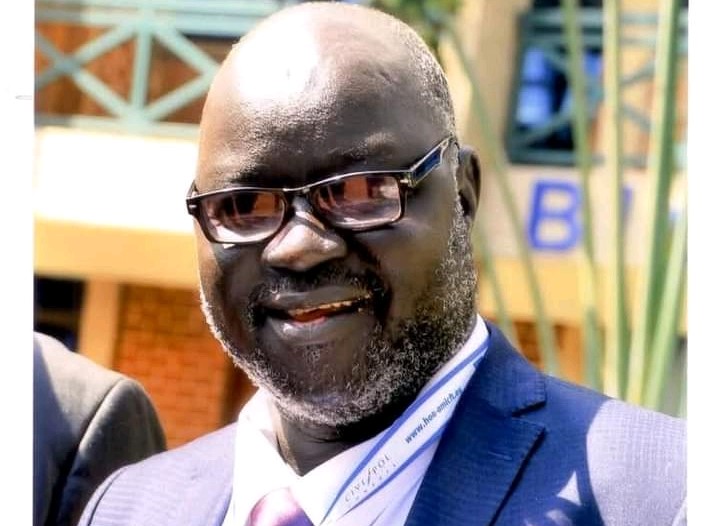
The writer, William Sunday D. Tor, is a South Sudanese writer and researcher specializing in identity and political conflict in Sudan.
The views expressed in ‘opinion’ articles published by Radio Tamazuj are solely those of the writer. The veracity of any claims made is the responsibility of the author, not Radio Tamazuj.

 and then