



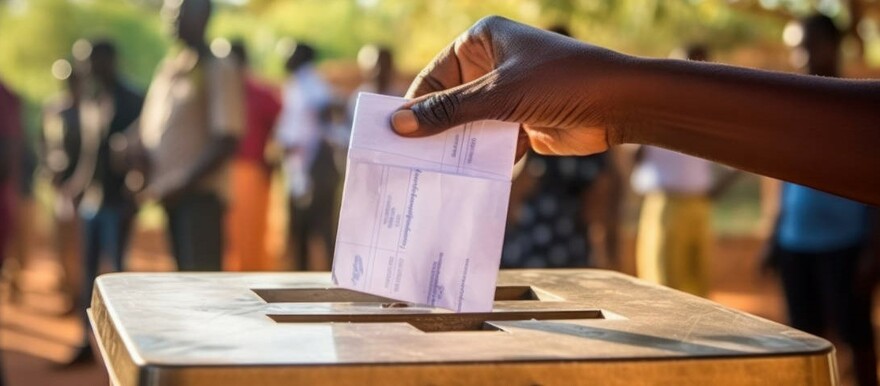
Dr. Luka’s recent article — framed as technical counsel on the fate of the R-ARCSS and the road to elections — does not speak to the people of South Sudan. It speaks to the insiders: technocrats, regional mediators, donors, and domestic elites who prefer legalism and procedural fixes that preserve elite continuity. We will expose his audience, correct the factual record, dismantle each of his four “options,” and be brutally clear about one thing: the people of South Sudan cannot, must not, and will not be used as a cover to reinstall an illegitimate regime in Juba.
1. Who is Dr. Luka really speaking to?
Read his tone and his targets: heavy emphasis on constitutional text, National Elections Act (NEA) technicalities, amendment procedures, and high-level processes (JMEC, Tumaini, NCRC). That language is not mobilising language for ordinary citizens; it’s an appeal to lawyers, advisers, donors, and regional mediators who transact power in conference rooms. Dr. Luka’s institutional biography — Sudd Institute / academic and policy networks — places him in the center of the expert-policy ecosystem that often thinks in trade-offs between “stability” and “timely democracy.” That ecosystem reliably privileges process over popular accountability.
Translation: when Dr. Luka writes about “delinking the NEA from the Permanent Constitution” or “hybrid technocrat governments,” he is offering legal avenues to protect incumbency to readers who control the levers of power — not the citizens who will live under the results.
2. The facts that matter (correcting misdirection)
- The March fighting in Nasir escalated into a major political crisis: White Army elements overran positions, the army evacuated, and Juba’s response included arrests and the surrounding/house arrest of key SPLM-IO figures. That incident triggered the current political breakup and the prosecutions now being used as political instruments.
- The parties amended the transitional timetable in September 2024 to push elections to December 2026 — a decision already criticized by RJMEC, the UN, and others as a risky postponement that must be accompanied by concrete security and technical steps. RJMEC has repeatedly warned that election preparations are behind schedule and that insecurity threatens the December 2026 target.
- The National Elections Act (amendment, 2023) and the National Elections Commission (NEC) are on record; election law and constitutional timelines carry precise deadlines (e.g., announcements, dissolutions, constituency delimitations) that are not cosmetic — they impose real technical and political tasks. The NEC has published the NEA amendment documents.
- South Sudan still lacks a robust, nationally accepted population baseline and will need substantial time and resources to complete a credible national census and constituency delimitation before a truly free and fair legislative election. The National Bureau of Statistics and partners have worked on preparatory exercises, but a full, secure census — with displaced populations and active frontlines — is not a trivial administrative exercise.
- At the same time, multiple perception surveys (including UNMISS-commissioned polling) show very high public demand for elections — the people want ballots, not bargains among elites — even while they fear violence if elections are rushed or used to entrench power. Civil society actors (CEPO and others) have repeatedly reminded authorities that public trust and security are prerequisites, not optional extras.
Those are the core facts. Every policy choice must be judged against them.
3. Response to the four options Dr. Luka proposes — point by point
Option 1 — “Hold elections only in the 102 geographical constituencies (defer 56 new seats).”
Reality check: This is a legalistic shortcut that rewards the status quo. It pretends representation is only a line-drawing exercise, but in practice, it will lock in demographic and geographic distortions that favour incumbents who control local administrations and security forces. Delaying additional seats without transparent, agreed criteria guarantees later manipulation when elites redraw lines. It also denies communities displaced by war or excluded by state aggression the chance to have those changes reflected. Any proposal that freezes the map without an independent, well-resourced socio-demographic process will be seen (rightly) as a partisan gerrymander.
Consequences: Legal veneer for structural exclusion; intensified grievance in marginalised areas; international credibility lost if the catalogue of additional seats is not independently validated.
(Sources on legal and technical limits of delimitation and the NEA framework are on record with the NEC and the NEA amendment texts.
Option 2 — “Partial elections: elect the President, governors, chief administrators (executive), and defer legislatures.”
Reality check: A standalone executive election without a legitimate legislature is a recipe for authoritarian capture. Elect a President in a context where parliament and state assemblies remain appointed or inherited, and you create a concentration of unbalanced power: the winner can claim a direct popular mandate while manipulating or ignoring representative checks. Given the lack of an independent election roll, unresolved constituency boundaries, and the fact that security forces have already been used to arrest and intimidate opposition leaders, a “partial” executive poll would be a partial coup by ballot. It would be convenient for incumbents and catastrophic for democratic accountability.
Consequences: Short-term façade of legitimacy for the incumbent; long-term erosion of checks and public trust; higher risk of post-election violence when opposition delegitimizes results.
See policy analyses on “how not to hold elections” and the repeated warnings from civil society and RJMEC about inadequate preparation.
Option 3 — “Create a hybrid technocratic government (prime minister + technocrats) to prepare conditions for elections.”
Reality check: Dress a power-restructure in technocratic language, and it remains a political redesign. Who selects the technocrats? Under what mandate, accountability, and timeline? In a context where courts and security services are already politicized, a “technocratic interim” is easily captured by the presidency and used to remove elected or representative institutions permanently. In practice, this becomes an administrative coup: the same elites remain in place but now with a new legal architecture that delays elections indefinitely. The proposal is tempting for donors and mediators because it looks like “fixing” governance — but without strong guarantees (international, enforceable, and with civil society oversight) it becomes a cover for elite entrenchment.
Consequences: Institutional hollowing; further alienation of constituencies; international fatigue followed by piecemeal recognition of an illegitimate architecture.
RJMEC has repeatedly warned that “business as usual” and administrative reshuffles will not fix the underlying security and trust deficits.
Option 4 — “Use the Tumaini Initiative and engagement with holdouts to justify a further postponement.”
Reality check: Inclusion of holdouts is necessary for sustainable peace. But using the Tumaini process as a pretext to postpone elections — without clear, binding benchmarks and time-bound deliverables — is dangerous. The Tumaini Initiative must be used to genuinely integrate holdouts into a political settlement that includes independent monitoring, disarmament, and security guarantees. If it instead becomes a diplomatic fig-leaf for delay, the international community and ordinary citizens will see it as manufactured legitimacy. Regional partners (Kenya, IGAD) and the international community will demand credibility; they will not indefinitely bless a process that is transparently being used to extend incumbency.
4. The so-called “partial election” is a red flag — here’s why
Calling for voting only for executives while deferring representative institutions is not a technical compromise — it is a political strategy to preserve the executive’s power while appearing to democratize. It removes legislative checks, postpones contentious roster work (population counts, boundary delimitation), and creates a new political reality where the presidency claims a direct popular mandate while the legislature remains unaccountable. If Dr. Luka or any other analyst frames this as “practical realism,” insist on the difference between practical planning and practical capture. The people must not be dragged into legitimising a process that strips them of full representation.
5. Why Dr. Luka appears invested in solutions that keep SPLM/Kiir power intact
At a minimum, three structural reasons explain the tilt in Dr. Luka’s prescriptions:
a. Institutional worldview: Dr. Luka’s career (think-tank, advisory roles, and work with policy institutions) biases him toward institutional fixes and negotiated elite bargains. Those fixes can easily be shaped to protect incumbents.
b. Risk aversion framed as “stability”: Many scholars and advisers fear immediate breakdown and therefore prefer orderly, stepwise reforms — but that logic can be weaponised to block popular accountability. When stability means “stability of elite rule,” it becomes a conservative doctrine.
c. Audience incentives: Writing for regional mediators and donors creates incentives to propose legally plausible, politically acceptable solutions that are implementable with the cooperation of Juba. That is not neutral: it privileges actors who already control state institutions.
This is not a claim about personal corruption; it is a structural diagnosis about incentives. When experts operate inside circles that depend on the goodwill of an incumbent state, their recommendations will often prioritize continuity over rupture. That is why civil society must maintain a loud, independent voice.
6. Why the people of South Sudan cannot be used to reinstate the current regime
- The people want elections. Perception polling shows high demand for the ballot box; citizens rightly reject being used as a pretext for elite deals. Any attempt to present partial or staged processes as “the will of the people” will be exposed.
- There is no legitimate mandate to re-impose a government that rules by repeated postponement. The repeated extensions have already created a legitimacy deficit; more legal gymnastics will deepen the crisis rather than resolve it.
- Security cannot be substituted with legalistic sleights of hand. For elections to be credible, parties must trust security guarantees, independent adjudication, and a neutral electoral administration. Using the people to cover for the absence of those preconditions risks mass rejection and violent contestation.
Moral and political point: The citizens are not a resource to be deployed. They are sovereign. Any process that treats them otherwise will fail.
7. So, will elections be held in December 2026?
Short answer (honest, unvarnished): It is unlikely that credible, fully inclusive national elections — covering executive and legislature with proper delimitation, a census, and secure conditions — will be delivered by December 2026 unless an extraordinary political and logistical sprint happens immediately and is backed by enforceable regional and international guarantees. RJMEC, election institutions, and civil society have repeatedly warned that preparatory work is behind schedule and that insecurity (exemplified by Nasir) has set back the clock.
What would need to happen for December 2026 to be credible:
a. A neutral, internationally monitored timetable and funding commitment for: (a) secure census completion and constituency delimitation; (b) full electoral roll and voter education; (c) robust funding and autonomy for the NEC and Political Parties Council.
b. Immediate, verifiable de-escalation in areas of conflict and a clear demobilisation plan for irregular forces. RJMEC and the UN must be empowered to monitor and report publicly.
c. The suspension or transparent, legal treatment of politically-motivated prosecutions that look like selective justice — trials used to neutralize opponents, destroy the space for peaceful, electoral politics. The international community must insist on due process and independent judicial action.
Absent those changes, an election in December 2026 becomes either a sham (if held without safeguards) or a postponement (if actors invoke technicalities). Both outcomes deepen the crisis.
8. What the people, civil society, and regional partners must demand now
a. No partial elections that exclude legislative representation or constitutional safeguards. Reject “partial executive” models.
b. Binding, public benchmarks for any use of the Tumaini process — with a transparent timetable, third-party verification, and consequences for bad faith.
c. International and regional enforcement tools: targeted diplomacy, conditional assistance, and accountability measures if the state weaponises courts or security forces to crush political opponents. RJMEC and the AU/IGAD should be given teeth, not just ceremonial roles.
d. Civic mobilization and information campaigns to ensure the people are informed, can monitor the process, and can peacefully resist any effort to use them as camouflage for elite continuity. (This is where civil society, women’s mediators, and local networks must lead.)
9. Final word — the choice facing South Sudan
There are two roads in front of us: one leads to a managed continuity where the outward rituals of democracy mask consolidated elite rule; the other leads to a contested, painful, but authentic transition in which citizens reclaim sovereignty. Dr. Luka’s article offers a menu of technocratic options that can be read — charitably — as earnest attempts to solve impossible problems. But the political reality is simple: procedural cleverness without genuine checks, security guarantees, and popular consent will not deliver peace or legitimacy. It will deliver the opposite.
NAS IMCCA calls on:
- All parties: to stop treating the people as instruments and begin talks that are transparent, inclusive, and subject to independent monitoring.
- Regional mediators and international partners: to condition support on measurable benchmarks, protect civic space, and refuse to ratify any partial process that empowers the incumbent without full representation.
- Civil society and citizens: to amplify demands for real accountability, to document abuses, and to insist that any timetable for elections is tied to concrete, verifiable conditions — not to the convenience of power.
We will not let the people of South Sudan be a façade for another enforced tenure of the same hands that have presided over the collapse. The path to justice, dignity, and lasting peace runs through full, free, fair, and secure elections — not through the legalistic backdoors of partial ballots and technocratic suspensions.
The writer, Daniel Lee, is the National Salvation Front (NAS) Commissioner of Information, Mass Communications, and Cultural Affairs. He can be reached via imcca@proton.me.
The views expressed in ‘opinion’ articles published by Radio Tamazuj are solely those of the writer. The veracity of any claims made is the responsibility of the author, not Radio Tamazuj.

 and then