



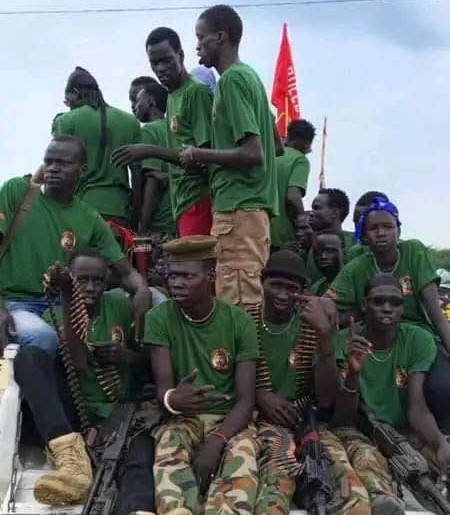
On 21 January 2026, South Sudanese President Salva Kiir issued an amnesty to select members of the Red Belt, a militia group operating in Jonglei State. According to official records, the partial pardon was granted “in the interest of national unity and the spirit of reconciliation”.
Given the country’s fragile political context, the President’s decision represents a step in the right direction. By offering an amnesty, while providing those not covered an opportunity to submit to state authority and integrate according to the law, the state signals a willingness to address armed mobilization through political engagement rather than reliance on force.
This choice warrants close attention from researchers, peace practitioners, and security analysts. Its long-term effectiveness remains to be tested: Will it succeed where previous initiatives did not work?
With the evolving complex security issues, the move presents an opportunity to explore whether it can become a home-grown approach to managing the persistent emergence and growth of local militias.
South Sudan has long struggled with strategies to address local militias, ranging from the White Army to former Agwelek and the Tahrir/Aak. Past responses have often been reactive, fragmented, or short-lived, highlighting the limits of approaches based solely on the concept of state security. In this context, the Red Belt amnesty represents a strategic decision, reflecting recognition that coercion alone has not delivered durable peace.
The amnesty decision should not be read as a concession of weakness. Instead, when implemented objectively, it can serve as a tool for political stabilization – drawing fighters out of armed structures, reducing immediate violence, and creating space for reintegration and reconciliation. The policy logic is clear: reduce incentives to remain in rebellion while opening a credible pathway back into lawful civic and security frameworks.
Amnesty is neither a solution nor a guarantee of peace. It is a transitional instrument, effective only when embedded within broader structural reforms.
South Sudan’s militia landscape is complex. Unlike formal rebel movements, driven by national agendas, many community-based armed groups mobilize around localized grievances like land disputes, cattle raiding, border tensions, and perceptions of communal insecurity. Their motivations are often defensive and identity-based, rather than ideological.
This distinction matters for policy. Political settlements alone rarely dissolve such groups. Their persistence is linked to gaps in state presence, weak law enforcement, limited justice delivery, and unresolved inter-communal tensions. In such environments, militias become alternative security providers.
The rise of groups such as the White Army, Tahrir, and the former Agwelek illustrates this pattern. These militias have repeatedly emerged, demobilized, and re-emerged, suggesting that past approaches addressed symptoms rather than the underlying drivers. This, therefore, calls for a deeper reflection on any approach, if a positive difference is to be made.
South Sudan’s past amnesty initiatives have been mixed, providing critical policy lessons that should inform the design and implementation of future offers. Amnesty can reduce violence and open space for reintegration, but its effectiveness depends on how it is tailored; structure, credibility, and follow-through. Reviewing earlier efforts reveals recurring strengths – short-term de-escalation and improved access for dialogue, as well as weaknesses, including weak monitoring, limited reintegration support, and poor linkage to justice and security sector reform. These gaps have, at times, allowed remobilization and undermined public trust. A policy-oriented assessment of previous amnesties is therefore essential to refine eligibility criteria, conditions, accountability safeguards, and institutional coordination. By examining selected militia cases, it becomes possible to draw practical takeaways on what worked and how future amnesty frameworks can better contribute to durable stabilization.
The former Agwelek militia case illustrates both the potential and the limitations of Presidential amnesty policies. Earlier general amnesties by the President, which also covered the Agwelek forces, did not produce lasting stability because they were not anchored in a holistic framework of integration, accountability, and institutional reform. They were often announced during major national addresses by the President. They typically extended pardons to all the groups that had taken up arms against the government, calling on them to join ongoing peace processes and reconciliation.
The most recent Presidential pardon affecting the Agwelek forces was issued in 2022. Unlike earlier amnesties, this arrangement was tailored to the Agwelek, facilitating the integration of their forces into the national military structures. This initiative has registered some progress, particularly by contributing to a reduction of violence in parts of Upper Nile, where the group has largely been concentrated.
However, the continued cohesion of Agwelek’s command structure highlights the fragility of reintegration that does not fully dismantle parallel chains of command. In practice, the situation remains hybrid, rather than fully resolved. While key leaders, including Gen Johnson Olony and his deputy, have been incorporated into the national military, with Gen Olony appointed Assistant Chief of Defense Forces for Mobilization and Disarmament, records show that significant elements of the Agwelek still operate with a distinct identity and retain informal command influence on the ground. Some fighters were reportedly continuing to function with relative autonomy, underscoring the incomplete nature of the integration.
The South Sudan Democratic Movement/Army – Cobra Faction (SSDM/A – Cobra Faction) began as both a militia and a rebel group. Records indicate it first rebelled against the government after the 2010 elections, initially operating under the SSDM of the late Gen George Athor. Its leader, Gen David Yau, later established the Cobra Faction within the SSDM/A. A Presidential Amnesty offered in 2010 did not produce results. The issue was ultimately resolved through a 2014 peace agreement, mediated by church leaders under the late Bishop Emeritus Paride Taban, which enabled the integration of the Cobra forces into the government. The failed amnesty remains a key case, raising important lessons on why such efforts sometimes do not succeed.
The White Army presents yet another contrasting case. This group has not received a tailored amnesty. It received a general pardon in the past, calling it to join reconciliation and peace efforts. However, this broad reconciliation call and general amnesty did not translate into structured disarmament or reintegration. Records indicate the group did not respond to the general amnesty calls. Without tailored engagement or sustained monitoring, the group has remained a recurrent factor in insecurity in Greater Upper Nile and South Sudan, illustrating the limitations of symbolic political gestures without operational follow-through.
Other loosely organized formations, including the Tahrir/Aak militias, operate without centralized command in Upper Nile and are sustained by unresolved local grievances. Their continued activity highlights the difficulty of applying a uniform policy to highly localized armed dynamics. The overarching lesson is that amnesty without institutional backing produces temporary de-escalation, at best.
The current Red Belt amnesty offers a potential departure from reactive security responses. By combining a conditional pardon with a call for integration under legal frameworks, the initiative attempts to balance de-escalation with state authority.
Its potential benefits are significant: reduced immediate violence and battlefield confrontation, incentives for fighters to disengage from armed structures, facilitation of disarmament, demobilization, and reintegration (DDR), signals of reconciliation and political inclusion, and lower financial and human costs, compared to sustained military campaigns. It requires due diligence in its implementation. In a fragile security environment, such measures can create breathing space for deeper reforms.
However, the risks are equally substantial. Amnesties that are not well designed or implemented can undermine the rule of law and the victims’ rights, create perceptions that violence is rewarded, encourage future armed mobilization as a bargaining strategy, enable remobilization if reintegration fails, be manipulated by political elites to protect allies, and unconditional or blanket amnesty weakens state legitimacy and may entrench impunity.
The policy challenge lies in managing the tension between short-term peace and long-term accountability. There is a need to shift focus beyond amnesty.
For the Red Belt initiative to contribute to durable stability, it must form part of a comprehensive strategy that includes: accountability mechanisms, Security Sector Reform (SSR) to professionalize and unify armed forces and strengthen law enforcement and justice institutions, arms control and community security, economic recovery and livelihood support in the affected areas, political dialogue and local conflict resolution. Without these measures, amnesty risks becoming a cyclical conflict management tool rather than a pathway to structural peace.
To pin it down, the Red Belt amnesty represents a calculated policy course. It acknowledges that coercive approaches alone have not resolved the militia challenge and that political tools are necessary in fragile contexts. Properly structured, conditional amnesty can reduce violence and open pathways to reintegration. Yet history cautions against overconfidence.
Amnesty is a bridge – not a destination. Not undermining community grievances that might have acted as a motivator factor, its success will depend less on the declaration itself than on the institutional seriousness, accountability safeguards, and reform commitments that follow.
In South Sudan’s stabilization trajectory, the Red Belt initiative may prove either a turning point toward managed de-escalation or another temporary pause in a recurring cycle. The difference will lie in the execution.
Waakhe Simon Wudu is a journalist and a student of strategic security studies (wakemurye@gmail.com).
The views expressed in ‘opinion’ articles published by Radio Tamazuj are solely those of the writer. The veracity of any claims made is the responsibility of the author, not Radio Tamazuj.

 and then