



The U.S. Embassy’s New Year statement on South Sudan’s oil revenues, as reported by Radio Tamazuj, is framed as a principled appeal for peace, accountability, and social responsibility. Its call for the payment of civil servants, soldiers, and police acknowledges an undeniable reality: the state has failed its most basic obligations despite possessing significant oil wealth. On the surface, the statement appears aligned with the interests of ordinary South Sudanese citizens.
Yet, precisely because the problem is neither new nor misunderstood, the statement’s restraint becomes its central weakness. What the U.S. presents as diplomacy instead reads as a familiar exercise in moral signaling—careful, non-confrontational, and ultimately inconsequential to those who hold power in Juba.
The appeal overlooks the core political fact underlying South Sudan’s crisis. The non-payment of salaries is not a technical failure or a capacity issue, but a product of entrenched corruption and a deliberate political choice made by an authoritarian, highly centralized, and personalized regime. Oil revenues have long flowed, but the regime has never translated them into public goods because accountability has been systematically resisted. By not naming those responsible or identifying sources of obstruction, the U.S. merges perpetrators and victims into a single moral space. This is a policy of moral equivalence—or perhaps selective morality; it is not neutrality, and it distorts reality.
Equally damaging is the statement’s lack of coercive logic. The embassy speaks of “hopes” and “aspirations” without specifying conditions, incentives, or consequences. There is no suggestion of fiscal benchmarks, targeted pressure, or policy recalibration should the status quo persist. For a government that has endured years of similar international statements without altering behavior, such language carries no deterrent value. Power responds to cost, not courtesy.
The U.S. Embassy’s call for South Sudan to allocate oil revenues to civil servants and public services is morally defensible, given that the government derives the vast majority of its income from oil; yet the people of South Sudan see little benefit, while infrastructure, schools, and hospitals remain unfinished. However, it is highly unlikely that the embassy’s call would alter a regime policy that has enabled more than a decade of plundering without reform.
President Kiir’s governance is marked by the diversion of oil revenues, elite predation, obstruction of the 2018 Revitalized Peace Agreement, and chronic neglect of public obligations. This reflects a political calculus in which regime survival and personal enrichment outweigh long-term national development. His regime’s policies often appear sound on paper but are rarely implemented in practice. By 2022, more than 60 percent of South Sudan’s oil production had been committed to debt repayment through opaque, oil-backed loans. Documented personal enrichment by Kiir, his family, and close allies—such as the U.S.-sanctioned former Vice President Benjamin Bol Mel—combined with these loans, demonstrates that the diversion of resources is a deliberate and politically motivated choice. Even international legal judgments have not altered this pattern. These include the $1 billion Qatar National Bank arbitration in 2024 in the U.S., and the 2025 case brought against South Sudan by African Export-Import Bank (Afreximbank) in the U.K. for failure to repay $657 million. Symbolic pressure has failed to produce meaningful reform.
Building on these entrenched patterns of elite capture and resource diversion, a United Nations commission released a scathing report in September 2025 that documented systemic corruption at the highest levels of South Sudan’s government. The report showed how political elites have siphoned off billions in oil revenues to the detriment of public services and development. The commission found an unprecedented level of corruption orchestrated by President Kiir, his family, and his allies. For example, the report found that approximately $2.2 billion was misallocated through the “Oil for Roads” program between 2021 and 2024. Of that amount, around $1.7 billion was diverted to firms linked to former Vice President Benjamin Bol Mel for road contracts that were never completed, leaving only a fraction of the funds for actual infrastructure or public services. This pattern of diversion underscores how public resources have been siphoned into politically connected networks rather than serving the needs of the South Sudanese people.
South Sudan’s government derives most of its revenue from oil and has diverted that income for years through opaque oil-backed loans and fraudulent, government-linked contractors. The regime has absorbed billion-dollar arbitration judgments and targeted sanctions without undertaking meaningful reform. The pattern is unmistakable. The continued withholding of salaries is therefore not a failure of capacity but the intentional result of corrupt political governance. This record leaves a simple question unanswered: on what empirical basis should anyone believe that a non-conditional U.S. “call”—absent benchmarks, costs, or enforcement—will produce a different outcome now than it has in the past?
This question is left to readers to assess in light of the evidence presented above.
The U.S. has financial, diplomatic, and geopolitical influence that it could leverage strategically and assertively if it chose to do so. As one of South Sudan’s largest donors, Washington possesses tools that could meaningfully alter the regime’s calculations. Yet the statement positions the U.S. as a benevolent observer rather than an engaged actor. This overcautious diplomacy preserves access and avoids confrontation, but it also signals predictability—and predictability is precisely what allows entrenched systems to remain unmoved. In this context, Uganda, China, and Russia have been able to deepen their ties with South Sudan, enabling Juba to discount Washington’s cautious approach.
Critics might argue that stronger U.S. pressure risks disrupting humanitarian access, destabilizing the region, or overestimating Washington’s unilateral influence. While these concerns are valid, history shows that conditional aid, targeted sanctions, and coordinated multilateral engagement can be carefully calibrated to protect civilians and maintain regional partnerships. Despite twelve years of unconditional support, elite corruption has persisted. Restraint has not mitigated these risks; instead, it has allowed the regime to consolidate power unchecked. Properly designed measures could impose political costs without endangering humanitarian operations or destabilizing the broader region, making strategic engagement both feasible and necessary.
Most critically, the statement misdiagnoses the nature of change. South Sudan’s government is notorious for impeding any reform that does not fit its own version, which is always about keeping the current political, judicial, and economic systems intact. Its transition from aid dependency to investment-led growth, as the embassy envisions, cannot happen without political reform. Investors do not respond to goodwill statements; they respond to strong institutions, the rule of law, and credible democratic and fiscal governance. By treating reform as a matter of encouragement rather than enforcement, the U.S. risks creating the illusion that structural change can happen without political cost. While this strategy may benefit the United States, for ordinary, suffering South Sudanese, it amounts to de facto silent complicity.
The embassy’s call is not wrong; it is necessary but insufficient. Its language reflects a longstanding pattern in South Sudan: stating what is morally correct while avoiding actions with real political consequences. President Kiir’s regime understands this approach well and absorbs it with ease, having changed nothing in the past. There is little reason to believe it will now. The United States should not cling to a policy that has proven ineffective over the last twelve years. If Washington is serious and still cares about South Sudan’s future, it must move beyond this policy of moral equivalence. This requires combining conditional aid, targeted sanctions, and multilateral pressure to make accountability politically costly for the regime. Simultaneously, the U.S. should strengthen engagement with Kenya, Ethiopia, Rwanda, and other regional partners to counter Uganda’s destructive influence and reinforce peace, governance, stability, and accountability throughout the country.
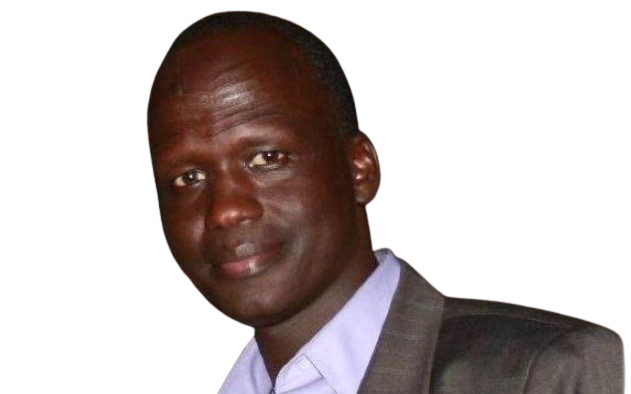
The writer, Duop Chak Wuol, is an analyst, critical writer, and former editor-in-chief of the South Sudan News Agency. He is a graduate of the University of Colorado and focusing on geopolitics, security, and social issues in South Sudan and the broader East African region. His work has appeared in leading regional and international outlets, including AllAfrica, Radio Tamazuj, The Independent (Uganda), The Arab Weekly, The Standard (Kenya), The Chronicle (Ghana), Addis Standard (Ethiopia), and Sudan Tribune. In 2017, the Ethiopian Broadcasting Corporation (EBC) highlighted his article on Prime Minister Meles Zenawi’s role in Ethiopia’s economic transformation. He can be reached at duop282@gmail.com.
The views expressed in ‘opinion’ articles published by Radio Tamazuj are solely those of the writer. The veracity of any claims made is the responsibility of the author, not Radio Tamazuj.

 and then