



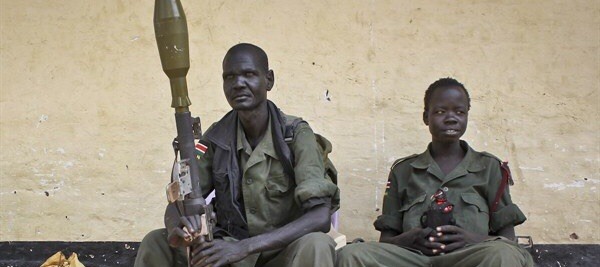
South Sudan is failing to translate peace agreements into reality on the ground. Investigative evidence reveals quiet, methodical preparations for renewed conflict, conducted largely outside public view. Across the country, particularly in the Bahr el Ghazal region and Central Equatoria State, old and young men are systematically drawn into state security and military structures without their consent. This includes the National Security Service (NSS) and affiliated military units, which employ practices that flagrantly violate lawful and transparent recruitment standards. Political fragmentation and weak state institutions have created conditions in which coercive practices occur with minimal oversight, allowing security actors to operate with near-total impunity. Reports indicate that civilians, including prisoners and street youth, are frequently coerced into military service and often sent to war zones under the cover of night, demonstrating the entrenched and widespread nature of forced recruitment.
Coercive Recruitment into Security and Military Structures
In Bahr el Ghazal and around Juba, the capital of Central Equatoria State, men and, in some cases, women are increasingly drawn into security and military institutions through coercive administrative measures rather than voluntary enlistment. Many are arrested without charge or detained in legal grey zones, with release contingent on agreeing to join the NSS or affiliated military units. This blurs the line between law enforcement and force generation, effectively transforming state custody into a mechanism for compulsory mobilization.
Child soldiers are heavily affected, with estimates suggesting that thousands, some as young as 10, are forcibly conscripted and subjected to harsh conditions, abuse, and severe psychological trauma. Recruitment operations are concentrated in specific towns across Bahr el Ghazal and around Juba, indicating deliberate targeting based on demographic vulnerability, political loyalty, and ease of control. Coercion often extends to families, creating social pressure that suppresses resistance. Evidence from NGOs, interviews with former detainees, local observers, and a South Sudanese national security source confirms that these practices are neither isolated nor improvised incidents. Instead, they follow a documented, recurring pattern of arrest, detention, coercion, and transfer, reflecting institutionalization. While this system expands the state’s security apparatus, it simultaneously erodes the rule of law, consolidating authority through force rather than consent.
Integration and Deployment of Coerced Recruits
Following involuntary recruitment, individuals are typically placed within the NSS or affiliated military units, assigned tasks ranging from routine patrols to frontline engagement. Most recruits are deployed without prior training, increasing operational and personal risk. In the absence of adequate training, targeted orientation programs function as a compensatory mechanism intended to impose command control, standardize procedures, and delineate chains of authority.
Many recruits replace SSPDF soldiers who have deserted due to difficult conditions, such as unpaid salaries, sometimes for up to a year. Facing severe economic strain, the military reportedly relies not only on informal livelihoods, such as selling firewood, but also on criminal activities to sustain personnel, exposing systemic weaknesses that heighten dependence on coerced recruits.
Operational Challenges and Resource Scarcity
Deepening these systemic weaknesses, recruits are frequently deployed to frontline duties without adequate equipment, highlighting severe logistical and financial constraints. Reports indicate that many forcibly recruited individuals are sent directly into combat, often learning only at the front lines that their mission is framed as defending the nation against perceived threats. Some arrive barefoot, others in open-toe footwear, and many wear regular shorts instead of standard military uniforms. Such conditions undermine operational effectiveness and expose recruits to extreme, preventable risks, underscoring deeper structural deficiencies within the military.
Despite these constraints, President Kiir’s government appears to prioritize financing foreign military deployments, particularly Ugandan soldiers, with relative ease. Field investigations indicate that each Ugandan soldier reportedly receives at least USD 200 per month, while most members of the national army remain unpaid for months, sometimes up to a year. This stark disparity reflects deliberate allocation favoring external security arrangements over domestic forces, revealing a governance strategy focused on regime protection rather than institutional stability.
Investigations further reveal that more than 1,700 recruits from the Bahr el Ghazal region have been deployed to Jonglei State on January 20, 2026, as part of the SSPDF, with many reportedly in their early teens, participating in attacks on SPLA-IO positions. Tens of thousands more recruits are reportedly undergoing training in Northern Bahr el Ghazal and Warrap States, signaling a sustained mobilization effort.
Over time, these recruits become permanently absorbed into the security apparatus, severely limiting their ability to resist or disengage. Reports indicate recruits are closely monitored, with troop movements coordinated near recruitment hubs to maintain control and prevent desertion. Such systematic integration strengthens short-term operational capacity while reinforcing state control over strategic regions.
Considering the full scope of these developments, the coordinated recruitment, training, deployment, and monitoring of new forces demonstrates an intentional approach to conflict preparation rather than an ad hoc crisis response. Within a broader context of weak institutions, entrenched militarization, and external military support, coerced mobilization emerges as a sustainable instrument of state power, revealing the deliberate reconstruction of South Sudan’s wartime infrastructure under the guise of peace.
Regional Militarization and External Support
Uganda officially describes its presence in South Sudan as a security-related mission. However, investigative evidence shows that the Uganda People’s Defence Force (UPDF) is actively involved in surveillance, opposition deterrence, and direct operational coordination with South Sudanese forces. A senior South Sudanese national security officer in Juba, speaking on condition of anonymity, confirmed on January 19, 2026, that a specialized Ugandan unit was deployed to Jonglei State on January 17, hours after clashes erupted between SSPDF and SPLA-IO around Duk County. The unit operates in close coordination with domestic forces, specifically elements of the NSS and Tiger Division, effectively serving as a force multiplier.
This deployment exemplifies a deliberate, rapid-response strategy linking regional military support to internal conflict dynamics. Embedding specialized foreign units alongside domestic forces enhances intelligence, extends operational reach, and deters opposition forces. The pattern underscores the strategic interplay between internal coercion and external militarization, revealing how Uganda actively shapes South Sudanese security outcomes.
Historically, Uganda has maintained a longstanding security and economic relationship with South Sudan, providing logistical support and engaging in military cooperation across key regions. Investigative reports suggest Ugandan assistance has included the provision of banned weapons, such as cluster munitions, in violation of international embargoes, intensifying the lethality of the conflict. This backing has, in turn, reinforced South Sudan’s capacity to enforce coercive recruitment practices and maintain strategic control over contested areas.
Uganda’s involvement appears motivated more by economic and political interests than security concerns, highlighting the regional stakes in South Sudan’s militarization. Within this context, Ugandan forces function not only as external partners but also as force multipliers that limit political space and constrain opposition activity. Collectively, internal coercive recruitment and regional military support suggest a coordinated strategy aimed at preparing for renewed conflict.
Beyond Uganda, new evidence indicates that South Sudan engages additional cross-border forces, further escalating regional conflict dynamics. Investigative sources reveal that President Kiir has strengthened military capacity through collaboration with Sudan’s Rapid Support Forces (RSF). On November 13, 2025, two senior NSS officers met with RSF leadership in North Darfur to discuss operational collaboration, including financial compensation for RSF participation. RSF representatives were reportedly in Juba in early January 2026 for meetings with NSS personnel, with Kiir’s knowledge.
This January meeting reflects a transactional strategy: Kiir leverages ethnic, border, and regional loyalties to supplement forces, effectively outsourcing combat capacity to a group notorious for brutality in Sudan. The alliance links domestic coercive recruitment to cross-border militarization, amplifying operational reach and civilian risk while embedding South Sudan deeper into volatile Nile–Sudan border dynamics.
Public vs. Private Narrative: Peace Rhetoric vs. Covert Militarization
Official statements stress peace and stability, with Kampala asserting that its forces are not engaged in conflict. However, investigative evidence confirmed by a confidential SSPDF officer at Bilpham Headquarters reveals a starkly different reality: covert militarization, forced recruitment, ethnic mobilization, and the continued use of banned weapons. Reports from recruitment hubs, battlefield footage, and former detainees indicate that war infrastructure is actively being rebuilt, despite official peace rhetoric.
The divergence between public rhetoric and private practice highlights the strategic deployment of peace narratives to conceal aggressive militarization and evade accountability. Insider sources confirm that President Kiir escalates conflict along ethnic lines, secretly mobilizing the Bahr el Ghazal region against predominantly Nuer opposition forces.
Peace Agreements and the Logic of Non-Implementation
The failure to consolidate a functioning state apparatus since independence explains how these dynamics have taken root. Since 2011, the state has struggled to translate formal peace agreements into effective governance. The 2018 revitalized peace agreement promised security, political, and legislative reforms, power-sharing, and institutional checks; yet, selective implementation has systematically undermined its transformative potential. Full implementation would have constrained executive authority; as a result, peace has been deliberately exploited to preserve presidential dominance.
Evidence suggests the agreement has not been implemented as stipulated, and that delays and omissions were not merely administrative or logistical but strategically orchestrated. Multiple monitoring reports, insider accounts, and implementation timelines indicate that President Kiir and his inner circle actively obstructed key provisions of the agreement. Core elements, such as the unification of forces, depoliticization of security services, establishment of independent oversight institutions, and reconstitution of key commissions, remain incomplete. These failures reflect a strategic decision to retain control over the security sector rather than relinquish authority through institutional reform.
This pattern of obstruction has been reinforced by unilateral executive actions that undermine the agreement’s power-sharing framework. President Kiir has repeatedly removed or reshuffled government officials aligned with opposition parties, including those appointed under the peace agreement, without consultation with opposition signatories, thereby consolidating loyalists within strategic ministries, state governments, and security institutions.
Sources reveal that President Kiir and his allies planned strategies against SPLA-IO and NAS on October 22, 2025, ahead of the December 2026 elections. One highly placed source closely associated with RJMEC confirmed two meetings in late October 2025 in Luri, attended by Kiir, his close security and military advisors, and seven Ugandan officials linked to Uganda’s External Security Organisation and Chief of Defence Forces.
This coordination indicates the government pursued parallel security planning outside formal peace mechanisms, preparing for war and political containment rather than implementing the agreement’s provisions for peaceful political competition. Uganda’s support has historically included violations of UN arms embargoes, facilitating weapons transfers despite restrictions, raising concerns over regional accountability.
Bahr el Ghazal as a Strategic and Historical Core
The Bahr el Ghazal region, particularly Northern Bahr el Ghazal and Warrap States, serves as a strategic base for recruitment and militarization. Historical precedents, including tribal militias mobilized months before the 2013 civil war and later integrated into formal security structures, reveal a long-standing pattern of militarized mobilization. Contemporary practices reflect a deliberate continuation of this trajectory, with young men forcibly transported to training sites across the country.
On December 23, 2025, Kiir issued a secret authorization granting unrestricted recruitment powers, financial and resource utilization, and close coordination with Ugandan soldiers to several high-ranking military and national security officials, including SSPDF Chief of Defence Forces Gen. Paul Nang Majok, NSS Lt. Col. Angelo Kuot Garang, SSPDF Assistant Chief of Defence Forces for Mobilization and Disarmament and commander-in-chief of the Agwelek militia Gen. Johnson Olony, NSS Major Gen. Garang Ariath, and others. This authorization formalized a long-standing war strategy and entrenched coercive recruitment practices, demonstrating the calculated integration of domestic and regional forces to maintain control and suppress opposition.
Evidence from the Battlefield and Case Studies
Recent clashes between the SSPDF and SPLA-IO in Jonglei State have exposed ongoing coercive recruitment dynamics. Footage and multiple anonymous sources confirm that recruits were forcibly conscripted, with authorities prioritizing loyalty and rapid manpower over national defense considerations. Viewed in combination, historical precedent, institutional weakness, external military cooperation, and corroborated insider accounts demonstrate that coercive recruitment is systemic and deliberately planned rather than incidental. This practice reinforces executive control while undermining professional security institutions and concealing wartime tactics not intended for public scrutiny.
The following case studies provide concrete examples of how coercive recruitment is implemented across South Sudan. Drawing on battlefield evidence, social media documentation, confidential field interviews, and family testimony, these cases illustrate systematic patterns of forced enlistment, deployment of underage recruits, and coordinated state control. They highlight the human, operational, and institutional impacts of recruitment practices that prioritize loyalty and manpower over legal norms, governance, and civilian protection.
Case Study 1: Biliu Kuol Bateng, a young man from Mayom County, Unity State, believed to be under 18, was reportedly detained without charge and forcibly conscripted into military service. He was captured by SPLA-IO during the Pajut clashes around January 17, 2026. A video clip widely circulated on South Sudanese social media documents him recounting his arrest, transfer, and assigned duties, providing direct evidence of systematic coercion.
Case Study 2: Patrick Gore, 15, from Central Equatoria State, illustrates the broader social impacts of coercive recruitment. According to confidential field interviews, his family faced threats when attempting to obtain information about his detention. On January 19, 2026, around 11:00 pm, he escaped from a national security facility to Munuki district, highlighting the wider community-level consequences of coercive practices.
Case Study 3: Chan Nyatuol, an elderly man from Unity State’s Guit County, was reportedly detained and forcibly transferred to Jonglei State to participate in combat against armed opposition forces. Family testimony indicates he was deliberately deceived by government operatives, summoned to a staged meeting, and subsequently forced into a waiting vehicle, demonstrating a coordinated and systematic coercive recruitment tactic.
Collectively, these cases and battlefield evidence reveal a deliberate and systemic approach to forced recruitment, prioritizing operational control and loyalty over legal norms or institutional integrity. The convergence of coerced enlistment, deployment of underage recruits, and corroborated field accounts demonstrates how the state systematically leverages coercion to expand manpower, entrench authority, and perpetuate violence.
High-Level Confirmation of War Preparations
Further confirming the scale and intent of these operations, this investigation has been corroborated by multiple high-level government sources indicating that South Sudan is heading toward all-out war. This assessment was reinforced by statements made by SSPDF Assistant Chief of Defence Forces for Mobilization and Disarmament, Gen. Johnson Olony, who on January 24, 2026, addressed his Agwelek militia fighters with an explicit call to violence, declaring, “When we arrive there, do not spare an elderly person, do not spare a chicken, do not spare a house—anything.” The remarks triggered immediate and widespread condemnation from South Sudanese communities and underscore mounting fears that senior military figures are openly endorsing tactics associated with the resumption of war, with the potential to result in mass atrocities nationwide.
This stark confirmation at the leadership level reinforces how the observed patterns of recruitment and coercion are part of a broader, deliberate strategy, setting the stage for the systemic risks and regional implications discussed below.
Patterns, Implications, and Risks
Across the country, coercive recruitment and forced integration are widespread, systematic, and strategically coordinated, reflecting a carefully planned approach to consolidating power through war. Coordination between South Sudanese security structures and external military support, particularly from Uganda, underscores deliberate orchestration rather than improvised action.
These practices undermine peace agreements, bypass legal recruitment procedures, and weaken institutional oversight, increasing the risk of renewed ethnic and political violence. Targeted communities, marginalized youth, displaced individuals, and other vulnerable populations experience destabilization, trauma, and erosion of social cohesion, perpetuating insecurity even during periods of nominal peace.
The reported use of chemical or other banned weapons, combined with child recruitment, heightens humanitarian and ethical risks. Uganda’s military presence further enhances operational capacity for coercion and deterrence. The convergence of internal coercion and external support creates a self-reinforcing system that consolidates state control over violence while constraining civil society. Viewed within broader historical and contemporary patterns, these dynamics demonstrate a high potential for the return of full-scale civil war, revealing how peace rhetoric masks the reconstruction of wartime infrastructure.
Conclusion: The Hidden Architecture of Conflict
South Sudan is actively preparing for renewed conflict, masked by rhetoric of “peace.” Coercive recruitment, forced integration, child soldier involvement, ethnic mobilization, and the use of banned weapons—all supported by external actors—collectively reveal a coordinated strategy to consolidate military power while circumventing accountability. President Kiir’s alliances with Uganda and Sudan’s RSF further extend operational reach and embed external actors into domestic conflict, sharply increasing risks to civilians. These developments undermine peace agreements, destabilize communities, and escalate ethnic and political tensions.
The resumption of war in South Sudan carries serious regional consequences, threatening stability in neighboring states such as Sudan, Kenya, Uganda, and Ethiopia. Cross-border displacement, illicit arms flows, and the mobilization of regional militias or paramilitary actors could intensify existing political and security pressures, overwhelm humanitarian response systems, and facilitate transnational insurgent networks. Insider testimony underscores the urgent need for sustained international monitoring and enforcement, without which covert militarization and cross-border alliances will entrench cycles of violence, destabilize the wider region, and further erode prospects for sustainable peace.
The writer, Duop Chak Wuol, is an analyst, critical writer, and former editor-in-chief of the South Sudan News Agency. He is a graduate of the University of Colorado, focusing on geopolitics, security, and social issues in South Sudan and the broader East African region. His work has appeared in leading regional and international outlets, including AllAfrica, Radio Tamazuj, The Independent (Uganda), The Arab Weekly, The Standard (Kenya), The Chronicle (Ghana), Addis Standard (Ethiopia), and Sudan Tribune. In 2017, the Ethiopian Broadcasting Corporation (EBC) highlighted his article on Prime Minister Meles Zenawi’s role in Ethiopia’s economic transformation. He can be reached at duop282@gmail.com.
The views expressed in ‘opinion’ articles published by Radio Tamazuj are solely those of the writer. The veracity of any claims made is the responsibility of the author, not Radio Tamazuj.

 and then