



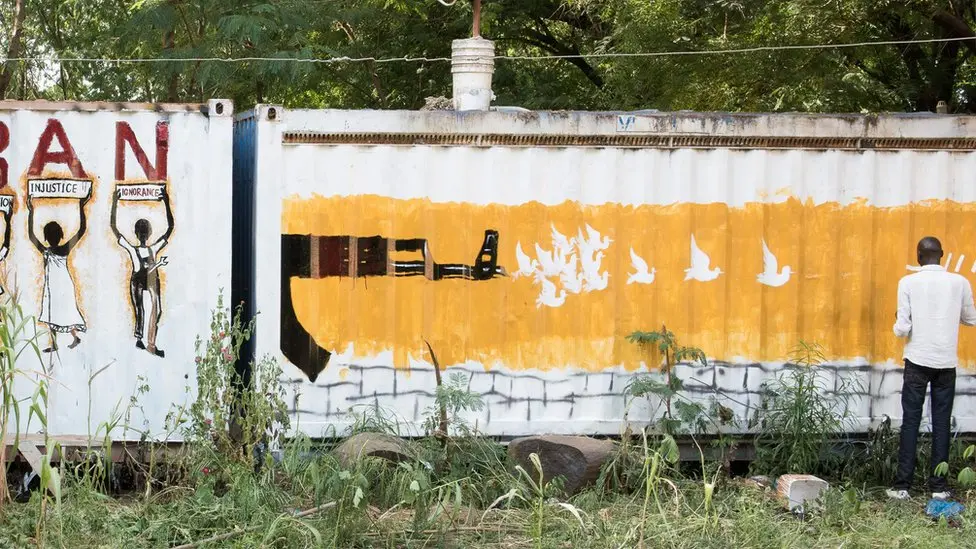
South Sudan’s journey as a nation has been deeply scarred by repeated cycles of armed conflict. Since independence, the country has struggled to translate political agreements into lasting peace, as violence continues to erupt across communities and regions. The widespread use of force and revenge as tools for resolving political and communal disputes has failed to deliver stability. Instead, it has entrenched insecurity, weakened institutions, and prolonged the suffering of civilians. Evidence from humanitarian reports, development assessments, and conflict analyses consistently shows that peace pursued through bullets does not address the root causes of violence. Sustainable stability in South Sudan can only be achieved through reconciliation and forgiveness, grounded in justice, accountability, and inclusive dialogue.
However, the human cost of seeking peace through violence has been devastating. Armed confrontations have claimed countless lives and displaced millions, forcing families to abandon their homes, farmlands, and livelihoods. Women and children make up the majority of those displaced, facing heightened risks of hunger, disease, and violence. Agricultural production has been severely disrupted as farmers flee insecurity, while pastoralist livelihoods have been undermined by cattle raiding and armed clashes. These realities are well documented in food security and protection assessments, which link chronic hunger and dependency on humanitarian aid directly to prolonged conflict and instability.
Moreover, the social and economic foundations of the country have been systematically eroded by cycles of revenge. Markets collapse when trade routes become unsafe, local economies stagnate, and youth are drawn into armed groups as an alternative means of survival. Infrastructure such as roads, schools, health facilities, and water systems has been destroyed or left undeveloped due to insecurity and the diversion of resources toward military priorities. Evidence from development partners shows that regions experiencing persistent violence lag significantly behind in education, healthcare access, and income generation, reinforcing inequalities that fuel further conflict.
In addition, the reliance on armed solutions has undermined trust between communities and between citizens and the state. Violence hardens ethnic and political divisions, creating narratives of collective blame that justify retaliation. Children growing up in such environments internalize violence as a normal means of resolving disputes, perpetuating cycles of conflict across generations. Trauma, left unaddressed, becomes embedded in social relations, weakening cohesion and obstructing national reconciliation. Studies from post-conflict contexts indicate that without deliberate efforts to address psychological and social wounds, societies remain vulnerable to renewed violence even after formal peace agreements are signed.
So what alternative exists when violence has failed repeatedly? Evidence points toward reconciliation and forgiveness as essential pillars of sustainable peace. Reconciliation processes create space for acknowledging harm, restoring dignity to victims, and rebuilding relationships fractured by war. In South Sudan, traditional and community-based conflict resolution mechanisms have historically played a role in resolving disputes over land, cattle, and communal relations. When supported by civil society, faith-based institutions, and local leaders, such initiatives have reduced tensions and enabled communities to coexist despite painful histories.
Somewhat counterintuitively, forgiveness is often perceived as weakness in a context of profound suffering. Yet evidence from peacebuilding practice demonstrates that forgiveness can be a powerful tool for breaking cycles of revenge. Forgiveness does not erase accountability or justice; rather, it allows communities to move beyond perpetual retaliation. In South Sudan, community dialogues and church-led reconciliation efforts have enabled displaced families to return home and resume shared economic activities, illustrating the practical benefits of non-violent approaches to peace.
In relation to national stability, reconciliation-based peace offers a pathway toward inclusive state-building. Peace processes centered solely on power-sharing among armed elites fail to address the everyday realities of citizens. Inclusive reconciliation, by contrast, amplifies the voices of women, youth, and marginalized groups who bear the brunt of conflict. Evidence from global peace processes shows that when peace is rooted in social healing and community participation, agreements are more likely to be implemented and sustained. For South Sudan, this means shifting the focus from military dominance to social cohesion and institutional reform.
Paradoxically, the pursuit of peace through force has delayed the very development it claims to protect. A nation cannot grow while its people live in fear and displacement. Education systems cannot function amid insecurity, healthcare cannot improve without stability, and economic growth cannot take root in a climate of violence. Reconciliation and forgiveness create the conditions necessary for investment, service delivery, and long-term development by restoring trust and predictability in social and political life.
Ultimately, South Sudan’s experience demonstrates that bullets and revenge do not bring stability. They deepen wounds, destroy livelihoods, and undermine the foundations of peace. Reconciliation and forgiveness, anchored in truth, justice, and inclusivity, offer a more credible and humane path forward. By choosing dialogue over violence and healing over retaliation, South Sudan can begin to repair its social fabric and move toward the stability and development its people have long endured and deserve.
The writer is a social researcher and peace advocate. He can be reached via mogtomloyo@yahoo.co.uk.
The views expressed in ‘opinion’ articles published by Radio Tamazuj are solely those of the writer. The veracity of any claims made is the responsibility of the author, not Radio Tamazuj.

 and then