



Your Excellency,
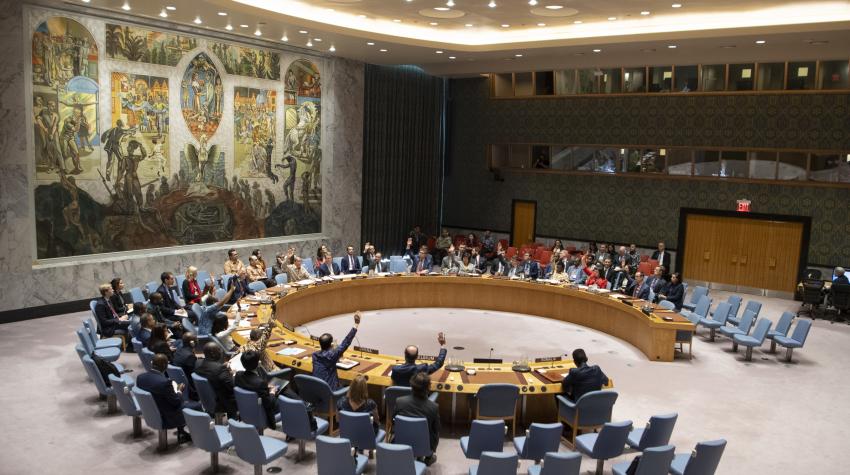
I write to convey my sincere appreciation to the United Nations Security Council and the broader international community for sustaining principled and vigilant engagement on the situation in the Republic of South Sudan. The recent high-level briefings held in New York on 10–11 February 2026 reaffirmed that South Sudan remains firmly on the conscience and agenda of the international system at a time when its peace process faces a profound strain.
The deliberations of the Council were both timely and sobering. They underscored the gravity of escalating violence in Greater Equatoria and Greater Upper Nile, the alarming expansion of humanitarian need, now affecting more than 70 percent of our population, and the mounting tensions between the Government of South Sudan and the United Nations Mission in South Sudan (UNMISS). The candid remarks by the representative of the United States, Ambassador Jennifer Locetta, reflecting concerns that elements of leadership have systematically undermined peace commitments, demonstrate the seriousness with which the Council views the current trajectory. Equally, the position articulated by South Sudan’s Permanent Representative, Ambassador Cecilia Adut Deng, affirming the Government’s stated commitment to elections and the peace process, highlights the urgent necessity of reconciling rhetoric with demonstrable action.
We further note the Council’s concerns regarding restrictions on UNMISS operations, the risks posed to the Mission’s viability, and the call by UN officials for the withdrawal of forces from the disputed Abyei region to prevent further escalation. These issues are not peripheral; they go to the heart of whether South Sudan will consolidate peace or relapse into renewed conflict.
The humanitarian dimension of the crisis demands particular attention. With approximately 10 million citizens in need of assistance and nearly 40 percent of the population displaced internally or externally, political deadlock is no longer an abstract governance failure; it is a direct threat to human survival. The advocacy by civil society actors and institutions such as the International Center for Transitional Justice, emphasizing the inclusion of refugees and internally displaced persons in transitional justice mechanisms, reflects an essential truth: peace cannot be sustainable if it excludes those most affected by war.
Addressing the structural weaknesses of the R-ARCSS
While the Revitalized Agreement on the Resolution of the Conflict in the Republic of South Sudan (R-ARCSS) represented a historic opportunity in 2018, its implementation has been impaired by structural weaknesses that now require urgent and corrective attention.
Moving beyond elite-centric power-sharing
The Agreement’s heavy emphasis on elite accommodation between principal leaders has inadvertently sidelined citizen-centered governance. A recalibration is necessary, one that institutionalizes meaningful participation of civil society, women, youth, displaced populations, and traditional leaders in constitutional-making, security reform, and transitional justice processes.
Strengthening enforcement mechanisms
Monitoring bodies such as RJMEC and CTSAMVM must be empowered with clearer consequences for non-compliance. Recommendations should be time-bound, transparent, and supported by calibrated measures, ranging from diplomatic pressure to targeted sanctions, where violations persist. International guarantors must move from observation to credible enforcement.
Operationalizing deadlock-resolution mechanisms
The peace framework should incorporate formal arbitration procedures for interpretative disputes, revive and fully activate joint implementation committees, and establish small, technically focused “deadlock-breaking” teams to resolve contentious security and constitutional issues. Where impasses endure, structured third-party mediation backed by leverage is indispensable.
Restoring collegial collaboration in the presidency
The spirit of collegial collaboration, as envisioned in the R-ARCSS, must be restored. Unilateral actions, dismissals, or detentions of signatories undermine both equality and trust. The release of political detainees, reactivation of the Joint Defence Board, and recommitment to consensus-based decision-making are essential confidence-building measures.
Security sector unification and reform
The protracted failure to unify forces under a single professional command continues to destabilize the country. A sequenced, internationally supervised security reform roadmap, with clear benchmarks and logistical support, should be prioritized before electoral timelines are finalized.
Institutional and economic reform
Peace agreements cannot endure in a vacuum of institutional fragility and economic despair. Strengthening public financial management, operationalizing integrated financial systems, empowering an independent Auditor General, and digitizing procurement processes are critical steps toward restoring public trust. Without a credible socioeconomic development agenda, political reconciliation will remain superficial.
Hybrid accountability mechanisms
Establishing the Hybrid Court for South Sudan, as stipulated in Chapter V of the R-ARCSS, would signal a decisive break from impunity and to address the violations of the Agreement instead of solely relying on the goodwill of the Principal Parties. Thus, internationalized tribunals, combining domestic and international expertise, offer a balanced pathway between sovereignty and accountability.
Inclusive and realistic electoral preparation
Elections scheduled for December 2026 must not become a trigger for renewed violence. Electoral readiness should be objectively assessed against security, institutional, and constitutional benchmarks. An election conducted without unified security forces, an agreed permanent constitution, and credible civic space would risk deepening fragmentation.
The way forward
South Sudan stands at a critical juncture, a “make-or-break” period for the survival of the revitalized peace framework. The international community’s sustained engagement remains indispensable, yet a durable peace ultimately requires internal political will. Enforcement mechanisms, inclusive dialogue, institutional reform, and a renewed commitment to equality among the parties must converge in a coordinated and accountable process.
We therefore respectfully urge the United Nations Security Council, the African Union, IGAD, and the TROIKA countries to intensify coordinated oversight, ensure the protection and operational freedom of UNMISS, and support a citizen-centered recalibration of the peace process. South Sudan does not require another agreement; it requires faithful implementation, credible accountability, and principled leadership.
On behalf of concerned citizens committed to the realization of a peaceful, democratic, and accountable Republic of South Sudan, I express gratitude for your continued solidarity and call for renewed collective resolve to safeguard the aspirations of our people.
Please accept, Your Excellency, the assurances of my highest consideration.
Signed
JUOL NHOMNGEK DANIEL, MP
Member of the SPLM-IO
On behalf of the concerned citizens of the Republic of South Sudan
Copied to:
1. The Secretary-General of the United Nations.
2. The Chairperson of the African Union Commission (AUC).
3. The Governments of the TROIKA Countries (United States, United Kingdom, and Norway).

 and then