



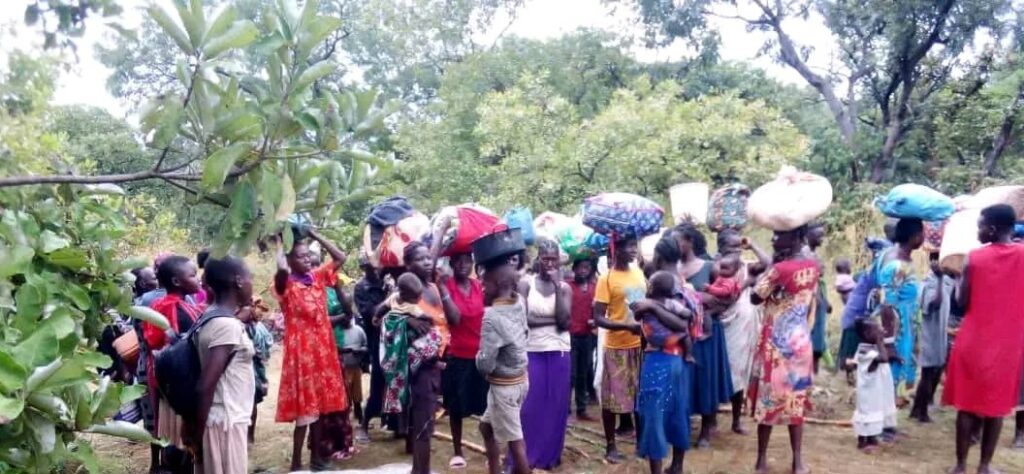
The inhabitants of Nagero County in Western Equatoria State have voiced serious concerns over the acute shortage of essential medicines, lack of food commodities in local markets, and poor road access linking the county to Wau and Tambura.
The situation follows heavy fighting that erupted on 28 September when forces loyal to the SPLM-IO reportedly attacked a South Sudan People’s Defence Forces (SSPDF) barracks in Nagero. The clashes involving government forces and opposition groups displaced civilians and left more than 17 people dead, forcing many residents to flee into nearby bushes.
Mathew Makiso, a community leader in Nagero County, told Radio Tamazuj on Tuesday that their situation is dire.
“Our children are dying every day. We see strange illnesses, swelling in their bodies, and the elderly are also dying,” he lamented. “There is no support reaching us. We appeal to the state government and the president to urgently rescue the people of Nagero.”
Residents say patients are forced to travel long distances for treatment or rely on traditional remedies, as health centres were looted or destroyed during the fighting.
Hellen Monira William, a resident of Nagero County, said her home was burned during the violence, and she lost her entire family, including three children.
“I appeal for peace, unity, and love among our people in Nagero and Western Equatoria as a whole,” she said. “Despite what I have gone through, I have forgiven those who harmed my family and me.”
She added that movement to Tambura and Wau remains dangerous, saying civilians are often accused of supporting armed groups if found travelling or carrying goods.
Traders in Nagero market, speaking on condition of anonymity for fear of reprisals, also complained of food shortages and rising prices. They attributed the situation to poor road conditions and restrictions on movement along the Nagero–Wau and Nagero–Tambura routes, especially during the rainy season.
“By God’s mercy, some traders still manage to reach Wau and Tambura,” one trader said. “But we move through the bush. If soldiers find you, you may be beaten, tortured, or accused of supplying rebels. People live in fear and silence.”
He called for freedom of movement, freedom of expression, and vocational training opportunities for youth to prevent idleness and crime.
Meanwhile, Bernardo Gabriel, the Acting Commissioner of Nagero County, confirmed that the fighting has severely affected the county.
“All health facilities were destroyed, roads are blocked, and there are no food items in the markets,” he stated. “Getting soap, salt, medicine, and food is extremely difficult. Displaced people are sheltering at police headquarters, primary schools, and houses near military barracks, with many families crowded into dirty and unsafe conditions.”
Community leaders are appealing to the Western Equatoria State government, humanitarian agencies, and development partners to urgently intervene by supplying medicines, restoring food supplies, and rehabilitating key roads to reopen movement and trade.
They warn that without immediate action, the crisis will continue to disproportionately affect children, pregnant women, and the elderly, worsening the humanitarian situation in Nagero County.
The state leadership is yet to comment on the matter.

 and then