



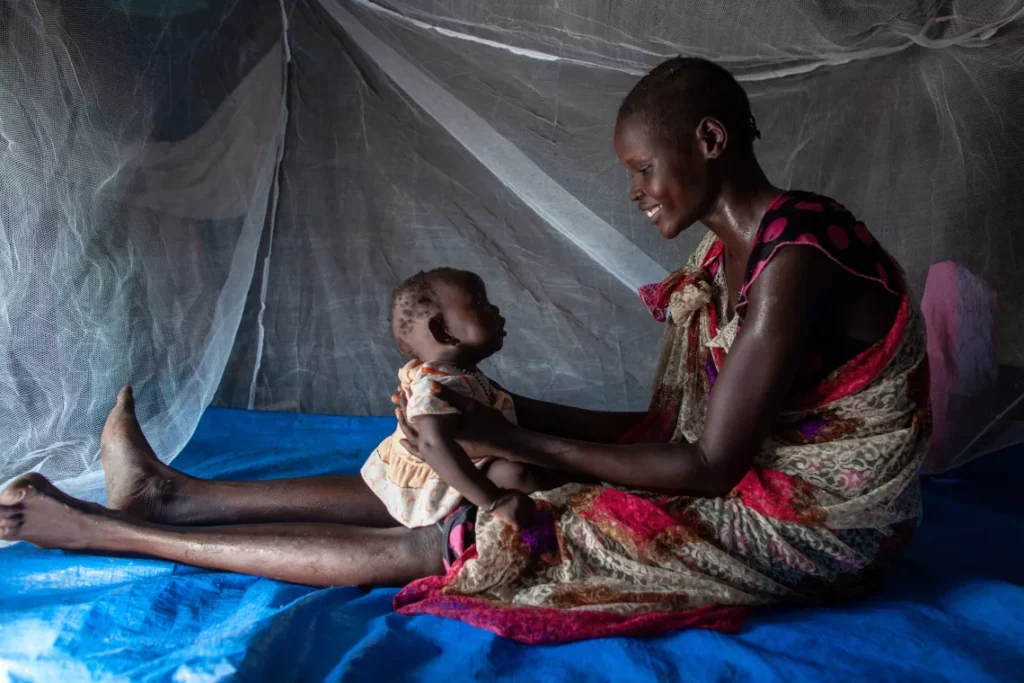
The Government of Eastern Equatoria State and partners on Tuesday launched the distribution of treated mosquito nets as a strategy to combat the rampant threat of malaria.
This exercise, launched in Torit, was attended by commissioners from all eight counties of the state, along with representatives from the two administrative areas of Imjehejek and Kauto.
“Today (Tuesday), we are addressing the distribution of long-lasting insecticide-treated mosquito nets. This is a vital approach that the Government of South Sudan has adopted to protect our communities from malaria,” said Emmanuel Baringo, CEO of Health Link South Sudan. “Malaria is the leading cause of death across our country, particularly impacting children. According to the Ministry of Health’s data, malaria is the predominant cause of suffering and fatalities in various communities.”
“Hence, the government, in collaboration with its partners, is committed to ensuring that every household receives mosquito nets, one net for every two individuals,” he added.
According to Baringo, teams will go door-to-door to guarantee that every household receives the essential protection, saying they have secured approximately 1.16 million mosquito nets for distribution across all counties in Eastern Equatoria State. “Additionally, due to our established presence in Central Equatoria, we have also been entrusted to distribute mosquito nets in six counties there, using the same door-to-door approach,” he revealed. “This is a thorough process that demands active participation from all stakeholders. We expect each of you to take ownership, provide leadership, and ensure security throughout the distribution process.”
“The nets belong to the government, and our partners are here to help us reach even the most hard-to-access communities,” Baringo added.
He cautioned against misusing or selling the mosquito nets and said that during previous distributions in 2023, they encountered significant challenges, including theft of nets.
“This distribution is comprehensive and will extend to all communities, including military areas,” he stated. “Based on the 2008 population data, we have effectively planned this distribution, covering each administrative region. UNICEF is responsible for managing this distribution.”
Meanwhile, Ambayo Peter, the UNICEF Health Officer for Greater Equatoria based in Yambio, said they are bridging the gap between the available nets in warehouses and the goal of achieving malaria-free homes.
“Our children and pregnant women are in a relentless battle against mosquitoes, an invisible foe. Malaria accounts for around 40 percent of the morbidity we see in our health facilities, which are overwhelmed, especially during the rainy season,” he said. “This disease is preventable. With support from global funds, UNICEF and the Ministry of Health have secured 9 million nets for the entire country of South Sudan. For Eastern Equatoria, we have 1.16 million nets aimed at protecting approximately 2 million people, targeting over 300,000 households.”
Ambayo said they must ensure equity, guaranteeing that every household receives a net to protect families from mosquitoes.
“Utilization is crucial; possession of a net does not equate to its use. We have witnessed misuse across Africa, including nets being repurposed for protecting chickens,” he stated. “We must ensure these nets are used solely for their intended purpose. Lastly, accountability is non-negotiable; we cannot allow the diversion of nets meant for vulnerable populations.”
For his part, Thomas Kotein, Eastern Equatoria’s State Minister for Health, commended all commissioners and representatives for their swift response to the launch meeting.
“Your attendance is vital, despite the challenges some faced traveling from distant areas,” he said. “Your commitment to this crucial exercise is greatly appreciated, and together, we will ensure the successful distribution of these nets.”

 and then