



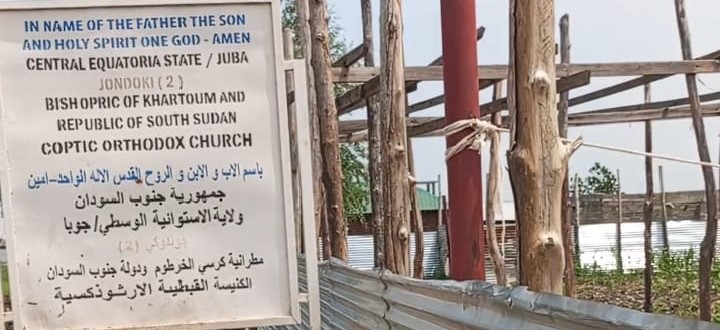
A bitter land ownership dispute between an Egyptian vocational school and the Coptic Orthodox Church has paralysed educational operations in South Sudan’s capital, as both sides dig in for a protracted legal battle.
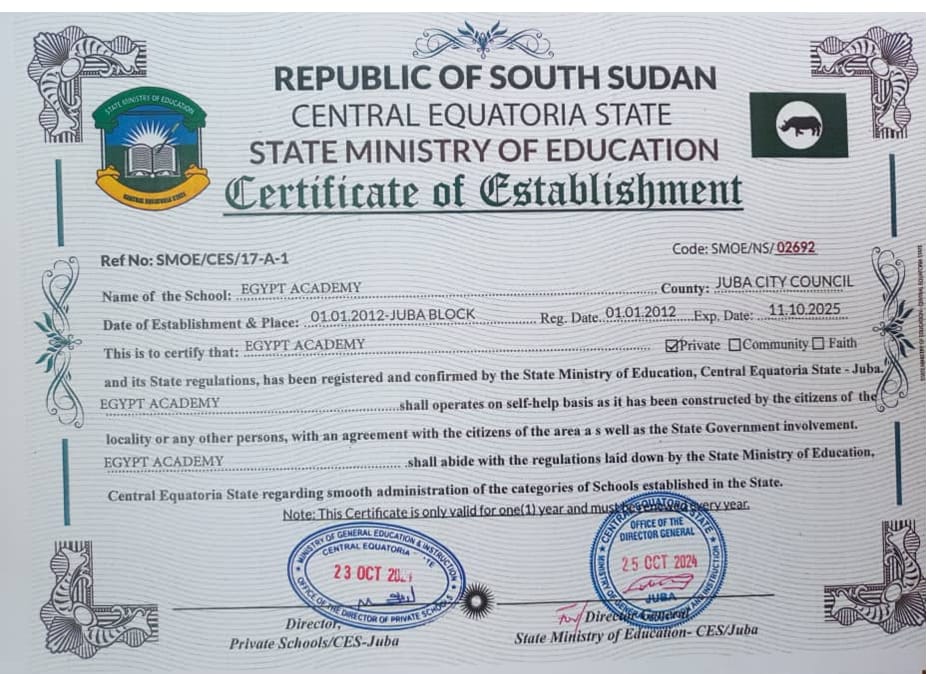
The Egypt Academy, which has provided vocational training in agriculture and computer sciences in South Sudan since 2012, claims its expansion has been halted by the very church it once trusted. According to school data, the institution has graduated 18,000 students since its inception.
Speaking exclusively to Radio Tamazuj on Tuesday, the academy’s director, Medhat Shafik Henin, said the school had operated peacefully for a decade until it attempted to build new training centres in 2020.
“Since 2012, we have been operating in South Sudan and are officially registered in Central Equatoria State, with our centre in Buluk offering computer science and vocational skills in electricity, carpentry and tailoring,” Henin said.
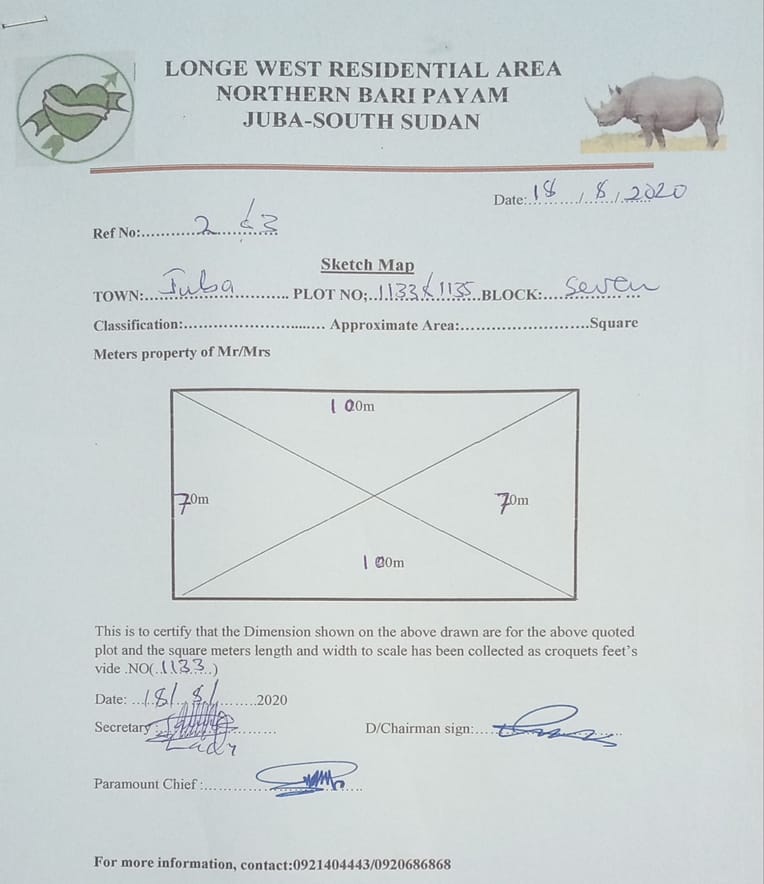
“In 2020, the academy decided to open an agricultural centre to support South Sudanese. As a result, we secured land measuring 100m by 90m and 100m by 70m in Longe residential area (Northern Bari Payam) at a cost of $12,000, while in Jonduki near New Site we secured another 100m by 70m at $10,000.”
Henin, an Egyptian national, alleges that a year after the purchase, a priest from the Coptic Church moved to expel the school.
“How the church came into the picture is that the priest, to whose church I belong, advised that we partner in serving the community, saying we could not work independently as foreigners. However, the church had the land registered in its name, yet the school was responsible for the purchase,” he said.
Henin leveled sharp accusations of corruption and collusion against the cleric.
“The priest breached the trust by annexing our land to the church without our consent. He colluded with land grabbers to have us expelled and registered the school lands as plots for his relative. So this is the source of the problem,” Henin said.
“Again, he is working with powerful Revenue Authority officials to evade justice, with his residence and church guarded by security officers so that our arrest warrants are not executed. So he is a criminal disguised as a church leader.”
The director said he had attempted to resolve the matter through the church hierarchy to no avail.
“I approached the church bishop to have the dispute settled outside the court, but nothing worked out,” he said, calling on the national government to investigate. “In 2025, we opened civil case 301 and criminal case 375 with Gudele police. After a few hearings, the cases were prematurely transferred to Juba and we are being frustrated.”
However, Father Michael Abar Ajak of the Orthodox Coptic Church dismissed the allegations, describing the funds provided by Henin as a donation rather than a private purchase.
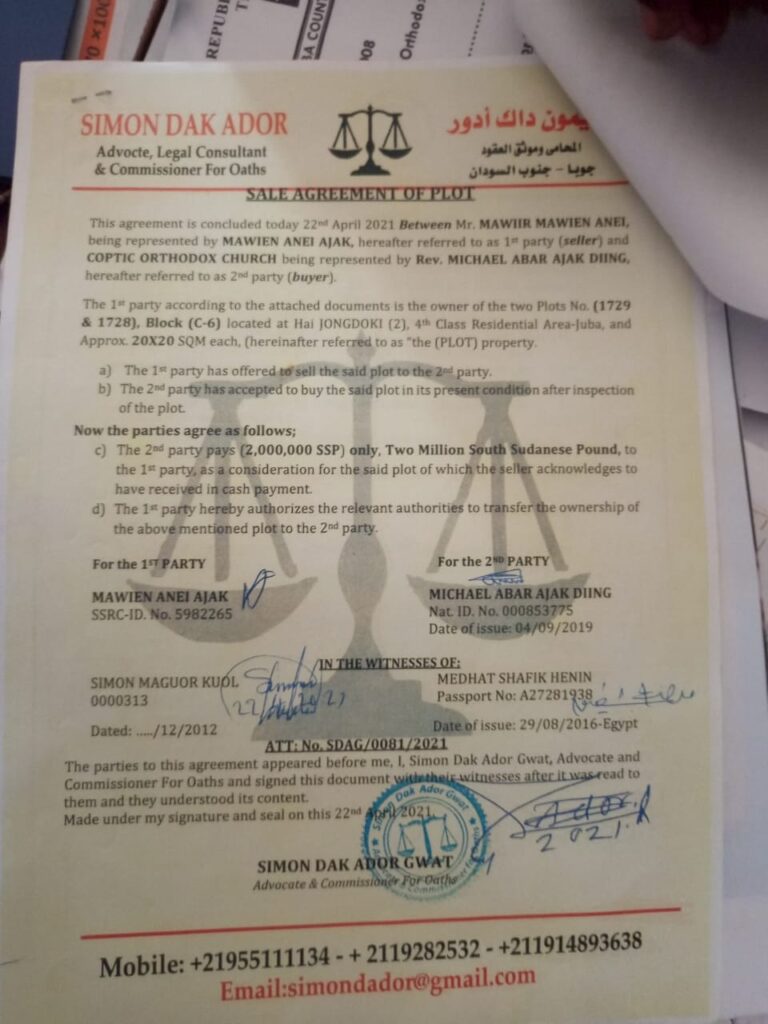
“What happened was that Medhat donated $16,000 to the church. As a church, we topped up his money and bought land from the Longe community. I signed as the church’s representative while Medhat signed as a witness because he is our member. Afterwards, Medhat requested our bishop that he wanted to establish a computer centre on the land, for which permission was granted,” Ajak said.
According to the priest, the friction began when Henin clashed with local leaders.
“Initially, the dispute involved him and the host community because he built the foundation of a computer centre building outside the land parameters. There, he filed a lawsuit against the Longe community chief,” he said.
The church maintains it intervened to protect its local reputation.
“We told him, you cannot sue the community leaders because this will taint our image while we plan to build a church there to serve them. So he was unhappy that we colluded with the community and threatened to sue us. No one denies his suggestion, though it was not a written one. We even suggested refunding him, but he refused. He wanted the land as an individual, yet the land belongs to the church as evidenced by the land purchase contract,” the priest added.
State authorities are now stepping in to mediate the fallout. John Lado Wani, a senior prosecution attorney in Central Equatoria State, confirmed to Radio Tamazuj that officials are attempting to find a middle ground.
“We are aware of this problem. As the Central Equatoria State Education Ministry, we supervise all schools under our jurisdiction and we allowed the Egyptian Academy to operate the agricultural project,” Wani said.
“We allowed the school to operate because we need someone helping our community. However, it appears that after the school bought the land, the church got involved as a partner, resulting in the dispute. As the state attorney, I will invite the two parties because we want this issue settled outside the court to avoid further problems.”
Efforts to reach Longe community leaders for comment were unsuccessful.

 and then