



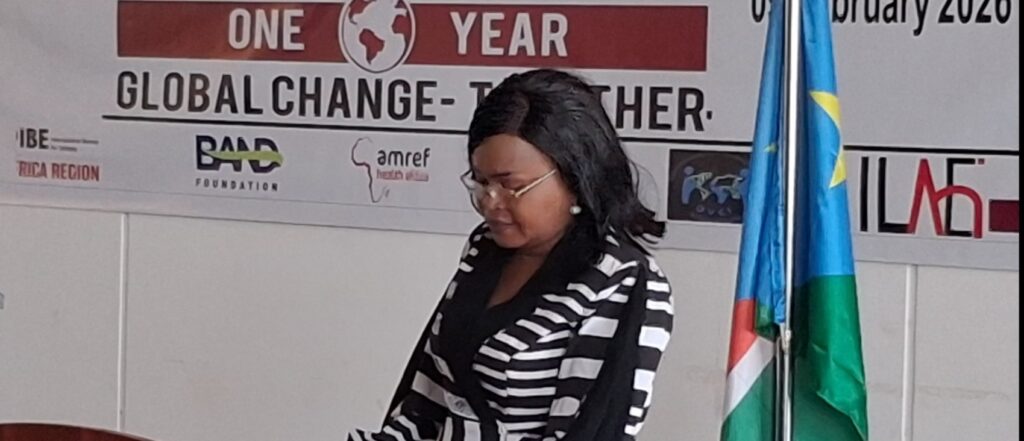
Mental health experts in South Sudan on Monday called for greater awareness, reduced stigma and increased investment in mental health services, warning that epilepsy remains widely misunderstood and neglected across the country.
Speaking during the commemoration of International Epilepsy Day in Juba, Rita Akol, deputy director of the mental health department at Juba Teaching Hospital, said epilepsy is a sensitive condition burdened by deep social stigma and limited access to care.
“As we are gathered today to celebrate International Epilepsy Day under the theme ‘The Epilepsy Pledge’, I wish to emphasize the importance of raising awareness about this condition, given the sensitivity and social stigma surrounding epilepsy,” Akol said. “It is a battle to confront the profound impact this has left in our society.”
International Epilepsy Day is observed globally to raise awareness and promote better understanding, care and inclusion for people living with epilepsy.
Akol said challenges faced by people with epilepsy are compounded by widespread lack of knowledge, limited resources and inadequate mental health services.
“Unfortunately, this challenge is further aggravated by the lack of knowledge, low resources and limited services, which contribute to the complexity of the mental health landscape,” she said.
She added that many communities do not regard mental health as a basic need, discouraging people from seeking professional help.
“Our community is still undermining the importance of seeking mental health services, as many of us think mental health is not a basic need,” Akol said.
Akol urged families — particularly mothers — to play a stronger role in addressing mental health challenges through education and awareness.
“Let us take this moment as an initial step to encourage our families, especially mothers, who play a very important role in families and communities, by equipping them with adequate knowledge and awareness to minimise the impact of mental health issues at the national level,” she said.
She also praised organisations working on epilepsy awareness and the Ministry of Health’s mental health department for their efforts.
“I would like to take this opportunity to thank the epilepsy awareness initiatives for the great efforts they are making to improve the lives of people living with epilepsy, together with the Ministry of Health’s Department of Mental Health,” Akol said.
She called for mental health infrastructure to be treated as a national priority. “We envision a future where mental health infrastructure is treated as a national priority, with lasting commitment to our people,” she said.
Kur Ezekiel, executive director of the Initiative for Epilepsy Awareness in South Sudan, said the day was marked “to reflect on the challenges that persons living with epilepsy face throughout their lives”.
He noted that more than 50 million people live with epilepsy worldwide and estimated that one in 100 South Sudanese is affected.
Ezekiel cited stigma, lack of medication and poverty as major challenges, urging the public to “make a pledge and take one concrete action” to improve the lives of people living with epilepsy.
During the event, epilepsy survivor Elias Abugo shared his experience of stigma and recovery, calling on families and communities to support those affected.
“I’m here to share with you my daily experience,” Abugo told participants, recalling that managing the condition after his first seizures in 2017 “was a bit difficult”.
Diagnosed in 2018, he said stigma hurt as much as the illness itself. “They call you using names which are really not your names,” he said.
Abugo said regular medication from Usratuna and Rama Health Care Centre, as well as participation in Special Olympics activities, helped restore his confidence.
“From that moment on, I started learning new things about my own health,” he said.
He said he has lived seizure-free for three years and appealed to families not to isolate children with epilepsy.
“You don’t isolate them from home, and you don’t stop them from going to school,” he said, while warning that drug shortages remain a major problem for patients across South Sudan.

 and then