



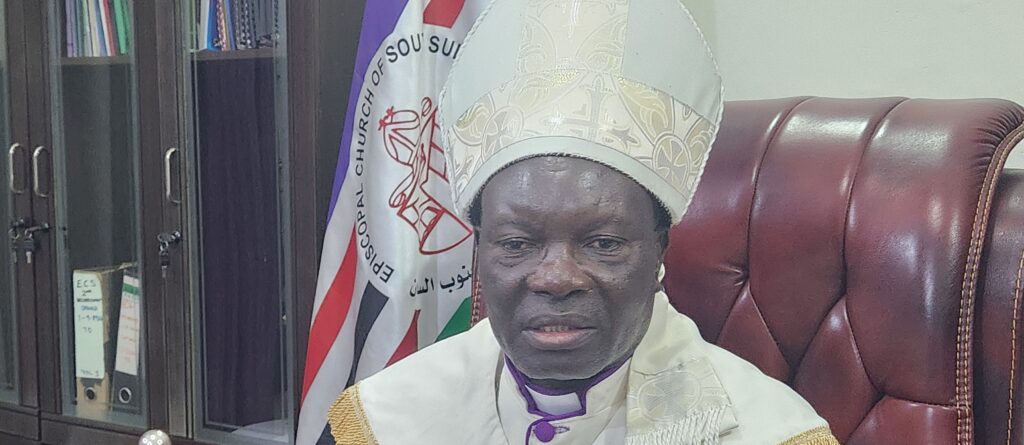
The head of the Episcopal Church of South Sudan on Tuesday renewed calls for peace and reconciliation, warning that ongoing violence and political uncertainty threaten the country’s stability as South Sudanese celebrate Christmas and look ahead to 2026.
Archbishop Justin Badi Arama, the church’s primate, said the festive season comes at a difficult moment marked by economic hardship, insecurity in several regions and delays in the implementation of the country’s revitalized peace agreement.
“As we celebrate the birth of our Lord Jesus Christ, we give thanks for the priceless gift of God’s love made flesh amongst us,” Badi said during a Christmas message delivered at a news conference in Juba. “This celebration comes at a time when our nation is facing harsh economic challenges and widespread insecurity.”
Quoting from the Bible’s Gospel of Luke, Badi said Christmas remains a symbol of hope, peace and renewal despite the country’s challenges.
“Light shines in the darkness, hope is renewed, and peace is offered to all humanity,” he said, urging South Sudanese to embrace reconciliation and unity in their communities.
The church leader called on citizens to allow the values symbolized by Christmas to guide the nation, saying South Sudan should become “the Bethlehem where Jesus Christ is born.”
“May we allow the newborn child lying in the manger to give meaning to our lives and to the challenges confronting our nation,” he said, adding that the church continues to pray for “true reconciliation, peace and joy” across the country.
Asked about the church’s expectations for 2026, amid anticipated political developments and the National Election Commission’s announcement that it plans to proceed using previous constituencies, Badi said peace remains the church’s primary concern.
“Our hope for the new year is that the violence in many parts of the country will diminish or cease completely, and that our people will enjoy peace and freedom in their own country,” he said.
During the interaction, Badi also offered prayers for journalists, describing them as the voices of the people, and called for protection and wisdom as they carry out their work.

 and then