



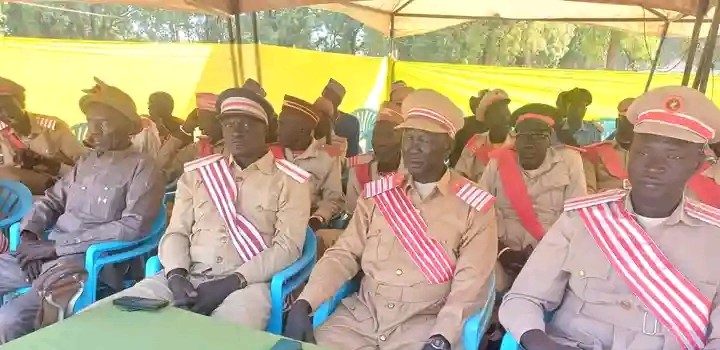
A five-day community conference aimed at fostering peaceful coexistence, reconciliation and unity opened Monday in Rumbek, the capital of Lakes State, following years of deadly communal violence.
Hundreds of local community members attended, including chiefs, senior politicians, intellectuals, and representatives of youth and women’s groups from both within South Sudan and the diaspora. The conference is scheduled to conclude Friday.
In his opening address, Lakes State Governor Rin Tueny Mabor cited the presence of guns among the civilian population as a primary cause of deaths in the area.
“Gun violence has caused a lot of destruction in the Agar community in Rumbek,” Mabor said. He noted that the Agar, historically known for internal harmony, are now killing one another.
“Why are we killing one another? Why are we causing destruction among us?” he said. “This is painful to the Agar community at home and in the diaspora, and it makes people sleepless at night.”
Mabor credited the community, not himself, for stability achieved in recent years. He said his administration began serious peace efforts after 2021 meetings in Juba and Rumbek addressed the deteriorating security situation.
“I started work here without looking back, and you also didn’t look back to me, and this is where the peace and stability in Rumbek is achieved,” he said.
He urged attendees to thoroughly discuss all issues affecting life in Rumbek.
Charles Benykok, chairperson of the Rumbek Youth Union, which called for the conference, said the goal is to address challenges hindering the community.
“We as a community are calling [on participants] to look into these issues deeply and to understand all the root causes,” Benykok said. “We called this Agar community conference so that we will be united and to create a sense of belonging together.”
Monica Ayen Maguat, deputy chairperson of the Agar community, thanked the youth union for initiating the conference. She attributed years of confusion primarily to conflicts involving youths in villages and cattle camps, not town dwellers.
“What is wrong with it if the educated youths organized such a good initiative to discuss things that affect us and the life of rural youths?” she said.
Daniel Deng Monydit, chairperson of the Juba-based Agar community, thanked the diaspora for contributions to the conference. He said the thematic issues for discussion were clear and would be fully addressed.
Angelina Adhel Malual, chairperson of the Lakes State Civil Society Network, urged the community to tackle underlying cultural issues.
“I like to see them discussing challenges that are facing them, especially the issues of cultural beliefs like cattle raiding, which always cause conflicts among the youths,” she said.
She also called for discussions on hate songs promoted by women, gangs, street children and food security.
“A peaceful state has so many benefits that come from different communities,” she said.

 and then